 Craig Stevens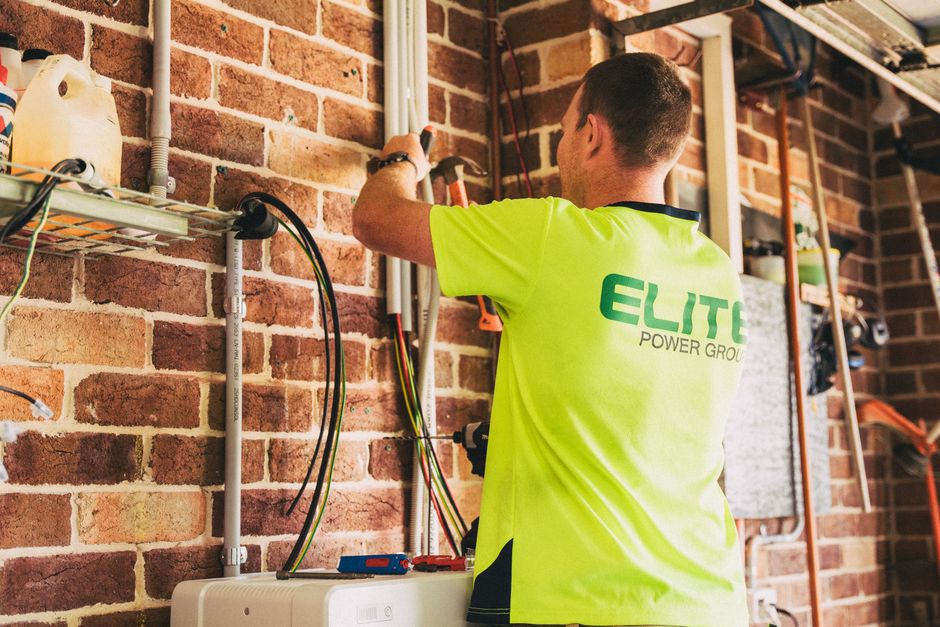
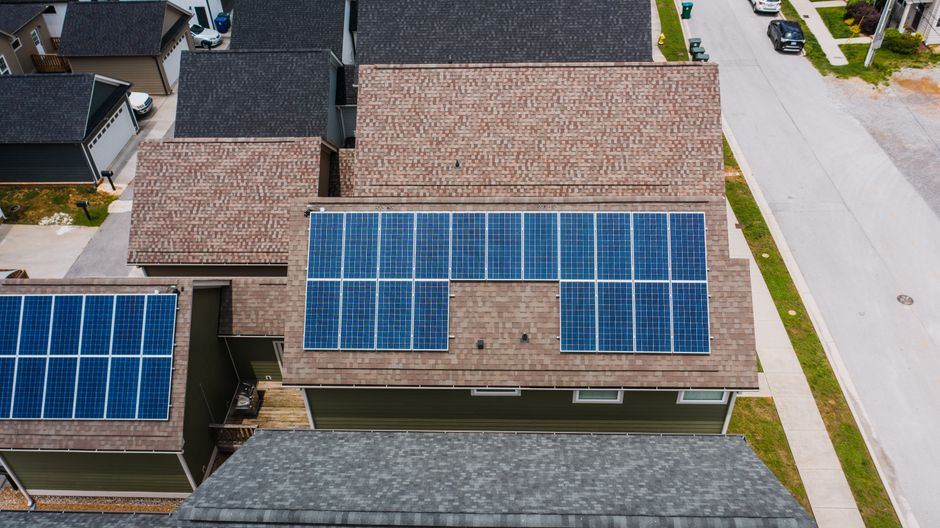
Picture this: you went solar three or four years ago, you’re proud of your panels, and then last August your neighborhood lost power for 18 hours during a heat event. Your solar system shut down automatically, because that’s what grid-tied systems do for safety. You sat in the dark with a perfectly good solar array on your roof. I’ve seen this scenario play out for thousands of homeowners, and it’s the thing that finally makes people ask seriously about batteries.
That question just got a lot more complicated. On July 8, 2026, Palmetto launched its Energy Backup Plan, a $0-down battery subscription starting at $98 per month, explicitly aimed at the estimated 4 million U.S. rooftop solar owners who are already generating power but have no storage. The timing isn’t accidental. The residential 30% federal tax credit under Section 25D expired December 31, 2025, which means the math on buying a battery outright changed dramatically overnight. What was a $16,000 purchase with a $4,800 federal rebate is now just a $16,000 purchase. The buy-vs-subscribe question, which used to have a fairly clear answer, is genuinely open again.
- Palmetto's Energy Backup Plan launched July 8, 2026: $0 down, $98/month, 12-year term, available in 25 states.
- The 30% residential battery tax credit (Section 25D) expired December 31, 2025, erasing ~$4,800 off a $16,000 purchase.
- Third-party-owned batteries (subscriptions) still qualify for the 30% commercial ITC (Section 48E) through 2027.
- Green Mountain Power offers Vermont subscribers batteries for $55/month; some Texas VPP models run even lower.
- Palmetto's app lets subscribers arbitrage energy prices, potentially earning back more than the monthly fee.
The Tax Credit Shift Changes Everything
Here’s what most people don’t realize yet: the tax credit didn’t disappear for everyone. It disappeared for homeowners who buy. Third-party-owned systems, meaning batteries owned by a company like Palmetto and leased or subscribed to you, still qualify for the commercial investment tax credit under Section 48E through at least 2027. That 30% credit goes to Palmetto, not you, but in a competitive market installers pass some of that savings downstream to keep subscription prices attractive. It’s not as clean as getting the credit yourself, but it does explain how a program can credibly offer $0 down with no major sacrifice on the company’s end.
If you were planning to buy a battery this year counting on that residential credit, you need to recalculate. A system that cost you $11,200 after the tax credit last year now costs you $16,000. That changes your payback period significantly, often pushing it past 10 years even with solid time-of-use arbitrage savings.
Subscription vs. Ownership: The Real Numbers
Helpful resource: EG4 Battery Monitor Shunt for Solar Systems is a top-rated option for this. (As an Amazon Associate this site earns from qualifying purchases.)
Let me put the comparison on paper, because the headline math hides a few things.
| Buy Outright | Palmetto Subscription | |
|---|---|---|
| Upfront cost | ~$16,000 | $0 |
| Federal tax credit (2026) | None (Section 25D expired) | Installer keeps 30% ITC |
| Monthly cost | $0 (after payback) | $98/month |
| 12-year total cost | ~$16,000 | ~$14,112 |
| Year 13+ cost | $0 | Ongoing fee or renegotiate |
| Maintenance responsibility | Yours | Palmetto’s |
| Portability if you move | Sell or reinstall | Contract transfers (terms apply) |
Over 12 years, the subscription actually costs less in raw dollars than buying outright in a post-tax-credit world, assuming no financing. But that’s the optimistic version. If you’d financed the battery purchase at 7% over 10 years, your monthly payment would be around $186, making the $98 subscription look very good. If you could pay cash and your battery generates meaningful arbitrage savings through time-of-use rate optimization, ownership still wins long-term. The math depends heavily on your utility’s rate structure.
What “Energy Arbitrage” Actually Means for Your Bill
Palmetto’s app lets subscribers set backup reserve levels and, more interestingly, do energy arbitrage: charge the battery from the grid during off-peak hours when electricity is cheap, then discharge during peak-rate hours. In markets with aggressive time-of-use pricing, like California’s PG&E territory or parts of Texas, the spread between off-peak and on-peak rates can be $0.15 to $0.30 per kilowatt-hour or more. A typical 10-13 kWh battery cycling daily could realistically offset $20 to $40 per month in electricity costs, which meaningfully cuts into that $98 fee.
I’ve seen projections where homes in high-spread markets come close to fee-neutral on the subscription. I’d treat those as best-case scenarios, not guarantees. Your utility’s rate design, your household’s load pattern, and how aggressively Palmetto’s algorithm manages dispatch all affect the outcome. But the fact that the feature exists is genuinely useful and not something you get from a passive, unconfigured battery installation.
How Palmetto Compares to What’s Already Out There
Palmetto isn’t first to this idea. The battery-subscription space has real competitors already operating, and depending on where you live, you may have better options.
Vermont’s Green Mountain Power has been offering batteries to customers for $55 per month for years, and that program includes a utility-managed virtual power plant component that helps keep costs low. Missouri utility Evergy runs a pilot at just $10 per month, though that’s a limited program with significant utility control over dispatch. In Texas, companies like Base Power, Lunar Energy through Octopus Energy, and Solrite operate virtual power plant models where subscribers get storage and potentially bill credits in exchange for letting the operator dispatch during grid stress events. These models are genuinely different from Palmetto’s, with varying degrees of homeowner control, but they’re worth knowing about before you sign a 12-year contract.
According to pv magazine USA’s coverage of the launch, Palmetto’s program is now live in 25 states including California, Texas, Arizona, Illinois, and Oregon, and the plan is being made available to all residential contractors, not just Palmetto’s direct sales channel. That’s a smart distribution move and means you might hear about this through your existing solar installer rather than Palmetto directly.
The Catch: 12 Years Is a Long Time
I want to be honest about the part that gives me pause. Twelve years is a real commitment. Battery technology is improving faster than almost any other consumer energy product. The battery you subscribe to in 2026 may look outdated by 2031 the way a 2014 smartphone looks today. When you own the hardware, you can upgrade when you choose. When you’re subscribed, you’re dependent on whether Palmetto upgrades your unit, what their contract terms say about technology refreshes, and whether the company itself is still operating and financially healthy a decade from now.
That’s not a knock on Palmetto specifically. It’s a structural reality of any long-term subscription for a fast-moving technology. Read the contract carefully, particularly the clauses about what happens if you sell your home, if you want to exit early, and who pays for replacement if the battery degrades below a certain threshold.
The subscription model makes a lot of sense for homeowners who can’t or don’t want to put $16,000 on the table, especially now that the tax credit cushion is gone. It makes less sense for someone with cash on hand, a long time horizon in their home, and a high-arbitrage utility rate structure. Both of those people are real. Only one of them should probably sign up for this.
Sources
- Palmetto Launches Energy Backup Plan – PR Newswire (July 8, 2026)
- Palmetto launches standalone residential battery subscription plan – pv magazine USA (July 10, 2026)
- Palmetto opens battery-only lease plan to all residential contractors – Solar Power World (July 2026)
- Solar News This Week – July 12, 2026 – Free Press (July 12, 2026)
- Home Battery Subscription: Affordable Home Energy Storage – Cars With Cords (July 2026)
- Federal Solar Tax Credit 2026: New Rules – SolaxPower (July 2026)
Photo: Elite Power Group via Pexels
Recommended Resources
Disclosure: As an Amazon Associate, we earn a small commission from qualifying purchases at no extra cost to you. We only recommend products that genuinely support the topics covered in this article.
- Renogy 200W Solar Starter Kit + 30A Charge Controller (~$169), Complete beginner solar kit, 200W monocrystalline panel, charge controller, and mounting hardware included.
- EF EcoFlow DELTA 2 Portable Power Station (1024Wh) (~$599), 1024Wh LFP battery with 1800W output, top-rated solar generator for home backup power. Charges in under 2 hours.
- EF EcoFlow DELTA 2 Max (2048Wh) (~$999), 2048Wh LFP battery with 2400W output, ideal for whole-home solar backup or pairing with rooftop solar panels.