 Patricia Moore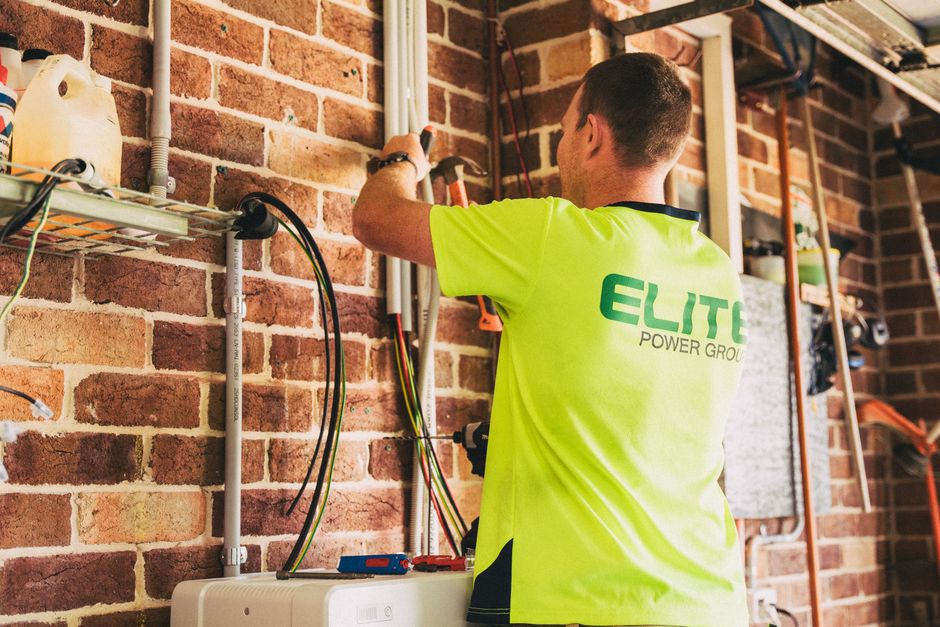
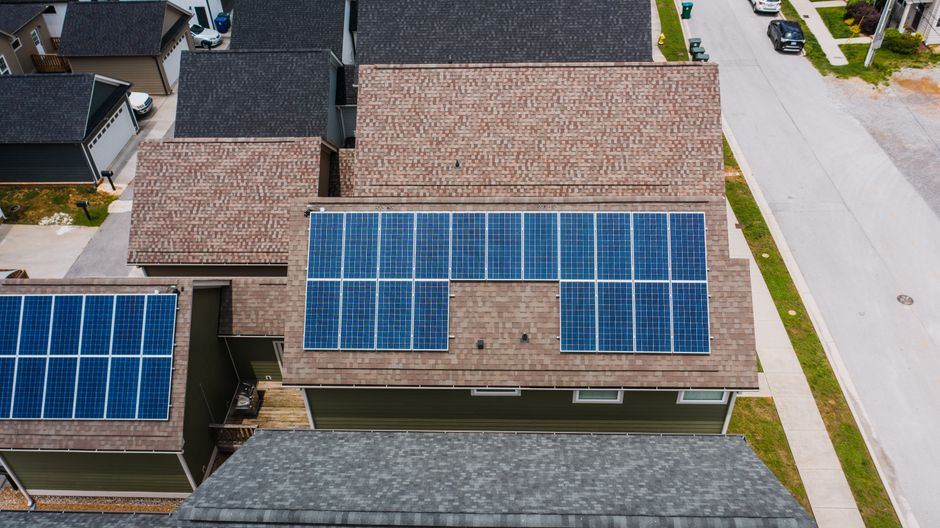
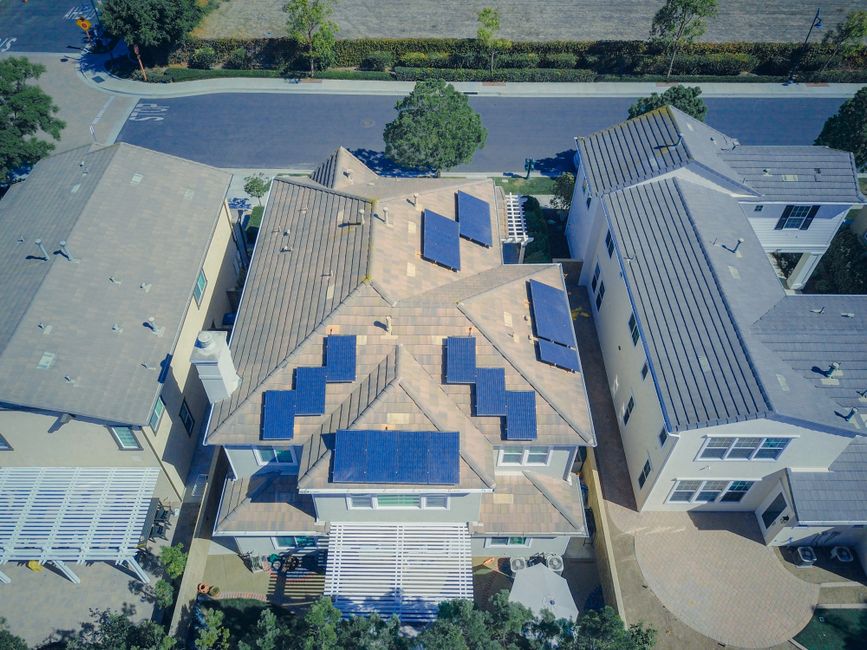
Something quietly significant happened in the solar industry this July, and most homeowners with panels on their roofs probably missed it. Palmetto launched what it’s calling an Energy Backup Plan: a $0-down, $98/month battery subscription covering installation and maintenance, available across 25 states, aimed squarely at the estimated 4 million U.S. rooftop solar owners who still have no storage attached to their systems. No financing. No $16,000 upfront check. Just a monthly fee and a battery on your wall.
That sounds simple. It isn’t. The arrival of a credible Battery-as-a-Service model changes how you should think about your existing solar array’s size, your utility bill strategy, and the math on whether storage makes sense for you at all. And the timing matters: the residential solar tax credit under Section 25D expired for systems placed in service after December 31, 2025, meaning the old calculus of “buy the battery, grab the 30% credit” is gone for most homeowners. According to GreenLancer’s July 2026 breakdown of the credit expiration, the federal incentive is no longer available to homeowner-owned systems, but the investment tax credit can still flow to third-party owners like Palmetto under a lease structure. That’s not a small detail. It’s the entire financial logic behind why these subscription models are suddenly worth taking seriously.
I’ll be honest: when I first saw the $98/month number, my instinct was to run the simple math and call it overpriced. What surprised me was how much the analysis changes once you factor in where the tax credit actually lands now, what happens to an undersized solar array when you add storage, and how arbitrage capability affects the ROI picture for households in states with time-of-use rates.
- Palmetto's battery subscription costs $98/month with $0 down across 25 states as of July 2026.
- The 30% federal solar tax credit expired after December 31, 2025 for homeowner-owned systems.
- Leased batteries let a third-party owner claim the investment tax credit, lowering your effective cost.
- Four million U.S. solar homeowners currently have no storage , this product targets them directly.
- Competing services from Base Power, Lunar Energy/Octopus, and Solrite are already live in Texas.
The Tax Credit Shift Changes the Buy-vs-Lease Calculation
For most of the last decade, the advice on battery storage was pretty consistent: buy outright if you can, claim the 30% federal credit, and own the asset. A $16,000 battery system became roughly $11,200 after the credit. That math justified the upfront pain. But that credit is gone now for homeowner-owned residential systems, and the financing market for batteries has tightened alongside rising interest rates.
The lease model flips the structure. Under a subscription like Palmetto’s, the company retains ownership of the hardware, which means it, not you, can claim federal clean-energy investment credits. Palmetto passes some of that value back through lower monthly pricing and covered maintenance. Whether that’s a good deal depends entirely on your specific situation, but the structural advantage of third-party ownership for tax credit capture is real and worth understanding.
Over a 12-year term at $98/month, you’re looking at roughly $14,112 in total payments with no residual ownership at the end. Compare that to purchasing a system outright at $16,000+ with no tax offset. The subscription costs less in nominal dollars over the term, and you avoid the capital outlay, maintenance costs, and degradation risk entirely. That’s not nothing.
How Your Solar Array Size Affects Storage ROI
Helpful resource: EG4 Battery Monitor Shunt for Solar Systems is a top-rated option for this. (As an Amazon Associate this site earns from qualifying purchases.)
Here’s where most of the conversation about Battery-as-a-Service gets oversimplified. Adding storage to an existing solar array isn’t a plug-and-play situation. The value you extract from a battery depends heavily on how much solar you’re actually generating relative to what your home consumes.
A household with a 5 kW array in Phoenix that already exports 40% of its generation back to the grid at low net-metering rates is an excellent candidate for storage. The battery captures that would-be export, stores it, and discharges it during the evening peak. A household with a 3 kW array in Seattle that barely covers its own daytime load has almost no excess generation to capture. Adding storage there is mostly about resilience, not economics.
The Palmetto app’s arbitrage feature, which lets subscribers set custom discharge schedules timed to peak utility rates, makes sizing even more consequential. If your array is undersized relative to your load, you won’t have excess solar to arbitrage. You’ll end up charging the battery from the grid, which in most states means you’re storing grid power at off-peak rates and discharging it during peak hours. That can still pencil out in markets with steep time-of-use differentials, but the margin is thinner.
| Scenario | Array Size | Daily Excess Generation | Primary Storage Value |
|---|---|---|---|
| Well-matched solar home | 7–10 kW | 15–30 kWh | Arbitrage + resilience |
| Undersized solar home | 3–5 kW | 0–8 kWh | Resilience only |
| No solar (storage only) | 0 kW | 0 kWh | Grid arbitrage |
| High-export solar home | 10+ kW | 30+ kWh | Max arbitrage benefit |
The Texas Effect and What Market Competition Means
It’s not an accident that the Battery-as-a-Service model took root first in Texas. Base Power, Lunar Energy (partnered with Octopus Energy), and Solrite have all been active in Texas’s deregulated electricity market, where retail rate volatility and grid reliability concerns are both acute. As Solar Power World reported in July 2026, Palmetto’s decision to open its battery subscription to all residential contractors across 25 states signals that this model is moving well beyond Texas-specific dynamics.
Deregulated markets create natural arbitrage opportunities because the spread between off-peak and peak rates can be wide and predictable. But even in regulated states, utilities are increasingly rolling out time-of-use rate structures, and that’s where storage subscriptions gain traction outside Texas. California’s NEM 3.0 structure, which slashed export compensation and pushed solar homeowners toward self-consumption, already made storage economically attractive. A $0-down path to storage in California is a genuinely different proposition than it was three years ago.
Competition among providers matters here too. Multiple companies chasing the same 4 million battery-free solar households means pricing pressure over the next 12 to 18 months. Signing a 12-year contract with Palmetto today locks you in before that competition potentially drives prices lower. That’s a real consideration.
What to Actually Check Before Signing
The $98/month entry point is a starting price, not a universal quote. Actual pricing will vary by system size, home energy consumption, and state. Before agreeing to any 12-year subscription, verify a few things: your current net metering agreement and whether it allows battery storage as an add-on, your utility’s time-of-use rate structure and the actual spread between off-peak and peak rates, your array’s current production data to estimate true excess generation, and the contract terms around what happens if you sell your house or the provider exits the market.
The subscription model also means you don’t own the battery at the end of the term. If the hardware has useful life remaining, you’re not capturing that residual value. For homeowners who plan to stay long-term and value the no-maintenance, no-capital-outlay simplicity, that trade-off may be reasonable. For those who think of their home as an investment they’ll sell in five to seven years, the math gets murkier.
The broader point, as pv magazine USA noted in its July 10 coverage of the launch, is that this product is a genuine first for scale: a standalone battery subscription not bundled with a new solar install, available nationally, with no financing required. That’s new. The right response isn’t reflexive enthusiasm or reflexive skepticism. It’s careful math specific to your roof, your utility, and your timeline.
The Battery-as-a-Service category is real, it’s growing, and for a meaningful slice of those 4 million solar-equipped households, a $98/month subscription will make more financial sense than any path that existed six months ago. Whether you’re in that slice depends on details worth spending an afternoon to figure out.
Sources
- Palmetto launches standalone residential battery subscription plan – pv magazine USA (July 10, 2026)
- Palmetto opens battery-only lease plan to all residential contractors – Solar Power World (July 2026)
- Home Battery Subscription: Affordable Home Energy Storage – Cars With Cords (July 2026)
- Solar Tax Credit 2025: What Changed in 2026? – GreenLancer (July 2026)
- Solar News This Week – July 12, 2026 – Free Press (July 12, 2026)
Photo: Elite Power Group via Pexels
Recommended Resources
Disclosure: As an Amazon Associate, we earn a small commission from qualifying purchases at no extra cost to you. We only recommend products that genuinely support the topics covered in this article.
- Renogy 200W Solar Starter Kit + 30A Charge Controller (~$169), Complete beginner solar kit, 200W monocrystalline panel, charge controller, and mounting hardware included.
- EF EcoFlow DELTA 2 Portable Power Station (1024Wh) (~$599), 1024Wh LFP battery with 1800W output, top-rated solar generator for home backup power. Charges in under 2 hours.
- EF EcoFlow DELTA 2 Max (2048Wh) (~$999), 2048Wh LFP battery with 2400W output, ideal for whole-home solar backup or pairing with rooftop solar panels.