 Patricia Moore
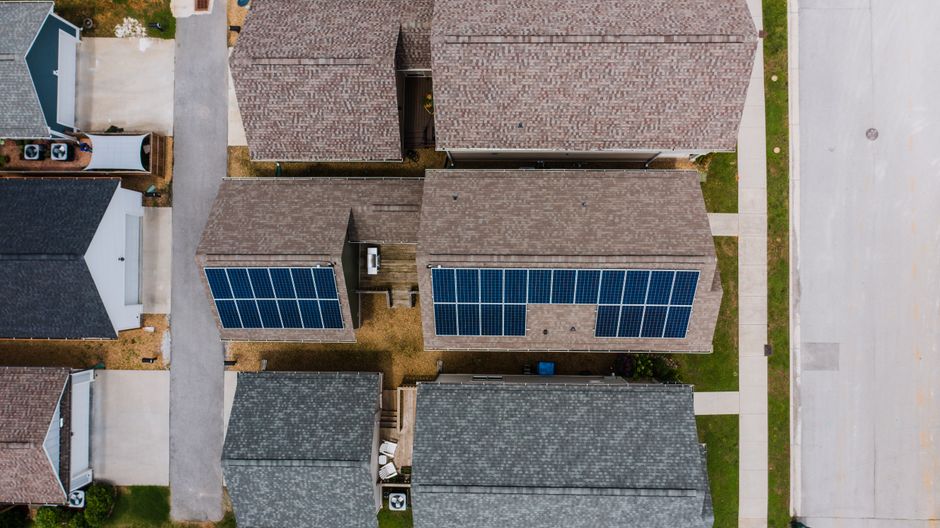
My neighbor across the street got a quote last spring, signed off on a west-facing roof installation without asking a single question about orientation, and is now generating about 15% less power than she would have with a south-facing array. Her installer never brought it up. That’s the situation I want to save you from.
Panel direction is the single biggest fixed variable in your system’s output. You can add batteries, upgrade inverters, shop for lower electricity rates. You cannot cheaply re-aim 20 panels bolted to your roof. So let’s get this right before anything else.
South is the default, and it’s almost always the best
| Azimuth Range | Direction | Output vs. South-Facing | Notes |
|---|---|---|---|
| 180° | Due South | 100% (optimal) | Best year-round performance in northern hemisphere |
| 135°-225° | SE to SW | 90-95% | Within 5-10% of maximum; acceptable range |
| 90° | Due East | 80-85% | 15-20% loss in places like Denver or Atlanta |
| 270° | Due West | 80-85% | 15-20% loss annually, but may align with TOU peak rates in some states |
In the northern hemisphere, the sun arcs through the southern sky. A panel facing due south (180° azimuth) sees the most cumulative sunlight over the course of a year. That’s not an opinion, it’s geometry. National Renewable Energy Laboratory (NREL) modeling consistently shows south-facing arrays at the optimal tilt outperforming any other fixed orientation by a meaningful margin in most U.S. climates.
How meaningful? For a typical 10 kW system in a place like Denver or Atlanta, the difference between south-facing and east-facing can be 15-20% in annual production. At average U.S. electricity prices around $0.16/kWh, that’s roughly $200-$300 per year in lost value. Over 25 years, that gap is real money.
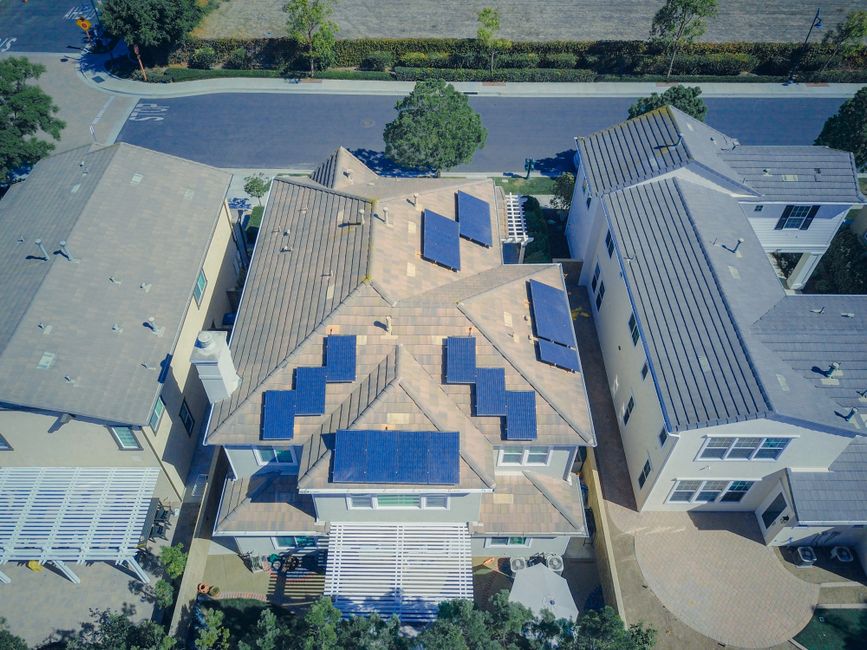
The caveat: due south is the goal, but you’ve got more flexibility than most people think. Anywhere from about 135° to 225° azimuth (southeast to southwest) will give you output within 5-10% of the theoretical maximum. Don’t let a slightly off-axis roof scare you away from solar entirely. I’ve seen homeowners in the 150°-200° range do just fine.
West-facing panels aren’t a disaster. Sometimes they’re actually smarter.
Helpful resource: Emporia Vue 2 Home Energy Monitor is a top-rated option for this. (As an Amazon Associate this site earns from qualifying purchases.)
Here’s the take that might surprise you: depending on your utility’s rate structure, west-facing panels can actually make you more money than south-facing ones, even while producing fewer total kilowatt-hours.
Stay with me. Utilities in California, Arizona, Texas, and several other states operate on time-of-use (TOU) pricing, where electricity is more expensive during peak hours, typically 4-9 p.m. A south-facing array produces its peak output around noon, which in many TOU structures is off-peak. A west-facing array shifts peak production to 3-6 p.m., when prices can be 2-3x higher. EnergySage’s market data shows this trade-off is now a real conversation in states with aggressive TOU schedules, and some installers in California routinely recommend a west-facing split for this exact reason.
Before you automatically chase south, pull out a recent electricity bill and look for whether you’re on a TOU plan. If you are, run the numbers for both orientations with your installer. If they look at you blankly, find a different installer.
Tilt angle matters almost as much as direction
What Type of Solar Panel Should You Buy? · The Solar Lab on YouTube
Direction gets all the attention, but tilt is equally important and equally overlooked. The general rule: your optimal tilt angle roughly equals your latitude. If you’re in Dallas at about 33° N, panels tilted at 30-35° will perform best annually.
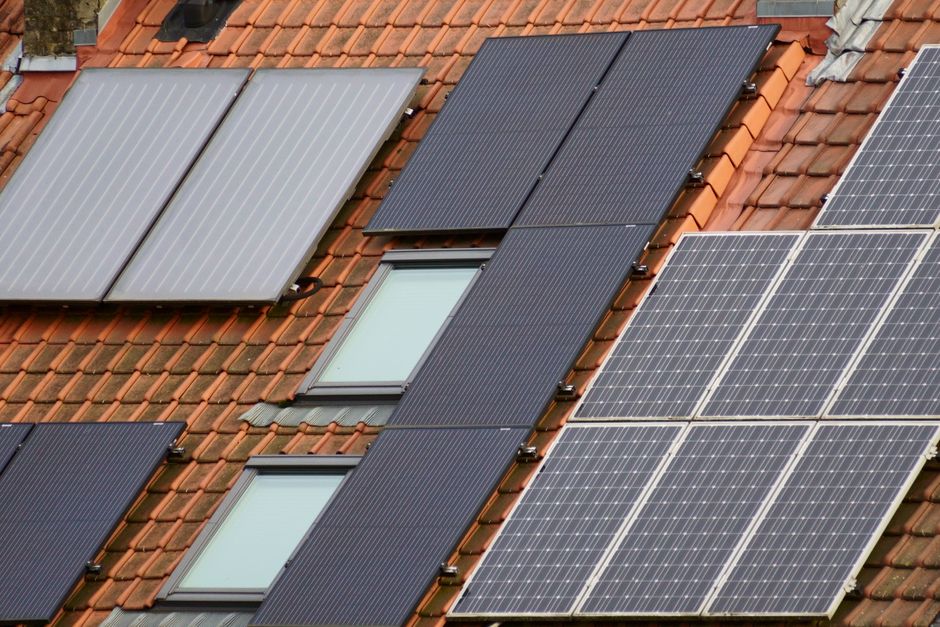
Most residential roofs sit between 15° and 40° pitch, which happens to be close to optimal for most of the U.S. That’s good luck. But flat roofs and very steep roofs both cost you production.
If you’re on a flat commercial-style roof or a low-slope residential one, you have actual choices. Adjustable tilt racking (like the kind from IronRidge or SnapNrack) lets you set the pitch precisely. For ground mounts, you can nail this exactly. I’d push hard for ground-mount flexibility if you have the yard space, because you’re not constrained by existing structure at all.
One thing most people don’t realize: a flat panel (0° tilt) isn’t just suboptimal for sun angle. It collects water and debris instead of shedding them, which degrades output over time. Never go truly flat if you can avoid it.
Shading will wreck your math faster than direction ever will
You can have perfect south-facing, 30° tilt, and still produce almost nothing if your roof sees significant shade between 9 a.m. and 3 p.m. That’s the “solar window,” and what falls in it counts. A single chimney shadow across two panels can drop whole-string performance by 30-50% with traditional string inverters.
If you have shade issues, microinverters (Enphase is the dominant brand) or DC power optimizers (SolarEdge) let each panel perform independently. They cost more, typically adding $0.15-$0.30 per watt to system cost, but they can be the difference between a mediocre system and a genuinely productive one on a complicated roof.
Before your site assessment, I’d strongly recommend spending $20-$40 on a solar pathfinder tool or using a free app like SunSurveyor to map shade on your property yourself. It gives you real data to bring to the installer conversation rather than just hoping they catch everything. You can find basic solar site assessment tools on Amazon that’ll tell you a lot before anyone sets foot on your roof.
Does your hemisphere or geographic location change anything?
Yes, one obvious but often-forgotten point: if you’re in the southern hemisphere (Australia, South Africa, southern South America), everything flips. Face your panels north. The sun arcs through the northern sky there. I get emails from Australian readers every few months who’ve been quoted south-facing systems by inattentive installers, which is just inexcusable.
Within the northern hemisphere, your latitude affects optimal tilt more than it changes the preferred direction. Alaskans need steeper tilt; Floridians can go shallower. Both should still aim south.
Quick answers to questions I get all the time
Does east or west facing matter if I can’t do south?
West is generally the better compromise for most U.S. homeowners. You’ll capture afternoon sun when household demand is typically higher, and if you’re on a TOU rate, that production may be worth more financially even though total kWh will be lower than south-facing.
How much production do I lose with a north-facing roof?
A lot. True north-facing panels in the northern hemisphere can underperform a south-facing system by 25-30% annually. In most cases, if your only usable roof space faces north, solar probably doesn’t pencil out well. Ground-mount or a different section of roof are worth exploring first.
What if my south-facing roof is shaded but my east-facing roof is clear?
Go east. Shading beats orientation every time as the dominant variable. A clear east-facing roof will outperform a shaded south-facing roof by a wide margin, and microinverters will help you capture every usable hour.
Can I check my roof’s direction myself before calling installers?
Yes, and you should. Open Google Maps, search your address, switch to satellite view, and use the compass overlay. You can also stand in your backyard at solar noon (roughly 12:30-1 p.m. local time) and watch where shadows fall. A proper compass app on your phone will give you your roof’s azimuth in seconds.
Does panel direction affect how fast they pay for themselves?
Directly, yes. A well-oriented south-facing system in a sunny state like Arizona typically pays back in 6-8 years on a 25-year panel lifespan. A poorly oriented or partially shaded system might be 11-13 years, which changes the math significantly on whether solar makes sense without battery storage or strong incentives.
If there’s one thing I’d want you to take from all of this: get your orientation decision locked in before you sign anything. It’s the one thing in a solar install that’s genuinely difficult to fix later, and the industry doesn’t always flag it loudly. You now know more about this than most homeowners who’ve already signed contracts. Use that.
Sources
- Emporia Vue 2 Home Energy Monitor
- basic solar site assessment tools on Amazon
- Jackery Explorer 300 Portable Power Station
- Emporia Smart Outlet with Energy Monitoring
- Budget Bizar
Disclosure: As an Amazon Associate, we earn a small commission from qualifying purchases at no extra cost to you. We only recommend products that genuinely support the topics covered in this article.
- Renogy 200W Solar Starter Kit + 30A Charge Controller (~$169), Complete beginner solar kit, 200W monocrystalline panel, charge controller, and mounting hardware included.
- EF EcoFlow DELTA 2 Portable Power Station (1024Wh) (~$599), 1024Wh LFP battery with 1800W output, top-rated solar generator for home backup power. Charges in under 2 hours.
- Renogy 2×100W Monocrystalline Solar Panels (~$99), Expandable 200W panel set from the most trusted DIY solar brand, used widely in off-grid and home backup systems.
Recommended Resources
Disclosure: As an Amazon Associate, we earn a small commission from qualifying purchases at no extra cost to you. We only recommend products that genuinely support the topics covered in this article.
- Renogy 200W Solar Starter Kit + 30A Charge Controller (~$169), Complete beginner solar kit, 200W monocrystalline panel, charge controller, and mounting hardware included.
- EF EcoFlow DELTA 2 Portable Power Station (1024Wh) (~$599), 1024Wh LFP battery with 1800W output, top-rated solar generator for home backup power. Charges in under 2 hours.
- Renogy 2×100W Monocrystalline Solar Panels (~$99), Expandable 200W panel set from the most trusted DIY solar brand, used widely in off-grid and home backup systems.