 Nadia Patel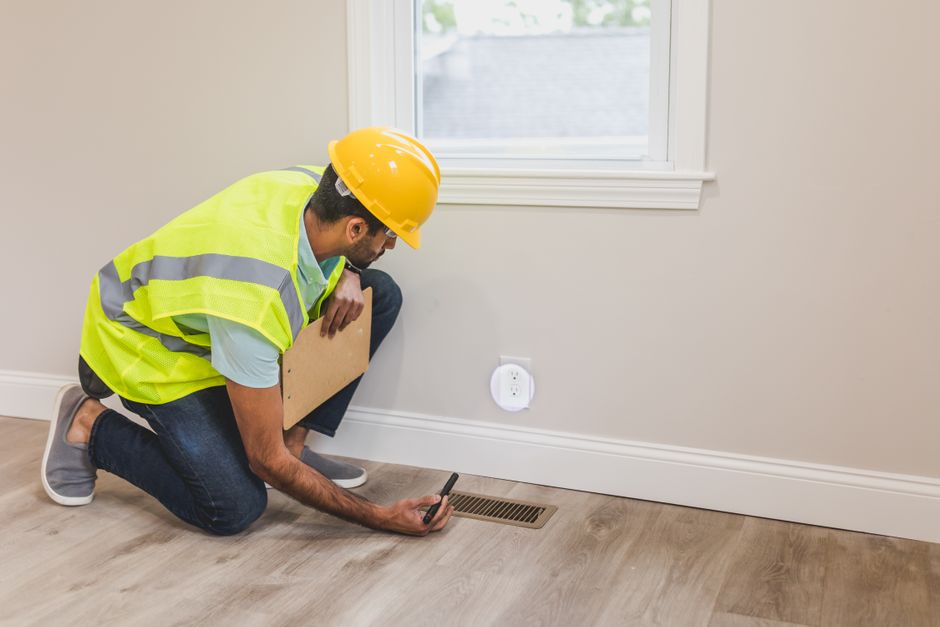
Most people think about solar panels and immediately start comparing quotes. Makes sense. The shiny hardware is exciting, the tax credit math is tangible, and installers are very happy to talk about kilowatts. What almost nobody tells you is that you might be designing an expensive system around a house that’s quietly leaking energy through a drafty attic or an oversized HVAC unit running inefficiently. I’ve watched homeowners spend $25,000 on solar and still end up with a bill because the audit conversation never happened.
Here’s what I tell people when they call me with their first solar quote in hand: the house comes first. Always.
A professional home energy audit typically runs between $150 and $500, depending on your region and how thorough you want to be. The U.S. Department of Energy has documented cases where simple efficiency upgrades, found during an audit, reduce a home’s energy load by 15 to 30 percent. That’s not a rounding error. That’s potentially two or three fewer solar panels you’d need to buy.
- A home energy audit ($150-$500) often reveals 15-30% reducible energy waste before you size a solar system.
- Oversizing your solar array around inefficiencies means paying for panels you wouldn't need after basic weatherization.
- Air sealing and insulation upgrades typically cost $1,000-$3,500 and can shrink your required system size significantly.
- Many utilities offer free or heavily subsidized audits, check before paying out of pocket.
- The 30% federal tax credit applies to solar costs, not efficiency upgrades, so reducing load first gives you a smaller, cheaper system that still qualifies.
Why Solar Installers Don’t Usually Bring This Up
I’ll be honest: this isn’t a conspiracy. Installers sell solar. That’s their job. They’re not being deceptive when they skip the efficiency conversation, they’re just outside their lane. The business model rewards selling more panels, not fewer. When I used to review installation proposals with clients, I noticed that system sizing almost always anchored to the last 12 months of electricity bills, no questions asked about why the usage was what it was.
That methodology works fine if your home is already tight. But if you’re running a 20-year-old central air system, or you’ve got two inches of attic insulation when code now calls for R-38, you’re baking inefficiency into your solar math permanently.
One client I worked with in Phoenix had a 2,200 sq ft home pulling $340 a month in summer. The installer quoted her a 9.8 kW system. After a utility-sponsored audit found serious duct leakage and a failing HVAC blower motor, she fixed both issues for about $2,100 total. Her usage dropped enough that a 7.2 kW system covered her needs, saving her roughly $6,400 on the solar install itself, more than triple what the audit and repairs cost.
What a Good Audit Actually Looks At
Helpful resource: Emporia Vue 2 Home Energy Monitor is a top-rated option for this. (As an Amazon Associate this site earns from qualifying purchases.)
A DIY walkthrough with a flashlight and a hand over your outlet covers is better than nothing. But a real audit is different in feel and depth. The auditor will usually show up with a blower door, which depressurizes your house to measure total air leakage, and an infrared camera that reveals cold spots invisible to the naked eye. The first time I watched an IR scan run on a 1990s ranch house, it looked like a heat map of poor decisions: light switches glowing blue, ceiling corners orange, an entire wall of an addition that was clearly never properly insulated. It’s genuinely surprising.
Here’s what gets measured in a thorough audit:
- Air sealing (blower door test quantifies leakage in CFM50, a standard metric auditors use to benchmark against similar homes)
- Insulation levels in attic, walls, and crawlspace, compared against current DOE recommendations for your climate zone
- HVAC efficiency (age, SEER rating, duct leakage if applicable)
- Water heating (often 15-18% of home energy use, and heat pump water heaters are a frequently missed opportunity)
- Lighting and major appliances, though this is usually a smaller lever
- Window and door performance, usually qualitative unless you’re in a very cold climate
The auditor should give you a written report with prioritized recommendations. If they hand you a list with no numbers attached, push back or find someone else.
The Audit-to-Solar Sizing Connection
This is the part that actually changes your quote. EnergySage’s market data shows the average residential solar installation in the U.S. currently runs around $2.95 per watt before incentives. That means every kilowatt you don’t need to install saves you roughly $2,950 before applying the 30% federal tax credit. Trim 2 kW off your required system size and you’ve saved close to $4,100 net.
Here’s a straightforward comparison of common audit findings and their impact on solar sizing:
| Finding | Typical Fix Cost | Estimated Load Reduction | Panels Avoided (approx.) | Net Savings on Solar |
|---|---|---|---|---|
| Attic air sealing + R-38 insulation upgrade | $1,200 - $2,800 | 8 - 15% | 1.5 - 2.5 kW | $3,100 - $5,200 |
| Duct sealing (leaky forced-air system) | $400 - $1,200 | 5 - 12% | 0.8 - 2 kW | $1,650 - $4,100 |
| Replace 15+ year old HVAC (low SEER) | $4,000 - $9,000 | 10 - 20% | 1.5 - 3.5 kW | $3,100 - $7,200 |
| Switch to heat pump water heater | $900 - $1,800 | 8 - 12% | 1 - 2 kW | $2,065 - $4,130 |
| LED lighting retrofit (whole house) | $150 - $400 | 2 - 5% | 0.3 - 0.8 kW | $620 - $1,650 |
Load reduction estimates based on DOE data and NREL modeling benchmarks. Savings on solar calculated at $2.95/W before the 30% ITC.
Not every fix makes financial sense on its own timeline. Replacing a 12-year-old HVAC that’s still functional is a big decision. But knowing how it affects your solar design is information you should have before you sign anything.
Finding an Auditor (and Knowing What You’re Paying For)
The Building Performance Institute (BPI) certifies energy auditors, and finding a BPI-certified professional is the easiest quality filter I know. Your state energy office or utility may have a list. As of July 2026, many investor-owned utilities still subsidize audits heavily, sometimes down to free, as part of demand-side management programs. I’d check your utility’s website before paying retail.
For a rough DIY picture while you wait, a plug-in energy monitor like the Emporia Vue 2 (around $70 on Amazon, the site may earn a commission) lets you monitor circuit-level consumption in real time. It won’t catch building envelope issues, but it will tell you immediately if your dryer, hot tub, or chest freezer is eating 20% of your monthly bill. Sometimes that one data point changes everything.
I thought for a long time that whole-home energy monitors were overkill for most people. Then a reader emailed me in April 2026 to say she’d discovered her 2017 refrigerator was drawing nearly 900 kWh per year, way above spec, due to a faulty compressor. She’d been about to add that load to her solar sizing. One $70 monitor and a $650 fridge replacement later, she dropped her system size by nearly 800 watts.
The Timing Question
You might be wondering: do I really need to do all of this before getting solar quotes? Or can I do them in parallel?
My honest answer: parallel is fine, sequential is better. Get the audit done, implement anything with a payback under 5 years, then request solar proposals based on your reduced load. The National Renewable Energy Laboratory (NREL) has published research showing that homes with recent efficiency upgrades tend to be better candidates for accurately-sized solar systems, which perform closer to projections over their 25-year warranties. Overbuilt systems aren’t dangerous, they’re just expensive.
If you’re on a tight timeline, at minimum share your audit findings with your solar installer and ask them to model two scenarios: one with your current load and one with the post-efficiency load. Any installer worth working with will do this without complaint.
Sources
- U.S. Department of Energy, Energy Saver: Home energy audit guidance, including typical savings ranges of 15-30%.
- National Renewable Energy Laboratory (NREL): Research on residential solar system sizing, performance projections, and efficiency interaction effects.
- EnergySage Market Data: Current solar installation pricing, including $/watt averages for residential systems.
- Building Performance Institute (BPI): Auditor certification standards and the CFM50 blower door methodology.
- ENERGY STAR, Heat Pump Water Heaters: Appliance efficiency data, including baseline water heating load percentages.
Photo: RDNE Stock project via Pexels
Recommended Resources
Disclosure: As an Amazon Associate, we earn a small commission from qualifying purchases at no extra cost to you. We only recommend products that genuinely support the topics covered in this article.
- Renogy 200W Solar Starter Kit + 30A Charge Controller (~$169), Complete beginner solar kit, 200W monocrystalline panel, charge controller, and mounting hardware included.
- EF EcoFlow DELTA 2 Portable Power Station (1024Wh) (~$599), 1024Wh LFP battery with 1800W output, top-rated solar generator for home backup power. Charges in under 2 hours.