 Alex Rivera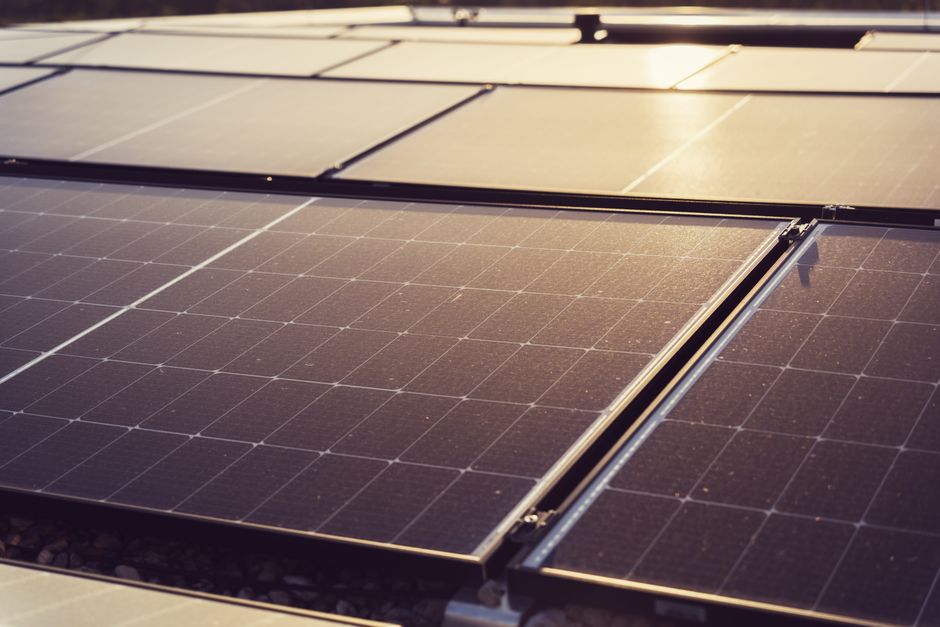
Most people who come to me asking about off-grid battery sizing have already made one of two mistakes: they’ve either grabbed a random number from a forum (“someone said 4 batteries is enough”) or they’ve gotten a quote from an installer that felt suspiciously round. I’ve sat across the table from both types. The honest answer is that the number of batteries you need is almost entirely driven by your specific load, your location, and how many days of cloudy weather you’re willing to survive on stored power alone.
That’s not a dodge. It’s just how the math works.
Let me walk you through how I actually size battery banks for off-grid systems, what the real numbers look like for typical households, and where people consistently get it wrong.
- Most off-grid homes need 2–4 days of battery autonomy, which typically means 20–40 kWh of usable storage.
- A "standard" 100Ah 12V battery holds only 1.2 kWh , you'll almost certainly need more than a handful.
- Lithium (LiFePO4) batteries can be discharged to 80–100%, while lead-acid should stop at 50% to preserve lifespan.
- System voltage (12V, 24V, or 48V) affects how many batteries wire together, not just how many you need total.
- The average off-grid home in the U.S. uses 30 kWh/day, but aggressive efficiency measures can cut that to 10–15 kWh.
Start with Your Daily Energy Use
Before anyone can tell you how many batteries you need, you need to know how much energy you actually consume in a day. Not a rough guess. A real number.
Pull your last 12 months of utility bills if you have them, because seasonal variation matters a lot. The average U.S. household uses about 29 kWh per day according to the U.S. Energy Information Administration, but off-grid homes that have gone through the exercise of auditing their loads tend to land much lower, often 8–15 kWh/day, once you’ve swapped out resistance heating, old refrigerators, and incandescent lighting.
I did this exercise with a family in rural New Mexico a couple of years back. They assumed they needed a massive system. When we went appliance by appliance with a Kill A Watt meter (about $25 on Amazon, and genuinely one of the most useful tools I’ve ever handed a client), their actual daily load came out to 11.4 kWh. Not 30. That changed everything downstream in the sizing calculation.
Your daily kWh number is the foundation. Get it wrong and every calculation after it is wrong too.
The Core Formula (And What It Actually Means)
Helpful resource: Renogy 100W 12V Flexible Solar Panel is a top-rated option for this. (As an Amazon Associate this site earns from qualifying purchases.)
Here’s the math I use, stripped of the jargon:
Battery bank size (kWh) = Daily kWh usage × Days of autonomy ÷ Depth of discharge
Days of autonomy is how many days you want to run without solar input at all, usually due to overcast weather. For most off-grid homes I work with, 2–3 days is a reasonable target. In the Pacific Northwest or Alaska, I’d push that to 4.
Depth of discharge (DoD) is where battery chemistry matters. Lead-acid batteries, including AGM and gel variants, shouldn’t go below 50% charge regularly or you’ll shorten their lifespan dramatically. Lithium iron phosphate (LiFePO4) batteries can safely discharge to 80–100% depending on the manufacturer.
So for that New Mexico family (11.4 kWh/day, 3 days of autonomy, using LiFePO4 at 90% DoD):
11.4 × 3 ÷ 0.90 = 38 kWh of battery capacity needed
If they’d chosen flooded lead-acid at 50% DoD: 11.4 × 3 ÷ 0.50 = 68.4 kWh. That’s nearly twice the battery bank for the same usable storage. This is one of the reasons I rarely recommend lead-acid for new off-grid builds anymore unless the budget truly can’t accommodate lithium.
How Many Physical Batteries Is That?
How Home Batteries Work: A Beginner's Guide · SolarQuotes on YouTube
This is where people get confused, because “how many batteries” depends entirely on the battery you’re buying and the voltage of your system.
A common budget battery like a Renogy 100Ah 12V AGM holds 1.2 kWh nominal. At 50% DoD, that’s 0.6 kWh usable per battery. To get 38 kWh usable at 50% DoD, you’d need roughly 64 of them. That’s not a typo.
With a 100Ah 48V lithium battery (like those from Ampere Time or EG4), each unit holds 4.8 kWh at full capacity and maybe 4.3 kWh usable. To hit 38 kWh, you need about 9 of them.
Same energy requirement. Wildly different physical counts.
This is exactly why the question “how many batteries do I need?” can’t be answered with a single number. The honest answer is always: it depends on the battery.
Comparing Common Battery Options for Off-Grid Use
| Battery Type | Typical Capacity | Usable DoD | Cycle Life | Approx. Cost (2026) | Best For |
|---|---|---|---|---|---|
| Flooded Lead-Acid (FLA) | 100–225Ah @ 12V | 50% | 500–800 cycles | $150–$300/unit | Tight budgets, DIY-tolerant owners |
| AGM | 100–200Ah @ 12V | 50% | 600–1,000 cycles | $200–$500/unit | Low-maintenance lead-acid users |
| LiFePO4 (12V, small) | 100Ah @ 12V | 80–90% | 2,000–5,000 cycles | $250–$400/unit | Van builds, small cabins |
| LiFePO4 (48V server rack) | 100–200Ah @ 48V | 90–95% | 3,500–6,000+ cycles | $800–$2,500/unit | Whole-home off-grid systems |
| Flow Battery (Vanadium) | Scales widely | 100% | 10,000+ cycles | $8,000–$20,000+ | Long-term, large installations |
As of August 2026, the 48V server rack LiFePO4 format (brands like EG4, Jakiper, and Redodo have become competitive) has really become the practical standard for serious off-grid builds. The price-per-kWh on those has dropped considerably over the past few years. NREL’s battery cost tracking consistently shows residential lithium storage costs declining year over year, and that’s showing up in real installer quotes now.
System Voltage and Wiring Configuration
This trips people up constantly. You don’t just buy N batteries and call it done. The way batteries connect changes the math.
Batteries wired in series add voltage (two 12V batteries in series = 24V system). Batteries wired in parallel add capacity (two 12V 100Ah batteries in parallel = 12V 200Ah). Most off-grid homes above a few kW of solar should be running a 48V system for efficiency reasons. At 48V, you wire four 12V batteries in series to form one “string,” then add more strings in parallel to grow capacity.
I used to think 24V systems were fine for mid-sized off-grid homes. I changed my mind after doing the wire sizing math on a 6kW system at 24V versus 48V. The wire gauge required at 24V was significantly heavier and more expensive, and the inverter efficiency was measurably worse. The Solar Energy Industries Association has noted that 48V has become the de facto standard for residential off-grid inverter-chargers, and the product availability at 48V is just vastly better now.
A Few Real-World Scenarios
Scenario 1: Small off-grid cabin, occasional weekend use, 5 kWh/day → 48V system, 2 days autonomy, LiFePO4 at 90% DoD → 11.1 kWh needed → 2–3 server rack batteries. Cost: roughly $2,000–$4,500 for batteries alone.
Scenario 2: Full-time off-grid family home, 15 kWh/day, rural Montana (cloudy winters) → 3–4 days autonomy, LiFePO4 → 50–67 kWh needed → 12–16 server rack batteries at 48V/100Ah → Battery cost alone: $12,000–$25,000. This is why full off-grid in cloudy climates often pairs oversized solar with a backup generator to shorten the required autonomy days rather than buying 20 batteries.
Scenario 3: Van or RV conversion, 2–3 kWh/day → 1–2 days autonomy, LiFePO4 at 85% DoD → 2.4–7 kWh needed → 2–6 of the 12V 100Ah lithium batteries → Cost: $600–$2,000. The Renogy 12V 100Ah LiFePO4 is the one I’ve seen hold up best for mobile applications over years of recommendations.
Sources
- U.S. Energy Information Administration (EIA): Residential electricity consumption data, average household usage figures
- National Renewable Energy Laboratory (NREL): Battery storage cost trends, residential solar-plus-storage data
- Solar Energy Industries Association (SEIA): U.S. solar and storage market data, industry standards
- NREL: Residential Solar-plus-Storage System Cost Benchmark: Battery system cost breakdown and efficiency benchmarks
- Battery manufacturer specification sheets: Renogy, EG4, Ampere Time (Lithium LiFePO4 cycle life and DoD ratings, verified 2025–2026)
Photo: Michael Pointner via Pexels
Recommended Resources
Disclosure: As an Amazon Associate, we earn a small commission from qualifying purchases at no extra cost to you. We only recommend products that genuinely support the topics covered in this article.
- Renogy 200W Solar Starter Kit + 30A Charge Controller (~$169), Complete beginner solar kit, 200W monocrystalline panel, charge controller, and mounting hardware included.
- EF EcoFlow DELTA 2 Portable Power Station (1024Wh) (~$599), 1024Wh LFP battery with 1800W output, top-rated solar generator for home backup power. Charges in under 2 hours.