 Derek Hansen
The average American home pulls about 10,500 kilowatt-hours of electricity every year, according to the U.S. Energy Information Administration. Sounds massive until you realize a typical solar setup of just 8 to 10 panels can handle a real chunk of that. But here’s what sales reps conveniently skip during that first phone call: the “right” number of panels has almost nothing to do with national averages. It comes down to your specific roof, your location, your actual habits, and how much of your electric bill you’re willing to eliminate.
The Real Formula: What Actually Determines Panel Count
Most online calculators spit out a number in 30 seconds flat. Those numbers aren’t worthless, but they skip several variables that can shift your system size by 30% or more.
The basic math is simple. Annual electricity consumption in kilowatt-hours, divided by annual production per kilowatt in your region, divided by individual panel wattage. That gives you a rough starting point.
Here’s what that looks like when you actually run the numbers:
- A home using 10,500 kWh per year in Denver, Colorado
- Denver gets roughly 5.5 peak sun hours daily, which equals about 1,825 kWh of annual production per kW installed (accounting for typical system losses)
- With 400-watt panels (the current standard), you’d need: 10,500 / 1,825 = 5.75 kW divided by 0.4 kW per panel = roughly 14 to 15 panels
Take that same house to Seattle, where peak sun hours drop to 3.5 daily, and you’re suddenly looking at 22 to 23 panels for the same output. Same house. Nearly 60% more panels. That’s why location matters so much.
Your Electricity Bill: The Starting Point You Can’t Skip
Helpful resource: Jackery Explorer 300 Portable Power Station is a top-rated option for this. (As an Amazon Associate this site earns from qualifying purchases.)
Before anything else, grab 12 months of electricity bills. Not just last month, twelve full months. Seasonal swings are real, and a single summer bill from Texas or a winter bill from Minnesota will throw you off completely.
Look for your annual kWh usage, which most utilities now print straight on the bill. If yours doesn’t, add up the kWh across 12 months.
A few things to watch:
Electric vehicles. A Level 2 EV charger can add 3,000 to 4,500 kWh annually to your household, depending on driving habits. I’ve seen people get quotes for 10-panel systems, then buy an EV six months later and still face significant bills.
Upcoming changes. Planning to add central air? Finish the basement? Have a kid moving back in? Size for where you’re going, not where you are.
Efficiency improvements. If you’re replacing an old HVAC or adding attic insulation, your usage may drop. Don’t overbuild based on a house you’re about to fix.
For real precision before committing, a home energy monitor like the Emporia Vue 2 (available on Amazon) breaks your usage down by circuit and shows you exactly where energy’s disappearing. (Note: this site may earn a commission on qualifying purchases.)
Roof Factors That Change Everything
What Type of Solar Panel Should You Buy? · The Solar Lab on YouTube
You could have perfect usage numbers and the sunniest yard around, but if your roof doesn’t cooperate, the math breaks down fast.
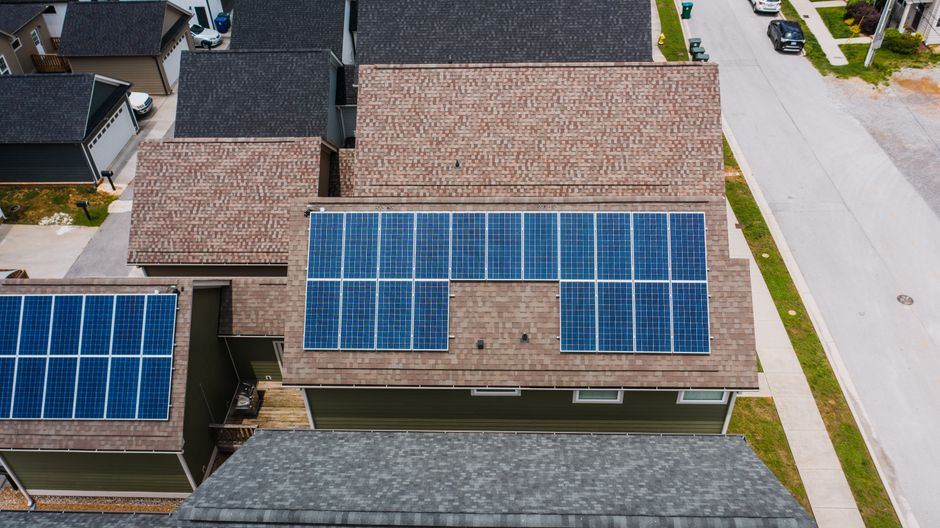
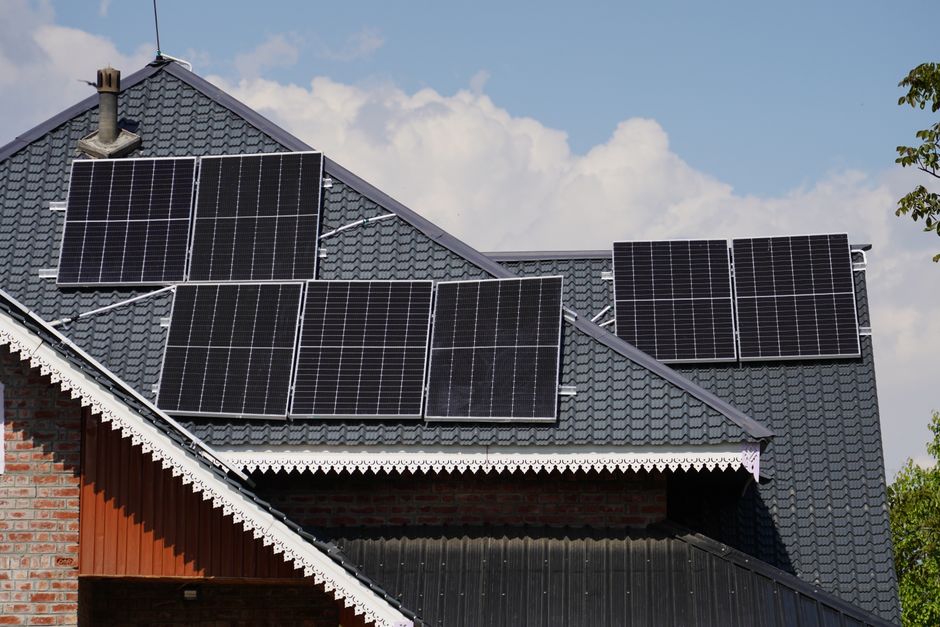
Orientation. South-facing roofs in the Northern Hemisphere produce roughly 10 to 25% more power than east- or west-facing ones. North-facing is genuinely bad and often not worth installing on. Most installers call east and west “fine,” which they are technically, but you’ll need more panels for the same output.
Tilt angle. Between 15 and 40 degrees works well across most of the continental U.S. Very flat roofs (under 10 degrees) can use tilt mounts, but that costs extra.
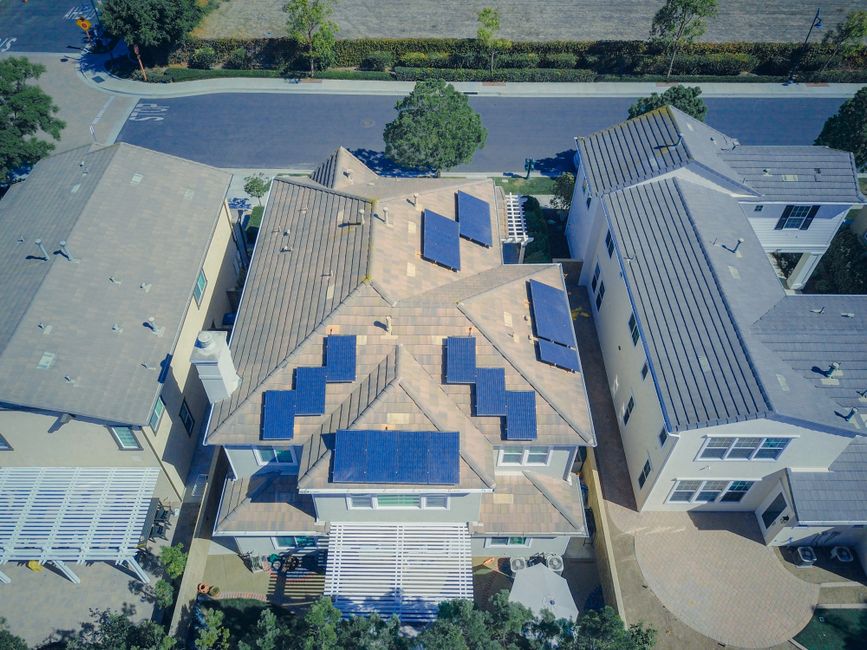
Shading. This kills more solar projects than anything else. A single chimney shadow hitting even two or three panels crushes output significantly, especially with older string inverter tech. Microinverters or DC optimizers (Enphase, SolarEdge) reduce shade losses at the panel level, but shading still eats production. If trees are in play, get an actual shade analysis done, not a guess.
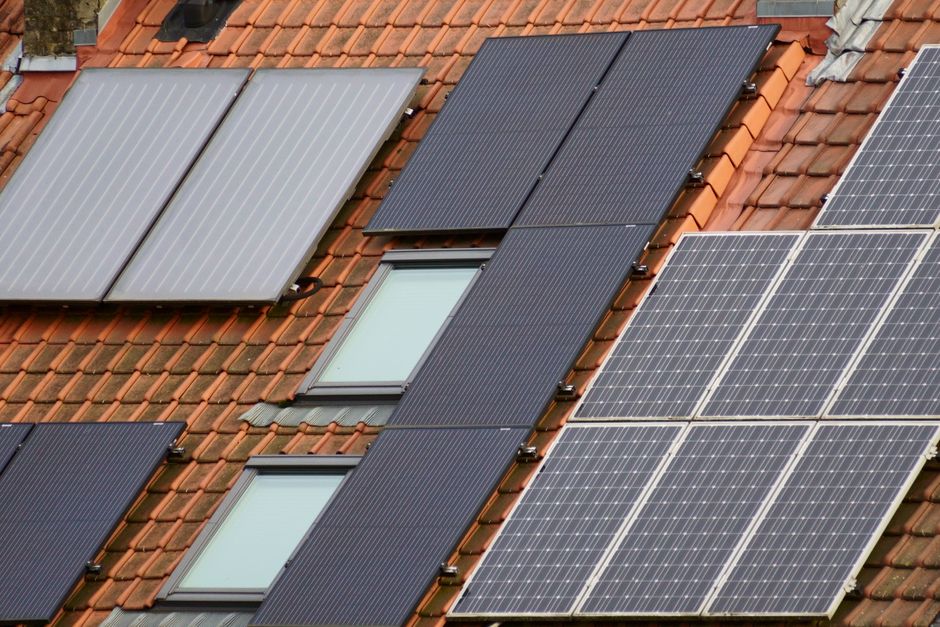
Usable roof space. A 400-watt panel takes up roughly 22 square feet. A 15-panel system needs about 330 square feet of open, properly oriented space. Skylights, vents, chimneys, and dormers all take their share.
Panel Wattage and Efficiency: Does It Actually Matter?
| Panel Wattage | Panels Needed | Approx. Roof Space Required | |—————|—————|—————————–|| | 300W | 24 panels | ~528 sq ft | | 370W | 19 panels | ~418 sq ft | | 400W | 18 panels | ~396 sq ft | | 430W | 17 panels | ~374 sq ft |
A decade ago, premium panels hit 250 watts. Today, mainstream residential panels range from 370 to 430 watts, with high-efficiency models like the Maxeon 7 pushing past 440 watts. Higher wattage means fewer panels for the same system size, which matters hugely when roof space is tight.
Quick breakdown of what different panel tiers mean for a 7 kW system:
| Panel Wattage | Panels Needed | Approx. Roof Space Required |
|---|---|---|
| 300W | 24 panels | ~528 sq ft |
| 370W | 19 panels | ~418 sq ft |
| 400W | 18 panels | ~396 sq ft |
| 430W | 17 panels | ~374 sq ft |
The efficiency jump from 300W to 400W isn’t just about fewer panels. Higher-efficiency panels also handle heat and low-light better, which matters in the Southeast or Pacific Northwest.
Don’t let a salesperson pressure you into a 30% premium for high-efficiency panels just because they sound better, unless you actually have a constrained roof. EnergySage’s market data shows that mid-tier panels from Qcells or REC Group deliver excellent performance at significantly lower cost per watt than premium brands for typical residential installations.
How to Actually Calculate Your System Size: Step by Step
Here’s how I’d approach this if I were sitting at your kitchen table.
Step 1: Find your annual kWh usage. Log into your utility account or add up 12 months of bills. Let’s say it’s 12,000 kWh.
Step 2: Decide your offset goal. Most people aim for 80 to 100% offset. Strong net metering policies make 100% more attractive. If your state has bad net metering (California’s NEM 3.0 is a killer), oversizing won’t pay off like it used to.
Let’s target 100%: 12,000 kWh.
Step 3: Find your production ratio. The National Renewable Energy Laboratory’s PVWatts tool is the standard here. Plug in your zip code, roof angle, and orientation, it’ll give you expected annual production per kW installed. Let’s say PVWatts shows 1,500 kWh per kW per year (reasonable for mid-Atlantic).
Step 4: Calculate system size in kW. 12,000 kWh / 1,500 kWh per kW = 8 kW system
Step 5: Calculate panel count. 8,000 watts / 400 watts per panel = 20 panels
Step 6: Sanity check your roof. 20 panels x 22 sq ft = 440 sq ft of usable space needed. Do you have it? Any shading issues that require microinverters?
That’s your estimate. A real installer refines it with satellite imagery and possibly a site visit, but you’ll walk into that conversation informed.
After installation, a solar monitoring device like the Emporia Energy Solar Monitor (on Amazon) lets you track whether your panels deliver what was promised. (Note: this site may earn a commission on qualifying purchases.)
When Fewer Panels Is Actually the Right Answer
I need to be straight about something the solar industry often dodges: more isn’t always better.
If your utility only credits excess generation at the “avoided cost rate” (sometimes 3 to 5 cents per kWh, versus your retail rate of 12 to 20+ cents), then surplus power you generate is basically a gift to the utility. Building a larger system to “cover everything” delivers terrible returns on those extra panels.
In that case, sizing to cover 80 to 90% of your daytime load and pairing the system with a battery like the Tesla Powerwall or Enphase IQ Battery makes more sense. You capture surplus and use it when the grid rate is worse.
Battery storage is its own topic, but here’s the point: if you’re considering batteries, your optimal panel count shifts because you can now use more of what you generate.
The honest answer to “how many panels do I need” is that it takes about 20 minutes of real work to get right. Run the numbers in PVWatts, pull your actual usage data, and think about where your energy consumption is headed over the next 5 to 10 years. The homeowners happiest with their solar systems understood the math before signing anything.
Sources
- Jackery Explorer 300 Portable Power Station
- Emporia Vue 2 (available on Amazon)
- Emporia Energy Solar Monitor (on Amazon)
- Emporia Vue 2 Home Energy Monitor
- Jackery SolarSaga 100W Solar Panel
Disclosure: As an Amazon Associate, we earn a small commission from qualifying purchases at no extra cost to you. We only recommend products that genuinely support the topics covered in this article.
- Renogy 200W Solar Starter Kit + 30A Charge Controller (~$169), Complete beginner solar kit, 200W monocrystalline panel, charge controller, and mounting hardware included.
- EF EcoFlow DELTA 2 Portable Power Station (1024Wh) (~$599), 1024Wh LFP battery with 1800W output, top-rated solar generator for home backup power. Charges in under 2 hours.
- Renogy 2×100W Monocrystalline Solar Panels (~$99), Expandable 200W panel set from the most trusted DIY solar brand, used widely in off-grid and home backup systems.
Recommended Resources
Disclosure: As an Amazon Associate, we earn a small commission from qualifying purchases at no extra cost to you. We only recommend products that genuinely support the topics covered in this article.
- Renogy 200W Solar Starter Kit + 30A Charge Controller (~$169), Complete beginner solar kit, 200W monocrystalline panel, charge controller, and mounting hardware included.
- EF EcoFlow DELTA 2 Portable Power Station (1024Wh) (~$599), 1024Wh LFP battery with 1800W output, top-rated solar generator for home backup power. Charges in under 2 hours.