 Craig Stevens
The average American household spends about $1,500 a year on electricity. Over 25 years, that’s $37,500 flowing straight to your utility company, and that’s before accounting for the rate increases that have averaged around 2-3% annually for the past decade. So when a solar installer quotes you $25,000 for a rooftop system, the sticker shock hits hard. But that number only tells part of the story. Here’s what solar panels actually cost in 2026, and more importantly, what they’ll really cost you after the dust settles.
What Solar Panels Actually Cost in 2026
Let’s start with the raw numbers. According to data tracked by EnergySage and corroborated by installer pricing across major markets, the average cost of a residential solar installation in 2026 sits between $2.80 and $3.50 per watt before incentives. For a typical 8-kilowatt (kW) system, that puts the gross price somewhere between $22,400 and $28,000.
Here’s a quick breakdown by system size:
| System Size | Avg. Gross Cost | After 30% Federal Tax Credit |
|---|---|---|
| 5 kW | $15,000, $17,500 | $10,500, $12,250 |
| 8 kW | $22,400, $28,000 | $15,680, $19,600 |
| 10 kW | $28,000, $35,000 | $19,600, $24,500 |
| 12 kW | $33,600, $42,000 | $23,520, $29,400 |
The right system size depends on your annual electricity consumption. A home using 10,000 kWh per year typically needs a 7-9 kW system, depending on how much sun your roof gets and the panel efficiency you choose.
Panel prices have dropped dramatically over the past 15 years. In 2010, residential solar cost over $7 per watt. That decline has slowed considerably. We’re not seeing the year-over-year price drops of the early 2010s anymore. The equipment cost is a fairly mature market now. What actually moves the needle on your quote today is labor, permitting, installer margin, and your specific roof situation.
The Federal Tax Credit: Still 30% in 2026 (For Now)
Helpful resource: Renogy 100W 12V Flexible Solar Panel is a top-rated option for this. (As an Amazon Associate this site earns from qualifying purchases.)
The Investment Tax Credit (ITC) is the single most important financial lever for most homeowners. In 2026, it remains at 30% of your total system cost, including installation labor and equipment. Pay $25,000 for a system, get a $7,500 credit directly off your federal income tax bill. Not a deduction. A credit.
A few things people get wrong about the ITC:
You need a tax liability to use it. The credit reduces what you owe the IRS. If you only owe $3,000 in federal taxes this year, you only capture $3,000 of a $7,500 credit. The good news is the ITC is rollable. Carry the unused portion forward to subsequent tax years.
It applies to battery storage too. If you add a home battery like the Tesla Powerwall or Enphase IQ Battery to your system, the full battery cost qualifies for the 30% credit as well, provided it’s charged by solar.
It doesn’t last forever at 30%. Under current law established by the Inflation Reduction Act, the 30% rate runs through 2032, then steps down to 26% in 2033 and 22% in 2034, before expiring for residential installations in 2035. There’s always legislative uncertainty, so don’t assume it’ll be extended.
Beyond the federal credit, 37 states offer additional incentives ranging from property tax exemptions (so your home value increase from solar doesn’t raise your property tax bill) to state income tax credits and net metering programs. The U.S. Department of Energy’s homeowner guide to going solar has a solid breakdown of how to stack these incentives.
What Drives Your Specific Quote Up or Down
Payback Period for Offgrid Solar Power System's: How much $$$ do I actually save?? · DIY Solar Power with Will Prowse on YouTube
This is where most solar articles fail homeowners. They quote averages, but your quote isn’t average. It’s shaped by six key factors that vary wildly from one house to the next.
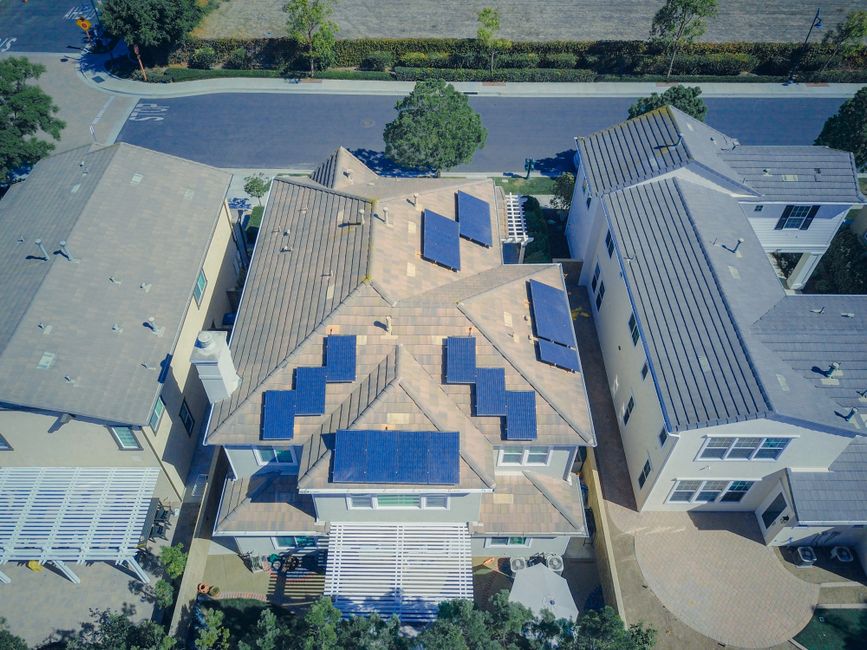
1. Roof condition and complexity. A simple south-facing roof with no shading and recent installation is a solar installer’s dream. Add multiple roof planes, dormers, skylights, or a roof that needs replacing in 5 years, and costs climb fast. I’ve seen roof-related complexity add $2,000-$5,000 to an otherwise standard quote.
2. Panel type. Monocrystalline panels are the current standard for residential installs. Premium options like the SunPower Maxeon or REC Alpha hit 22-23% efficiency but cost 15-25% more per watt than mid-tier panels. If roof space is tight, premium efficiency makes sense. If you have plenty of room, a quality mid-tier panel from a brand like Qcells or Canadian Solar will likely pencil out better.
3. Inverter technology. String inverters are the cheapest option. Microinverters (Enphase dominates this market) or power optimizers (SolarEdge’s name) cost more upfront but offer panel-level performance monitoring and better output if you have any shading. Microinverters add roughly $0.20-$0.40 per watt to your system cost. For most shaded roofs, that premium pays for itself.
4. Your utility’s net metering policy. Net metering is what makes solar math work in most states. It lets you “bank” excess solar energy with your utility at retail rates. But several states have weakened their net metering programs in recent years, most notably California’s NEM 3.0 changes in 2023 that cut export compensation by roughly 75%. Poor net metering stretches your payback period considerably.
5. Local permitting and interconnection fees. Some municipalities charge $200 for a permit. Others charge $1,500 and have an 8-week backlog. Installers typically roll this into your quote, but it’s worth asking what you’re paying line-item.
6. Installer competition in your market. Metro areas with dozens of solar companies have compressed margins and sharper prices. Rural or less-populated markets might have only two or three contractors, and prices reflect that scarcity. Always get at least three quotes. EnergySage’s data consistently shows that homeowners who get multiple quotes save an average of 20% compared to those who go with the first proposal.
Financing Options: Cash, Loan, or Lease?
How you pay for solar affects your total cost dramatically.
Cash purchase is always the financially optimal choice if you can swing it. You capture the full tax credit, own the system outright, and your payback period typically runs 7-11 years, after which you’re generating essentially free electricity for the remaining 14-18 years of the system’s life.
Solar loans are the most popular financing method today, used in roughly 60% of residential installs. A common structure is a 12-year loan at 5-8% interest. Your monthly payment often comes close to matching your current electric bill, which is the pitch installers use. What they don’t always emphasize: a $25,000 loan at 7% over 12 years costs you about $7,400 in interest, which eats into your savings. Shop loan rates aggressively. Credit unions often beat the installer’s preferred lender.
Solar leases and PPAs (Power Purchase Agreements) let you go solar with little or no money down, but you don’t own the system, so you don’t get the tax credit. The installer does. Your savings are typically smaller, and the contracts run 20-25 years with escalator clauses. Leases can also complicate home sales. I’d steer most homeowners toward a loan over a lease unless you genuinely can’t qualify for financing or have no federal tax liability.
How to Compare Solar Quotes: A Step-by-Step Approach
Getting quotes is easy. Comparing them intelligently is harder.
Step 1: Normalize by cost per watt. Divide total system price by system size in watts. A $28,000 quote for a 9 kW system is $3.11/watt. A $24,000 quote for a 7.5 kW system is $3.20/watt. Now you’re comparing apples to apples.
Step 2: Check the production estimate. Every proposal should include a Year 1 production estimate in kWh. Compare that against NREL’s PVWatts calculator, a free tool that lets you input your address and system specs to get an independent production estimate. If an installer’s number is more than 10% above PVWatts, ask why.
Step 3: Look at panel and inverter brands. Ask for spec sheets. Check the panel’s efficiency rating, temperature coefficient, and warranty (25-year product and performance warranties are now standard from reputable brands). Cheap no-name panels with a 10-year warranty are a red flag.
Step 4: Understand the warranty coverage. Good installers offer a workmanship warranty of at least 10 years. Some offer 25. This matters because roof penetrations and electrical connections are where problems show up years later.
Step 5: Run your own payback calculation. Take your estimated annual savings (Year 1 production estimate times your per-kWh electricity rate), divide your net system cost (after tax credit) by that number. That’s your simple payback period. A 7-9 year payback on a system with a 25-year lifespan is a solid investment.
To monitor your system’s output once it’s installed, a home energy monitor like the Emporia Vue Energy Monitor (available on Amazon, and yes, this site may earn a commission) can give you whole-home visibility into production and consumption, not just what your inverter app shows.
When Solar Doesn’t Make Financial Sense
I’ll say what a lot of installers won’t. Solar doesn’t pencil out for everyone, and pushing it on the wrong homeowner does real damage.
If your electricity rate is below $0.10/kWh, your payback period will likely stretch past 15 years. Some rural co-ops and parts of the Southeast have rates this low. Solar is still viable in some of these markets, but the math needs careful scrutiny.
If you’re moving in 3-5 years, the calculus gets complicated. Solar does add home value (Lawrence Berkeley National Laboratory research puts it at about $4 per watt on average), but realizing that value depends on your buyer’s market, your real estate agent’s ability to articulate the benefit, and whether you own the system outright. A leased system can actively make a home harder to sell.
If your roof needs replacement within 5-10 years, do the roof first. Removing and reinstalling a solar array typically costs $1,500-$3,500 and it’s rarely covered by either the roofer or the solar installer.
If your roof faces mostly east-west or has heavy shading, your production numbers will be significantly reduced. East-west facing systems aren’t disqualifying, but they might only produce 80% of what a south-facing system would. Run the numbers honestly.
Solar in 2026 is a mature, well-understood investment with real financial upside for millions of homeowners, but it’s not right for everyone at every price point. Get three quotes, run the numbers yourself with tools like PVWatts, understand your tax situation before banking on the ITC, and ask hard questions about net metering in your specific utility territory. The homeowners who get burned on solar are almost always the ones who skipped the homework.
Sources
- EnergySage
- Renogy 100W 12V Flexible Solar Panel
- U.S. Department of Energy’s homeowner guide to going solar
- NREL’s PVWatts calculator
- Emporia Vue Energy Monitor
Disclosure: As an Amazon Associate, we earn a small commission from qualifying purchases at no extra cost to you. We only recommend products that genuinely support the topics covered in this article.
- Renogy 200W Solar Starter Kit + 30A Charge Controller (~$169), Complete beginner solar kit, 200W monocrystalline panel, charge controller, and mounting hardware included.
- EF EcoFlow DELTA 2 Portable Power Station (1024Wh) (~$599), 1024Wh LFP battery with 1800W output, top-rated solar generator for home backup power. Charges in under 2 hours.
- Renogy 2×100W Monocrystalline Solar Panels (~$99), Expandable 200W panel set from the most trusted DIY solar brand, used widely in off-grid and home backup systems.
Photo: K via Pexels
Recommended Resources
Disclosure: As an Amazon Associate, we earn a small commission from qualifying purchases at no extra cost to you. We only recommend products that genuinely support the topics covered in this article.
- Renogy 200W Solar Starter Kit + 30A Charge Controller (~$169), Complete beginner solar kit, 200W monocrystalline panel, charge controller, and mounting hardware included.
- EF EcoFlow DELTA 2 Portable Power Station (1024Wh) (~$599), 1024Wh LFP battery with 1800W output, top-rated solar generator for home backup power. Charges in under 2 hours.
- Renogy 2×100W Monocrystalline Solar Panels (~$99), Expandable 200W panel set from the most trusted DIY solar brand, used widely in off-grid and home backup systems.