 Alex Rivera
The average American home gains about $15,000 in resale value after a solar installation. That number gets quoted constantly by solar salespeople, and I’ll be honest: it’s not wrong, but it’s also not the whole story. That figure comes from a 2019 Zillow analysis, and when you actually look at what’s behind it, the picture gets both more interesting and more complicated than any installer is going to tell you sitting at your kitchen table.
I’ve spent a lot of time with homeowners trying to figure out whether solar is a smart financial move, and the resale value question is one of the trickiest because the answer genuinely varies by so much depending on where you live, how you bought the system, and what the local real estate market is doing. Let me walk you through what the data actually says.
The ownership structure of your solar system dramatically affects how buyers and lenders perceive your home's value.
| Factor | Owned System | Leased / PPA |
|---|---|---|
| Appraised value increase | $3-$4 per watt typical (e.g., $18K-$24K for 6kW) | Often $0, system is not homeowner's asset |
| Buyer perception | Viewed as home upgrade (like a new roof) | Viewed as transferred debt obligation |
| Sale complexity | Transfers with property at closing | Requires lease transfer approval; some buyers walk |
| Lender treatment | Included in collateral value | Monthly payment may count against buyer's DTI ratio |
| Negotiation leverage | Seller can highlight lifetime savings | Seller may need to buy out lease ($5K-$20K typical) to close deal |
| Best-case scenario | Full premium in high-rate state with solar-savvy appraiser | Buyer is comfortable assuming lease; no discount demanded |
| Worst-case scenario | Appraiser finds no comps; premium undervalued | Deal falls through or seller pays buyout plus price reduction |
General information for comparison, confirm specifics for your situation.
The Core Number, and Why It’s Slippery
Two major studies keep coming up in this conversation. The Lawrence Berkeley National Laboratory found that buyers paid roughly $4 per watt of installed solar capacity, which works out to about $24,000 on a typical 6-kilowatt system. Zillow separately calculated that solar homes sold for 4.1% more on average, or $16,400 on a $400,000 home.
Same ballpark, different numbers. The research isn’t exactly mixed, but it’s not as tidy as “solar adds $X to your home” either.
What actually determines your premium:
- Your electricity rates. California, Massachusetts, and Connecticut show bigger premiums because power’s more expensive there.
- Ownership type. Owned systems command premiums. Leased ones often don’t.
- How old the system is. A brand-new installation with 25 years of warranty left is worth way more than a 12-year-old system.
- Local market familiarity. Where solar’s everywhere, appraisers understand it. Where it’s still unusual, they sometimes can’t find “comps” and assign the system almost no value.
That last point catches people off guard. An appraiser in Boulder, Colorado probably sees solar houses weekly. An appraiser in rural Missouri might see one every five years.
Owned Systems vs. Leased Systems: This Is Where It Gets Serious
I can’t stress this enough: a leased solar system or one under a power purchase agreement doesn’t add value to your home the way an owned system does. It can actually kill a sale.
When you lease panels, you don’t own them. The solar company does. When you sell, the buyer either assumes the lease payments or you buy out the contract, which typically runs $5,000 to $20,000 depending on years remaining. I’ve watched real estate agents describe deals that evaporated because buyers wouldn’t touch the lease or didn’t qualify for the transfer.
Owned systems? Completely different animal. According to EnergySage’s market data, homeowners who buy outright (cash or a paid-off solar loan) capture that $4/watt premium much more reliably. The difference is stark enough that if you’re not planning to stay 20+ years, how you finance matters enormously.
How Location Warps the Math
How to Choose the RIGHT Solar Panels for Your Home · SolarQuotes on YouTube
The geographic data surprised me the most. The premium isn’t evenly distributed across the country.
A Fannie Mae analysis and work from the National Renewable Energy Laboratory (NREL) both found that high-electricity-rate states show the largest solar premiums. It’s straightforward: a solar system in Massachusetts, where residential power costs around 25 cents per kilowatt-hour, saves more money annually than the identical system in Louisiana at 11 cents. Buyers understand this. Higher savings means higher value.
California has seen premiums hit $5 or $6 per watt in some markets. The Midwest and South often see $2 to $3 per watt. Sometimes less.
Don’t assume the $15,000 national average applies to your Des Moines or Baton Rouge house. It probably doesn’t.
The Appraisal Problem Nobody Talks About
Even when buyers will pay more for solar, that premium has to survive the appraisal. This is where things quietly fall apart.
Appraisers are supposed to use an “income approach” to value solar, calculating the present value of future electricity savings. Some do this right. Many don’t, especially in markets where solar is still rare and there aren’t recent “solar comps” to reference.
A reader emailed me last spring about exactly this. She’d accepted an offer $18,000 above asking because the buyers specifically wanted the solar. Then the appraisal came back with zero value assigned to the system. The deal nearly collapsed. They had to renegotiate.
It’s a real risk. If you’re selling a solar home, find a real estate agent with experience selling solar properties. Request an appraiser with PV (photovoltaic) valuation training if possible. The Appraisal Institute offers specific credentials for this work, though not every appraiser pursues them.
Does System Age Matter?
Absolutely. A brand-new 8kW system with 25 years of warranty is worth way more than a 15-year-old 4kW system with degraded panels and an inverter that needs replacement soon.
Solar panels lose roughly 0.5% of output yearly. A 10-year-old system produces about 95% of its original output, which isn’t terrible. But older systems also mean older inverters (string inverters typically last 10-15 years, so replace-ment might cost $1,000 to $2,000), and older monitoring equipment.
If you’re buying a home with existing solar, ask for monitoring data. Most modern systems show production history in an app. No data? That’s a warning sign. A tool like the Emporia Vue (note: this site may earn a commission on purchases) can help you understand what an existing system actually produces before you commit.
What Buyers Actually Pay For
Here’s my honest assessment: buyers don’t pay a premium for solar as technology. They pay for electricity cost certainty.
The real hook isn’t “we have panels.” It’s “our electric bill was $38 a month last year, here’s proof.” That’s what makes buyers lean forward. A $400 annual bill versus $2,400? That translates directly into monthly cash flow and mortgage payment math.
This means how you document your system’s production matters more than most sellers realize. Keep your utility bills. Export your monitoring data. Have annual reports ready. If your system has been producing, prove it. That documentation translates into actual money.
The $15,000 figure isn’t made up, but it’s a national average that hides a huge range of outcomes. In San Jose, you might see $30,000. In a rural Midwest market with low electricity rates and appraisers who’ve never valued solar, it might be close to zero. The honest answer is that solar’s value is real and often substantial, especially if you own it outright, you’re in a high-rate state, and you have production records to back it up. Get those three things right and the premium becomes more than just marketing talk.
Sources
- EnergySage’s market data
- the National Renewable Energy Laboratory (NREL)
- Emporia Vue
- Lutron Caséta Wireless Smart Dimmer Kit
- Renogy 100W 12V Flexible Solar Panel
Disclosure: As an Amazon Associate, we earn a small commission from qualifying purchases at no extra cost to you. We only recommend products that genuinely support the topics covered in this article.
- Renogy 200W Solar Starter Kit + 30A Charge Controller (~$169), Complete beginner solar kit, 200W monocrystalline panel, charge controller, and mounting hardware included.
- EF EcoFlow DELTA 2 Portable Power Station (1024Wh) (~$599), 1024Wh LFP battery with 1800W output, top-rated solar generator for home backup power. Charges in under 2 hours.
- Renogy 2×100W Monocrystalline Solar Panels (~$99), Expandable 200W panel set from the most trusted DIY solar brand, used widely in off-grid and home backup systems.
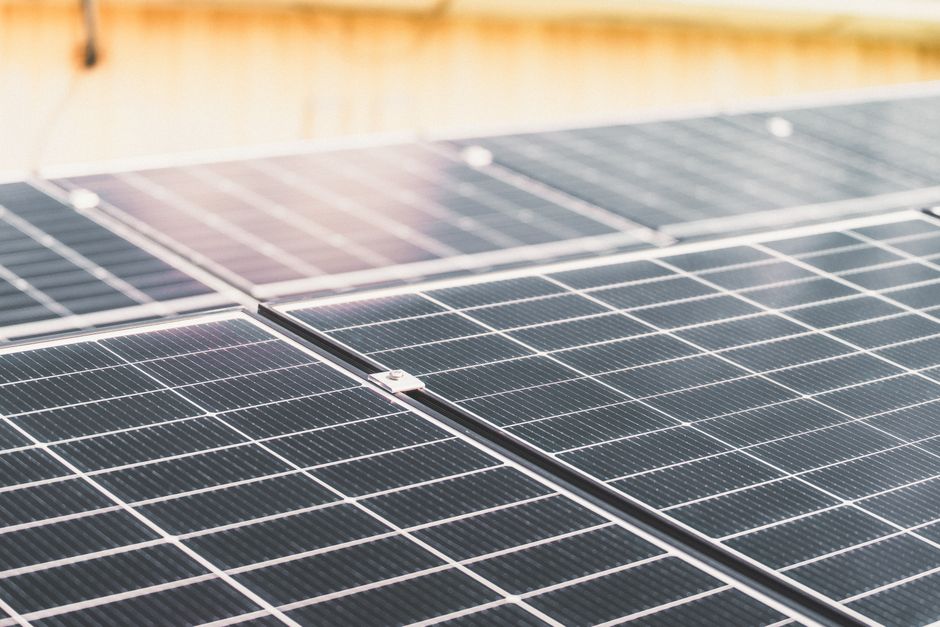
Photo: Ollie Craig via Pexels
Recommended Resources
Disclosure: As an Amazon Associate, we earn a small commission from qualifying purchases at no extra cost to you. We only recommend products that genuinely support the topics covered in this article.
- Renogy 200W Solar Starter Kit + 30A Charge Controller (~$169), Complete beginner solar kit, 200W monocrystalline panel, charge controller, and mounting hardware included.
- EF EcoFlow DELTA 2 Portable Power Station (1024Wh) (~$599), 1024Wh LFP battery with 1800W output, top-rated solar generator for home backup power. Charges in under 2 hours.
- Renogy 2×100W Monocrystalline Solar Panels (~$99), Expandable 200W panel set from the most trusted DIY solar brand, used widely in off-grid and home backup systems.