 Alex Rivera
If you’ve been getting quotes for solar lately, you might be wondering why the numbers don’t seem to add up the way they did a few years ago. Your neighbor installed panels in 2021 and talks about nearly zeroing out his electric bill. Your quote for a similar system today doesn’t come close to that. You’re not imagining it. The economics of residential solar have shifted in a meaningful way, and the sizing formula that worked brilliantly for years is now actively working against a lot of homeowners.
A BloombergNEF report released June 15, 2026 puts a number on the slowdown: the U.S. is projected to add just 4.1 GW of residential solar this year, down 15% from 2025 and the lowest five-year total we’ve seen. Part of that is the sunsetting of the 30% federal tax credit under the One Big Beautiful Bill Act. But a bigger part is something more structural. The classic sizing strategy, oversize your array and let the grid act as your free battery, is collapsing under the weight of net metering changes spreading state by state.
The Export Credit Problem Is Not Just a California Thing Anymore
| State/Utility | Export Credit Rate | Peak Rate Window | Net Metering Status | Key Deadline |
|---|---|---|---|---|
| California (NEM 3.0) | $0.05-$0.08/kWh | 4-9 p.m. | Low export credits | Current |
| Massachusetts | ~$0.30/kWh | Varies | Full retail net metering | N/A |
| Pennsylvania (PPL) | LMP (40-60% reduction proposed) | Varies | Shift to hourly wholesale | ~July 2026 |
| Wisconsin (WE Energies, Alliant) | Time-of-use export rates (proposed) | Varies | Moving from flat credits | Under review |
| Duke Energy territory | Under petition Q1 2026 | Varies | Reduction proposed | TBD |
California’s NEM 3.0 is the most-discussed example, and for good reason. Homeowners on NEM 3.0 are getting roughly $0.05 to $0.08 per kilowatt-hour for power they export at midday, while buying power back during evening peaks at $0.35 to $0.50 per kWh. That’s a spread that turns every watt of oversized solar capacity into a slow financial bleed. But the pattern is spreading.
Duke Energy filed a petition in Q1 2026 to reduce net metering credits for new solar customers in its territory, where solar penetration has now reached 6.2%. Wisconsin’s WE Energies and Alliant Energy are both pushing for time-of-use export rates instead of flat retail credits. And in Pennsylvania, PPL is proposing a shift to hourly wholesale market prices (called LMP credits) that would cut net metering value by 40 to 60% for new customers, potentially taking effect around July 2026. If you’re in PPL territory and you’ve been sitting on a quote, that grandfathering window matters.
The state-by-state divergence is now extreme. Massachusetts still pays close to full retail under net metering, around $0.30 per kWh. California pays a fraction of that. According to a 2026 policy comparison from Green Energy Calculators, that gap can shift the payback period on an identical system by five years or more. Same panels, same inverter, same roof. Just a different zip code.
What “Self-Consumption First” Actually Means for Sizing
Helpful resource: Renogy 100W 12V Flexible Solar Panel is a top-rated option for this. (As an Amazon Associate this site earns from qualifying purchases.)
Here’s what I tell people who are planning a system today: stop thinking about your solar array as a power plant and start thinking about it as a bill-replacement engine.
The old method was simple. Take your annual kWh consumption, divide by your location’s peak sun hours, add 10 to 20% for good measure, and let excess production roll credits on your utility bill. That math assumed a 1:1 relationship between what you exported and what you’d eventually consume back. That relationship is gone in most of the country.
The new methodology starts with a different question: how much of the solar you generate can you actually use on-site, in real time or stored in a battery? Under California NEM 3.0, the answer for a well-designed system is usually 80 to 90% with a 10 to 15 kWh battery, compared to maybe 30 to 40% without one. That shift in self-consumption is the entire ballgame. Pacific Solar Company’s January 2026 sizing guide makes this explicit: optimal NEM 3.0 sizing targets 100 to 110% of annual consumption paired with storage, not 130% hoping the grid will settle up later.
Practically, this means a smaller array often pencils better than a larger one if you don’t have storage. A 6 kW system you’ll consume most of beats an 8 kW system you’ll export 35% of into a $0.06 credit bucket.
Your TOU Schedule Is Now a Design Input, Not an Afterthought
How to Size your Solar Power System · DIY Solar Power with Will Prowse on YouTube
Time-of-use rates used to be something you thought about when choosing an electricity plan. Now they’re a core input to how you should size and orient your panels.
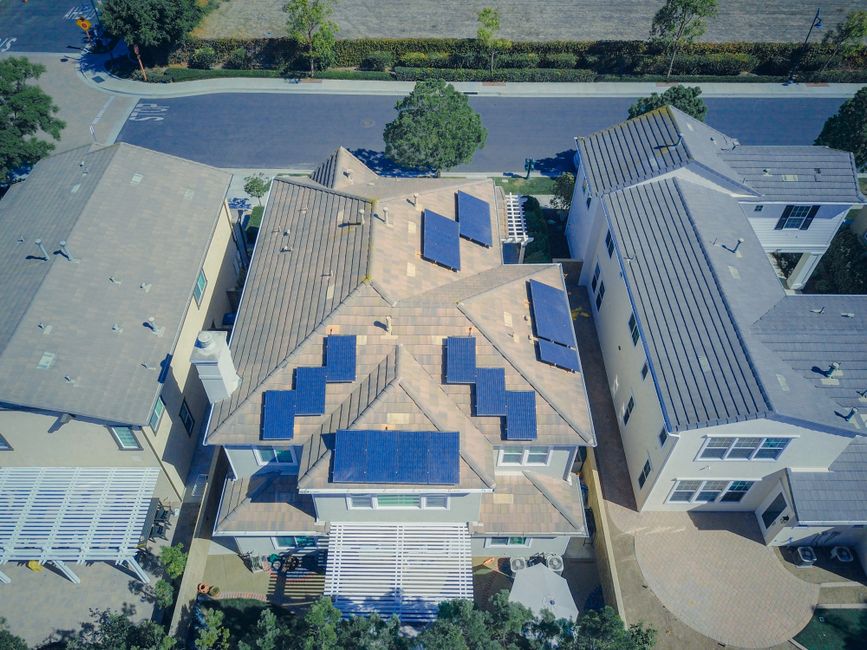
If your utility’s peak rate window runs from 4 p.m. to 9 p.m. (which is typical under California’s TOU structure and increasingly common elsewhere), a south-facing array optimized for maximum noon production is only partially solving your problem. That array generates power when it’s worth $0.06 and goes quiet when power is worth $0.45. Adding a west-facing array component, or west-facing panels on a split system, shifts generation later into the afternoon and captures more of the high-value window. A battery covers the rest.
OhmSnap’s March 2026 analysis of PG&E’s NEM 3.0 rates shows this clearly: pairing a modestly-sized array with a single 10 kWh battery and optimizing for afternoon self-consumption can outperform a larger unshaded south-facing array with no storage, purely because of when the credits are earned versus when electricity is consumed.
This is a design conversation your installer should be having with you. If they’re not asking about your TOU schedule and your typical load profile by hour of day, that’s a meaningful gap.
The Battery Math Has Changed, Too
Battery attachment rates hit 40% of new residential installations in Q1 2026, up from 35% in 2025. That’s not a coincidence. Homeowners who’ve done the math are arriving at the same conclusion: under low-export-rate regimes, a battery pays for itself in avoided peak-rate purchases in ways it simply didn’t when net metering was generous.
The honest caveat is that battery economics still depend on your specific rate structure. If you’re in Massachusetts and collecting $0.30 per kWh in export credits, a battery adds resilience and backup value but may not dramatically shorten your payback period on its own. If you’re in California or heading there, a battery is arguably more important than adding the last two panels to your array.
The question to ask your installer is specific: what is the projected value of grid export in year one under my current utility tariff, and what does that number look like if my utility adopts time-of-use export pricing within the next three years? Any installer worth working with should be able to model both scenarios.
What to Do Before You Sign a Contract
If you’re in a state where the net metering rules are stable and generous, the urgency here is lower. But if you’re in California, the Mid-Atlantic, the Southeast, or the Midwest, you’re operating in a policy environment that is actively moving against the export model.
Before you sign anything, get your export credit rate in writing from your installer, not as an assumption buried in a proposal spreadsheet, but as the actual current tariff your utility applies to new solar customers. Ask whether your utility has any pending rate cases that could change that number. Check your state’s net metering tracker; OhmSnap’s April 2026 state-by-state tracker is one of the more current resources available.
Then size accordingly. A system built around what you’ll actually consume, anchored by real numbers and paired with storage where it pencils, will hold up better over a 25-year lifespan than one built on the assumption that exporting excess power will always be worth doing.
The installers who tell you to oversize aren’t necessarily being dishonest. Many are still using playbooks that made sense three years ago. Your job is to ask the questions that bring the conversation into 2026.
Sources
- U.S. Residential Solar Installations Set to Stall for Years , Bloomberg / Spokesman-Review (June 15, 2026)
- Net Metering Tracker: Which States Are Changing the Rules in 2026? , OhmSnap (April 2026)
- Net Metering Rules by State: 2026 Policy Comparison , Green Energy Calculators (April 7, 2026)
- PA Net Metering 2026: PPL Tariff Changes July 2026 , NuWatt Energy (April 2026)
- How Much Solar Do You Really Need? Sizing Your System Under NEM 3.0 , Pacific Solar Company (January 2026)
- PG&E Solar in 2026: NEM 3.0 Strategy, TOU Rates, and Battery Sizing Guide , OhmSnap (March 2026)
Recommended Resources
Disclosure: As an Amazon Associate, we earn a small commission from qualifying purchases at no extra cost to you. We only recommend products that genuinely support the topics covered in this article.
- Renogy 200W Solar Starter Kit + 30A Charge Controller (~$169), Complete beginner solar kit, 200W monocrystalline panel, charge controller, and mounting hardware included.
- EF EcoFlow DELTA 2 Portable Power Station (1024Wh) (~$599), 1024Wh LFP battery with 1800W output, top-rated solar generator for home backup power. Charges in under 2 hours.