 Craig Stevens
Most solar articles treat the inverter choice as a footnote. Buy panels, pick a size, oh and also there’s this inverter thing. That framing is backwards. The inverter is where your DC electricity becomes usable AC power, and the architecture you choose shapes your system’s performance, monitoring granularity, maintenance costs, and warranty exposure for the next 25 years. Getting it wrong is expensive to fix.
So let’s be direct about what’s actually at stake.
How Each System Works
A string inverter connects all your panels in a series circuit, like old Christmas lights, and converts that combined DC output in one central box, usually mounted on your garage wall or beside your electrical panel. One inverter, one conversion point, one potential failure. SolarEdge and SMA make the dominant string inverters you’ll see on residential installs today.
Microinverters flip the architecture entirely. Each panel gets its own small inverter mounted on the racking behind it. Enphase owns this market. Their IQ8 series is on probably 60% of microinverter installs in the U.S. right now. Every panel converts independently, which means the panels aren’t linked in a chain.
That distinction sounds simple. The real-world consequences are not.
Where String Inverters Win
Helpful resource: Jackery SolarSaga 100W Solar Panel is a top-rated option for this. (As an Amazon Associate this site earns from qualifying purchases.)
Cost, first. A string inverter system typically runs $1,000 to $1,500 less in equipment costs on an average residential install compared to microinverters. On a 10kW system, that gap matters. EnergySage’s marketplace data consistently shows string inverter quotes coming in lower, and for straightforward installs on south-facing roofs with no shading, that price difference buys you nothing in return if you go micro.
String inverters are also easier to service. When something goes wrong, it’s one box. A competent electrician can diagnose it, and replacement units are stocked by most solar distributors. SMA’s Sunny Boy and SolarEdge’s HD Wave series carry 12-year warranties, extendable to 20 or 25. That’s a real number, not a formality.
The efficiency argument used to favor string inverters heavily. That gap has narrowed. But a quality string inverter still converts at 97-98% efficiency under ideal conditions, and modern microinverters are close. Don’t let anyone sell you microinverters on efficiency gains alone.
Where Microinverters Win (and It’s Significant)
What Type of Solar Panel Should You Buy? · The Solar Lab on YouTube
Shading is the one. If anything casts a shadow on any part of your roof during peak sun hours, a string inverter punishes you more than you’d expect. Because panels are wired in series, the output of the entire string drops to match the weakest panel. One shaded panel doesn’t just lose its own production, it drags the whole string down. On a shaded roof, I’ve seen string-inverter systems underperform by 20-30% compared to what the design predicted.
Microinverters don’t have this problem. Each panel works independently at its own maximum power point. The shaded one underperforms; the rest don’t care.
Monitoring is the second genuine advantage. With microinverters, you get panel-level performance data. If panel 7 on your east slope starts degrading, you’ll see it as a distinct dip in your Enphase Enlighten app. With a string inverter, you’re watching aggregate output. You’ll notice something is wrong eventually, but diagnosing which panel, or whether it’s the inverter itself, requires a site visit. I had a client go four months with a failing panel before we caught it because the string inverter output just looked like a slightly cloudy month.
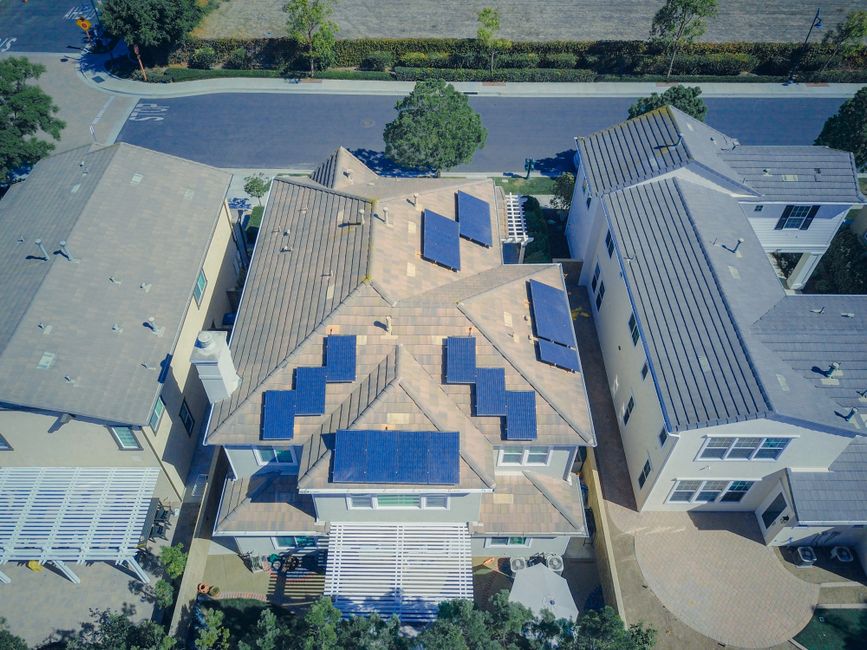
For complex roof geometry, multiple roof faces, or any roof that isn’t a clean south-facing plane, microinverters are usually the right call. Full stop.
One more thing worth saying: microinverters carry 25-year warranties. Enphase backs theirs aggressively. The IQ8 has a strong field reliability record. You’re not betting on a single box lasting two and a half decades; you’re distributing that risk across individual units that are relatively inexpensive to replace one at a time.
The SolarEdge Middle Option
| System Type | Cost | Shading Tolerance | Monitoring | Warranty | Best For |
|---|---|---|---|---|---|
| String Inverter | $1,000-$1,500 lower | Poor (20-30% loss possible) | Aggregate output only | 12-25 years | Clean, unshaded south-facing roofs |
| Microinverters | Baseline | Excellent (independent operation) | Panel-level data | 25 years | Shaded roofs, complex geometry, multiple orientations |
| SolarEdge + Optimizers | Middle ground | Good (mitigated shading) | Panel-level data | 12-25 years | Moderate shading, cost-conscious, data priority |
There’s a third architecture most homeowners don’t hear about until mid-consultation. SolarEdge uses string inverter topology but adds power optimizers to each panel. These DC optimizers handle panel-level maximum power point tracking and mitigate shading losses, without the full cost of individual microinverters.
You get panel-level monitoring. You get meaningful shading tolerance. The central inverter is still one box, which some people see as a liability (fair) and others see as simpler serviceability (also fair). SolarEdge systems typically land between string-only and full microinverter costs.
If your roof has moderate shading and you want panel-level data but you’re cost-conscious, this is worth a real look. It’s not a compromise so much as a different set of tradeoffs.
What I Actually Recommend
Clean south-facing roof, no shading, simple rectangular layout: go with a quality string inverter. Save the $1,200, get a good SMA or SolarEdge unit, and put that money toward a better monitoring setup. Speaking of which, a home energy monitor like the Emporia Vue is worth adding regardless of inverter type, since it gives you whole-home consumption context that even microinverter apps don’t provide. (Note: the site may earn a commission on purchases.)
Any shading at all, more than a passing shadow from a chimney, microinverters or SolarEdge optimizers. Don’t let an installer talk you into a basic string setup on a shaded roof because it’s cheaper. That math reverses fast.
Multiple roof orientations, say panels on both south and east faces: microinverters. Strings that mix orientations are inefficient nightmares.
The Solar Energy Industries Association reports that microinverters now account for a significant and growing share of residential installs, which tracks with what I’m seeing in quotes. Installers are defaulting to Enphase because it’s easy to spec and customers like the app. That’s not necessarily bad advice, but you’re sometimes paying the microinverter premium when a string inverter would serve you just as well.
Sources
- Jackery SolarSaga 100W Solar Panel
- home energy monitor like the Emporia Vue
- Solar Energy Industries Association
- EG4 Battery Monitor Shunt for Solar Systems
- Solar Panel Cleaning Brush Kit with Extension Handle
Disclosure: As an Amazon Associate, we earn a small commission from qualifying purchases at no extra cost to you. We only recommend products that genuinely support the topics covered in this article.
- Renogy 200W Solar Starter Kit + 30A Charge Controller (~$169), Complete beginner solar kit, 200W monocrystalline panel, charge controller, and mounting hardware included.
- EF EcoFlow DELTA 2 Portable Power Station (1024Wh) (~$599), 1024Wh LFP battery with 1800W output, top-rated solar generator for home backup power. Charges in under 2 hours.
Recommended Resources
Disclosure: As an Amazon Associate, we earn a small commission from qualifying purchases at no extra cost to you. We only recommend products that genuinely support the topics covered in this article.
- Renogy 200W Solar Starter Kit + 30A Charge Controller (~$169), Complete beginner solar kit, 200W monocrystalline panel, charge controller, and mounting hardware included.
- EF EcoFlow DELTA 2 Portable Power Station (1024Wh) (~$599), 1024Wh LFP battery with 1800W output, top-rated solar generator for home backup power. Charges in under 2 hours.