 Nadia Patel
You’re standing in your backyard, squinting at your roof, and the solar installer just handed you a quote with two options. One says “monocrystalline” and costs about 20% more. The other says “polycrystalline” and looks like it might save you a decent chunk of money upfront. The installer gave you a quick explanation, but you walked away more confused than when you started. That’s exactly where most people are when they come to me, and I want to give you the honest breakdown that the quote sheet doesn’t.
What Actually Makes These Two Panel Types Different
The difference starts at the molecular level, and understanding it helps everything else make sense.
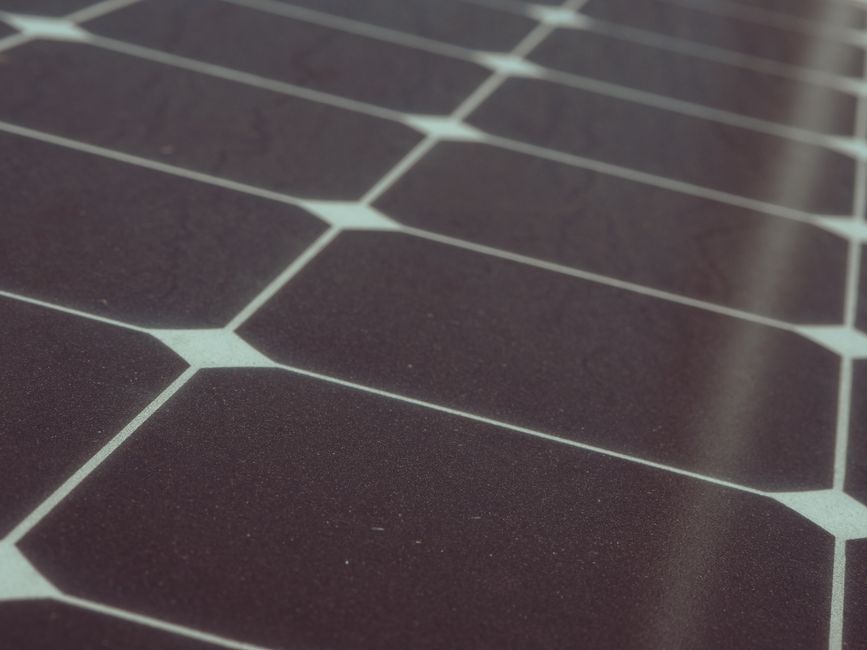
Monocrystalline panels are made from a single, continuous crystal of silicon. Manufacturers grow a large silicon ingot, slice it into thin wafers, and each wafer is essentially one unbroken crystal lattice. That uniformity is the whole point. Electrons move through a single crystal with very little resistance, which translates directly into higher efficiency.
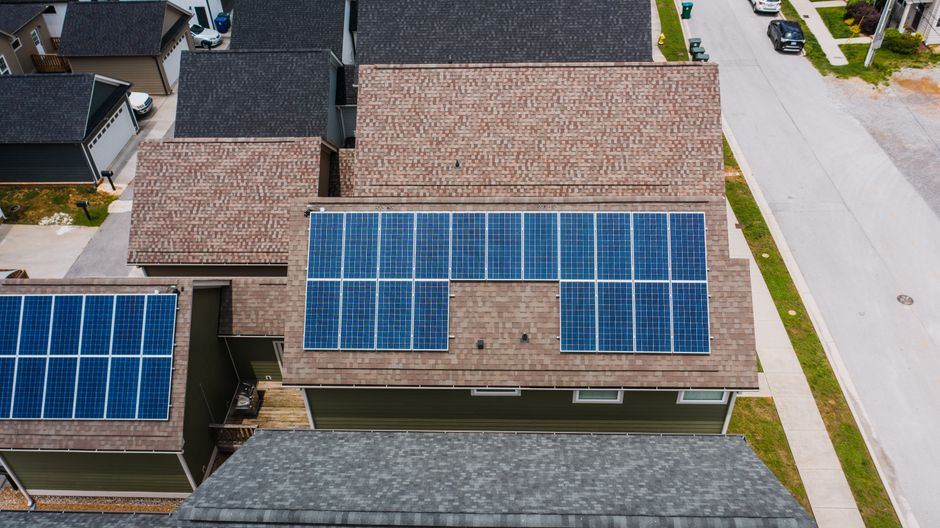
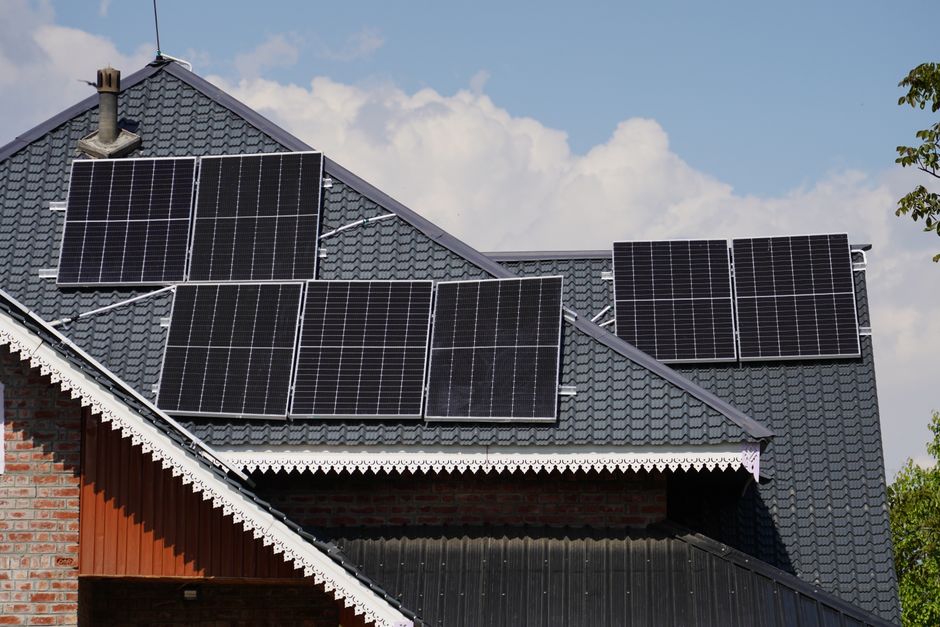
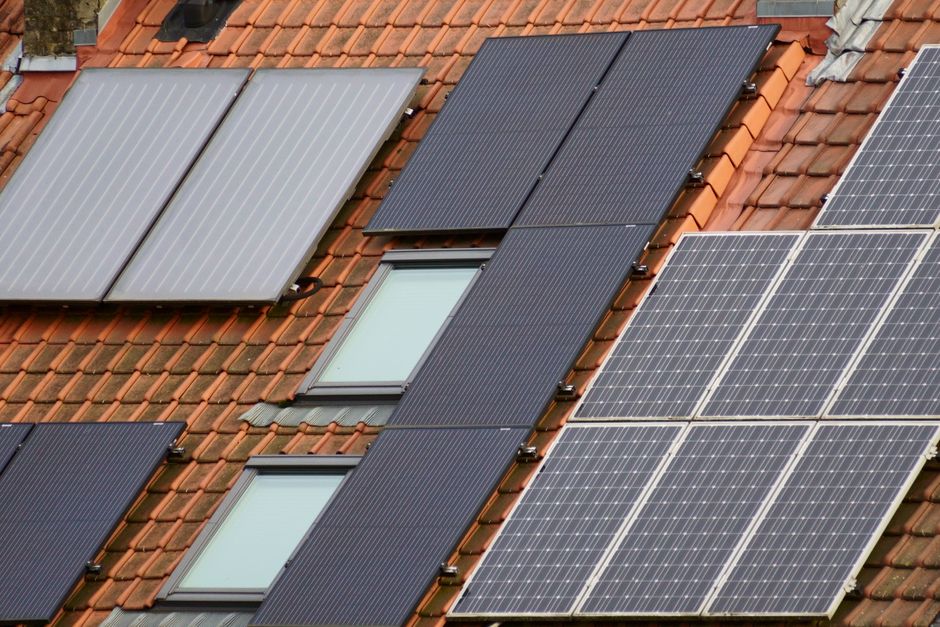
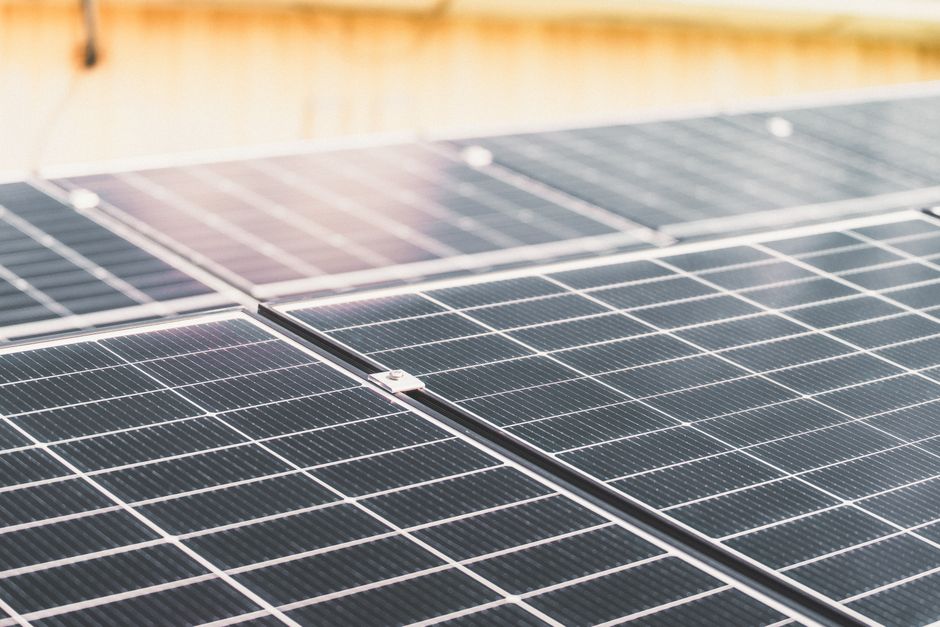
Polycrystalline panels are made by melting multiple silicon fragments together in a mold. When that silicon cools, it solidifies into a patchwork of many smaller crystals rather than one continuous structure. You can actually see this difference with your naked eye: monocrystalline cells look uniform black or very dark gray, while polycrystalline cells have that distinctive blue, slightly shimmery, almost marbled appearance. Those visible grain boundaries are where the crystal fragments meet, and they’re also where electron flow gets interrupted.
The practical result: monocrystalline panels typically achieve efficiencies between 19% and 23%, while polycrystalline panels generally land between 15% and 17%. That gap sounds modest. On a rooftop where every square foot matters, it adds up fast.
The Real Numbers: Efficiency, Output, and Roof Space
| Metric | Monocrystalline | Polycrystalline |
|---|---|---|
| Typical Efficiency | 19-23% | 15-17% |
| Appearance | Uniform black/dark gray | Blue with visible grain boundaries |
| Panel Output (example) | 400 watts | 330 watts |
| Panels Needed (10 kW system) | 25 panels | 31 panels |
| Roof Space Required (10 kW) | ~550 sq ft | ~680 sq ft |
| Annual Degradation Rate | 0.3-0.5% | 0.5-0.8% |
| Temperature Coefficient | -0.3% to -0.4% per °C | -0.4% to -0.5% per °C |
| Upfront Cost Premium | ~$500-$1,500 per 10 kW system | Baseline |
| Year 25 Output (400W panel, mono at 0.5%) | ~352 watts | - |
| Year 25 Output (400W panel, poly at 0.8%) | - | ~326 watts |
Here’s what I tell people who are tempted to just pick the cheaper option: efficiency differences matter most when your roof space is limited.
Let’s run through a concrete example. Say you want a 10-kilowatt (kW) system, which is roughly what a 2,500-square-foot home with average consumption might need.
Using 400-watt monocrystalline panels (a common size today), you’d need 25 panels. At roughly 22 square feet per panel, that’s about 550 square feet of usable roof space.
Using 330-watt polycrystalline panels, you’d need 31 panels to hit the same 10 kW. That’s roughly 680 square feet.
If your usable south-facing roof space is limited by dormers, vents, or shade, that 130-square-foot difference can mean the difference between getting your target system size on your roof or not. For homeowners with large, clear roof planes, it matters less. But I’ve seen plenty of cases where someone committed to poly panels and couldn’t fit enough to offset their bill.
The National Renewable Energy Laboratory (NREL) has documented efficiency improvements in monocrystalline technology consistently outpacing polycrystalline in recent years, with top-of-line mono panels now regularly exceeding 22% in real-world conditions. That research trajectory has practical implications: the efficiency gap isn’t closing, it’s widening.
The Cost Breakdown: Upfront Price vs. Lifetime Value
What Type of Solar Panel Should You Buy? · The Solar Lab on YouTube
Let’s get specific about money, because this is where most people make decisions they later regret.
The price difference between mono and poly panels has narrowed significantly over the past decade. In 2015, the monocrystalline premium was substantial. Today, you might be looking at a difference of $0.05 to $0.15 per watt at the panel level. On a 10 kW system, that’s $500 to $1,500 in panel costs alone.
But that’s not the whole story. Because polycrystalline systems need more panels to produce the same output, your labor, racking hardware, and wiring costs increase. More panels means more mounting brackets, more wire runs, more time on the roof. Industry data from EnergySage, which aggregates real quotes from thousands of installations, suggests the total installed cost difference between equivalent mono and poly systems is often smaller than homeowners expect, sometimes less than $1,000 on a full residential install.
Over a 25-year system life, that $1,000 difference is almost meaningless compared to the output advantage. A monocrystalline system producing even 5% more electricity over its life on an average-sized installation could generate thousands of dollars more in utility bill savings or net metering credits.
Then there’s degradation. Both panel types lose a small amount of output each year, but quality monocrystalline panels from reputable manufacturers typically degrade at around 0.3% to 0.5% per year. Polycrystalline panels often degrade slightly faster, around 0.5% to 0.8% per year. Over 25 years, that compounds. A panel starting at 400 watts and degrading at 0.5% annually still produces about 352 watts in year 25. At 0.8%, that same panel is down to about 326 watts. On a 25-panel system, that difference in energy output becomes significant.
How Each Panel Performs in Real-World Conditions
One thing installers don’t always volunteer: panel efficiency ratings are measured at Standard Test Conditions (STC), which means 77°F and ideal irradiance. Your roof in July is not 77°F.
All silicon solar panels lose efficiency as temperature rises. This is measured by the temperature coefficient, expressed as a percentage of output lost per degree Celsius above 25°C (77°F). Monocrystalline panels generally have a temperature coefficient of around -0.3% to -0.4% per °C. Polycrystalline panels are typically a bit worse, around -0.4% to -0.5% per °C.
In Phoenix or Austin where summer roof temperatures can exceed 150°F, this matters. If your roof surface is running 40°C above the STC baseline (which is realistic in hot climates), a poly panel with a -0.5% coefficient loses 20% of its rated output just from heat. The mono panel at -0.35% loses 14%. On a hot summer afternoon when air conditioning is hammering your electricity usage, that gap in actual production is real.
In low-light conditions, like overcast Pacific Northwest days or early morning and late afternoon production hours, monocrystalline panels also tend to perform comparatively better. This is partly because their higher cell efficiency means each photon captured is converted more effectively.
Side-by-Side Comparison: Monocrystalline vs. Polycrystalline
Here’s a clean comparison to make this concrete:
| Feature | Monocrystalline | Polycrystalline |
|---|---|---|
| Cell efficiency | 19% to 23% | 15% to 17% |
| Typical panel wattage | 350W to 450W+ | 250W to 350W |
| Temperature coefficient | -0.3% to -0.4%/°C | -0.4% to -0.5%/°C |
| Degradation rate | ~0.3% to 0.5%/year | ~0.5% to 0.8%/year |
| Appearance | Uniform black/dark | Blue, marbled grain |
| Roof space required (10 kW system) | ~550 sq ft | ~680 sq ft |
| Relative upfront cost | Higher | Lower |
| 25-year lifetime value | Generally higher | Generally lower |
| Best for | Limited roof space, hot climates, max output | Large open roofs, tighter budgets |
Use this table as a starting point, not a final verdict. Your specific roof, climate, electricity rate, and financial situation matter enormously.
How to Choose: A Practical Decision Framework
I’ve helped hundreds of homeowners work through this exact decision. Here’s how I actually walk through it.
Step 1: Measure your usable roof space. Ask your installer for the exact square footage of roof area that passes shade analysis. If you have less than 600 to 700 usable square feet and you need a system larger than 8 kW, monocrystalline is almost certainly the right call.
Step 2: Check your local climate. Look up your city’s average summer high temperatures. If you’re routinely above 90°F in summer and care about peak afternoon production, mono’s better temperature coefficient has real dollar value.
Step 3: Run a 25-year production estimate. Ask your installer to show you a production estimate using actual panel degradation rates for each option. Good installers use software like PVWatts (from NREL) or Aurora Solar to model this. If they won’t show you a 25-year comparison, that’s a red flag.
Step 4: Calculate the break-even on any price difference. Take the total cost difference between the two system options, then divide by the estimated annual energy production advantage of the mono system. If the break-even is under 5 years, mono is a straightforward win. If you’re looking at a 10+ year break-even, the calculus is less clear.
Step 5: Check the warranty. Quality monocrystalline manufacturers like SunPower, REC, and Panasonic typically offer 25-year performance guarantees with tight degradation limits. Verify the specific polycrystalline product’s warranty terms before assuming they’re comparable.
For homeowners who want to track their system’s actual production against these projections, a home energy monitor like the Emporia Vue Energy Monitor can show you real-time and historical production data so you know whether your panels are performing as promised.
The honest truth is that for most homeowners making a new installation decision in 2024, monocrystalline panels are the right choice. The price premium has eroded, the performance advantages are real, and the long-term value math usually favors them. Polycrystalline isn’t a bad technology; it’s just one that made more sense when the price gap was larger. Your money, your roof, and your electricity bills deserve a system optimized for the next 25 years, not just the cheapest option on the quote sheet.
Sources
- Emporia Vue Energy Monitor
- Renogy 200W Solar Starter Kit + 30A Charge Controller
- EF EcoFlow DELTA 2 Portable Power Station (1024Wh)
- Renogy 2×100W Monocrystalline Solar Panels
- Mark Stebnicki
Disclosure: As an Amazon Associate, we earn a small commission from qualifying purchases at no extra cost to you. We only recommend products that genuinely support the topics covered in this article.
- Renogy 200W Solar Starter Kit + 30A Charge Controller (~$169), Complete beginner solar kit, 200W monocrystalline panel, charge controller, and mounting hardware included.
- EF EcoFlow DELTA 2 Portable Power Station (1024Wh) (~$599), 1024Wh LFP battery with 1800W output, top-rated solar generator for home backup power. Charges in under 2 hours.
- Renogy 2×100W Monocrystalline Solar Panels (~$99), Expandable 200W panel set from the most trusted DIY solar brand, used widely in off-grid and home backup systems.
Recommended Resources
Disclosure: As an Amazon Associate, we earn a small commission from qualifying purchases at no extra cost to you. We only recommend products that genuinely support the topics covered in this article.
- Renogy 200W Solar Starter Kit + 30A Charge Controller (~$169), Complete beginner solar kit, 200W monocrystalline panel, charge controller, and mounting hardware included.
- EF EcoFlow DELTA 2 Portable Power Station (1024Wh) (~$599), 1024Wh LFP battery with 1800W output, top-rated solar generator for home backup power. Charges in under 2 hours.