 Craig Stevens
If you rent your home, you’ve probably watched the solar conversation happen around you for years. Homeowners get the tax credits, the rooftop panels, the lower bills. You get nothing, because you don’t own the roof. That’s been the reality for roughly 35% of Americans, and it’s a real gap in how this country has rolled out clean energy. Something shifted last week, though, and it’s worth paying attention to.
On June 30, 2026, New Jersey’s legislature passed the Garden State Balcony Solar Act (S2368/A4836) by unanimous votes in both chambers: 40-0 in the Senate and 79-0 in the Assembly. New Jersey became the 10th U.S. state to legalize plug-in solar. But the way the bill is written makes it genuinely different from what came before, and if you’re a renter anywhere in the country, you might be wondering what it actually means for you.
What This Law Actually Does
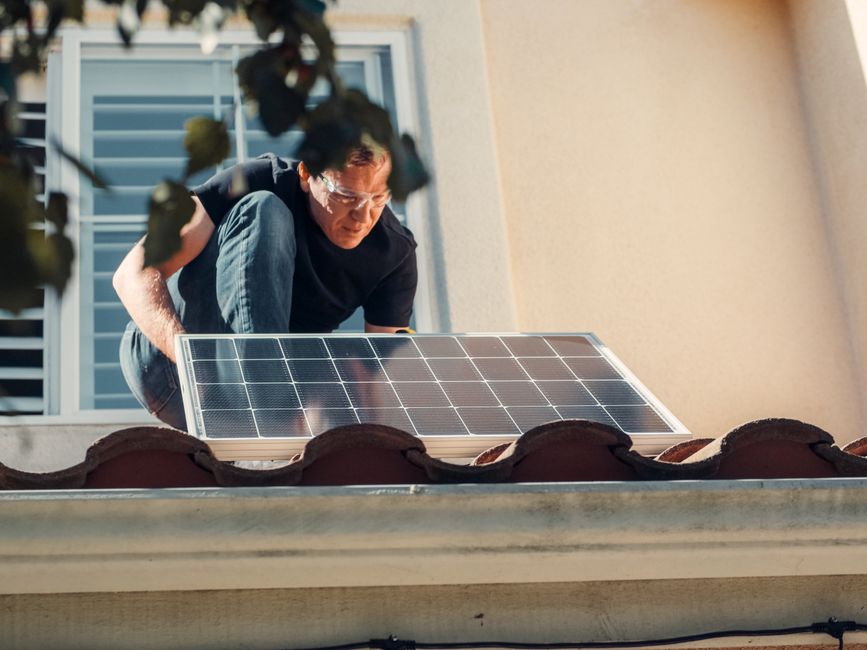
Plug-in solar, sometimes called balcony solar, refers to small panel systems you mount on a balcony railing, a fence, or a south-facing wall, then connect to a standard 120V household outlet. The electricity feeds directly into your home’s circuits and reduces what you draw from the grid. No roof required. No electrician required. No utility approval required.
New Jersey’s new law permits systems up to 1,200 watts AC, which is roughly three modern solar panels. It explicitly exempts these systems from local permitting requirements and utility interconnection approvals. That alone removes two of the biggest friction points that have made solar inaccessible to renters. But the provision that really makes this bill stand out: landlords, HOAs, and condo boards are prohibited from banning plug-in solar outright. A renter just needs to give 14 days’ written notice before installing a system. That’s it. Your landlord can’t say no.
As PlugInSolarUS noted after the bill passed, this framework protects tenants in a way no prior state law has done as explicitly. Previous legalizations in other states largely addressed what utilities could or couldn’t prohibit. This one goes straight at the landlord-tenant dynamic.
Do the Numbers Actually Work for Renters?
| Scenario | System Size | Annual Generation | Annual Savings | System Cost | Payback Period |
|---|---|---|---|---|---|
| Mid-range setup, New Jersey | 800W | ~1,094 kWh | ~$225 | $600 | 4-6 years |
| 3-year tenancy, New Jersey | 800W | ~3,282 kWh | ~$675 | $600 | 0.9 years (50% recovered) |
| 5-year tenancy, New Jersey | 800W | ~5,470 kWh | ~$1,125 | $600 | Break-even + positive |
| Low-end system | - | - | - | $300 | Varies by use |
| High-end system | - | - | - | $1,500 | Varies by use |
Helpful resource: Jackery SolarSaga 100W Solar Panel is a top-rated option for this. (As an Amazon Associate this site earns from qualifying purchases.)
Here’s what I tell people when they’re deciding whether a small solar investment makes sense: the math has to hold up even if you move in two years. With rooftop solar, the payback period can be 7 to 10 years, which makes it a terrible fit for renters. Plug-in systems are different.
An 800-watt south-facing balcony system in New Jersey can generate approximately 1,094 kilowatt-hours per year. At the state’s average retail electricity rate of 18.4 cents per kilowatt-hour, that’s about $225 in annual savings. The systems themselves currently run anywhere from $300 on the low end to $1,500 for a more capable setup, putting the payback window at roughly 4 to 6 years for a mid-range purchase.
That’s not a home run, but it’s reasonable, especially since these panels are portable. If you move, you take the system with you. A renter in a New Jersey apartment who spends $600 on a solid 800W kit and stays for three years will offset maybe half their investment. Stay for five years, and you’re in the black. The calculus improves in high-rate states like California or Massachusetts, where electricity costs well above the national average.
The one honest caveat: an eighth-floor apartment with northern exposure is going to see much worse production numbers than a ground-floor unit with a south-facing fence. Shading and orientation matter enormously. Before buying anything, check your balcony’s direction and think hard about what actually gets sunlight.
Why This Keeps Being Described as a Big Deal
One industry estimate cited by CNN puts 70% of Americans in a position where they can’t access rooftop or community solar. Renters make up a large chunk of that group, but so do homeowners with shaded roofs, people in condos, and households that simply can’t qualify for financing. Plug-in solar has been described as “a solution for that 70%,” and while that framing is a little optimistic given production variability, the underlying point is real.
The unanimous vote in New Jersey is also politically meaningful. This wasn’t a close call or a partisan fight. Forty senators and seventy-nine assembly members all said yes. That kind of legislative consensus tends to create momentum. Illinois is reportedly expected to consider reviving a similar plug-in solar bill this fall. Germany has already seen this market explode: more than 700,000 balcony solar systems were registered there by mid-decade, with units selling at hardware stores the way you’d buy a power tool.
The U.S. market has lagged partly because the regulatory picture was unclear and partly because installers and utilities didn’t have much financial incentive to push something small and cheap. The state-by-state legalization wave is starting to change both of those things.
What Renters in Other States Should Know Right Now
New Jersey’s law still needs Governor Mikie Sherrill’s signature and doesn’t take effect until January 2027. So even in New Jersey, renters can’t act on this quite yet. For renters in the other nine states that have already legalized plug-in solar, the situation varies. Some states protect you more than others on the landlord question, and utility policies on net metering for small plug-in systems are still inconsistent.
If you’re outside those 10 states, you’re in a gray zone. Plug-in systems are technically possible to install in most places, but your landlord may have grounds to prohibit them under your lease, and some utilities have policies against devices that backfeed into the grid without approval. The practical risk of a small system getting noticed is low, but “probably fine” is different from “legally protected,” and I wouldn’t tell you they’re the same thing.
What you can do right now, regardless of where you live: check your lease for any language about electrical modifications or exterior attachments, look up whether your state is among the 10 that have legalized plug-in solar, and start paying attention to what comes out of Illinois this fall. The legislative window is open, and it’s moving faster than it was two years ago.
For renters who have spent years watching solar pass them by, that’s genuinely new.
Sources
- New Jersey legislature unanimously passes plug-in solar bill , pv magazine USA (July 1, 2026)
- New Jersey Passes Garden State Balcony Solar Act , PlugInSolarUS (July 1, 2026)
- Why New Jersey’s balcony solar bill is a huge deal for renters , CNN via LocalNews8 (July 2, 2026)
- New Jersey lawmakers say ‘yes’ to plug-in solar , Solar Power World (July 1, 2026)
- New Jersey Unanimously Legalizes Plug-In (Balcony) Solar , Exact Solar / Substack (July 3, 2026)
Recommended Resources
Disclosure: As an Amazon Associate, we earn a small commission from qualifying purchases at no extra cost to you. We only recommend products that genuinely support the topics covered in this article.
- Renogy 200W Solar Starter Kit + 30A Charge Controller (~$169), Complete beginner solar kit, 200W monocrystalline panel, charge controller, and mounting hardware included.
- EF EcoFlow DELTA 2 Portable Power Station (1024Wh) (~$599), 1024Wh LFP battery with 1800W output, top-rated solar generator for home backup power. Charges in under 2 hours.