 Alex Rivera
Manufactured home solar is one of the most misunderstood corners of the solar industry, and I’ve watched too many homeowners get burned by it, sometimes literally wasting $15,000 on a system they couldn’t finance, insure, or even legally install.
Let me back up. About four years ago, a couple in New Mexico emailed me after their solar installer had already walked off the job midway through permitting. They owned a 1998 HUD-code manufactured home on a rented lot, and nobody had bothered to check any of that before taking their deposit. The roof wasn’t rated for the added load, the park’s lease didn’t allow structural modifications, and the lender they’d been directed to didn’t finance systems on personal property. Three strikes, and they were out $3,200 before a single panel went up. That story stuck with me, because it didn’t have to go that way.
Here’s the thing: solar absolutely can work on manufactured homes. Tens of thousands of them are producing clean power right now. But there are real structural, financial, and legal obstacles that installers don’t always mention, because the fastest path to their commission doesn’t include a 45-minute conversation about your HUD data plate.
- Solar works on many manufactured homes, but roof load ratings, lot ownership, and financing eligibility must be verified first.
- Most manufactured home roofs support 2-3 lbs/sq ft live load; standard solar panels weigh 2.5-4 lbs/sq ft, which may require engineering assessment.
- The 30% federal Investment Tax Credit applies to manufactured homes if you own the land or the home is on a permanent foundation.
- Ground-mounted systems sidestep most structural concerns and are often the smarter choice for manufactured home owners.
- Financing options are narrowing but real: FHA Title I, Fannie Mae MH Advantage, and chattel lenders like Triad Financial Services are active as of 2026.
The Roof Problem Nobody Leads With
Standard residential roofs are built to handle 15-25 pounds per square foot of live load, including snow, workers, and equipment. Most HUD-code manufactured homes are engineered to a much tighter spec: typically 20 lbs/sq ft total, with only a portion of that available for “live” loads beyond the roofing material itself.
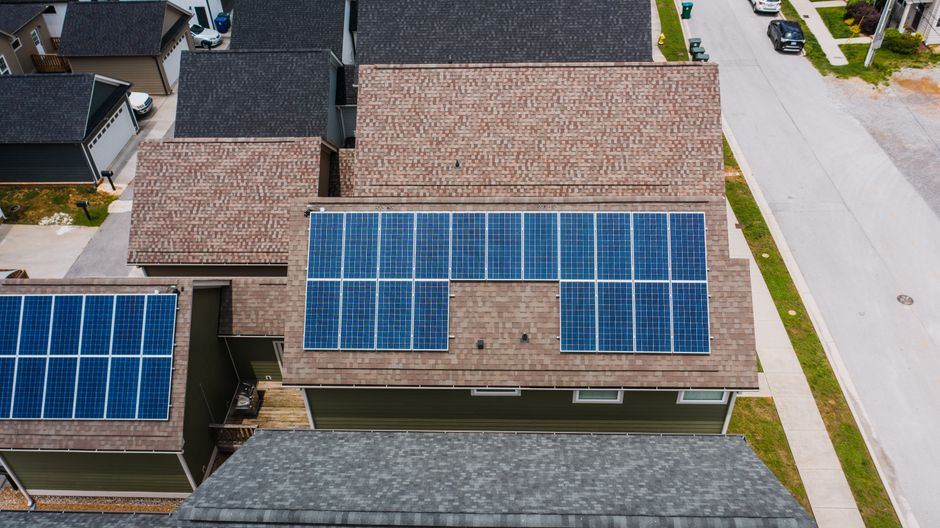
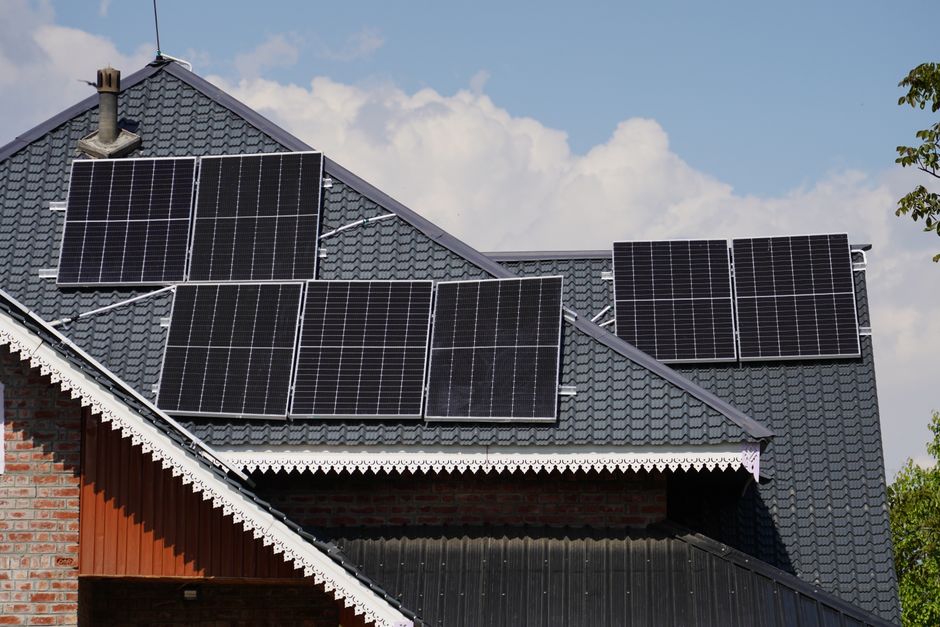
A standard 400-watt solar panel from a brand like Q CELLS or REC weighs roughly 44-50 lbs and covers about 18 square feet. That works out to around 2.5-2.8 lbs/sq ft. Add the racking hardware, and you’re often at 3-4 lbs/sq ft. On a roof that’s already near its structural limit, that math gets uncomfortable fast.
What most people don’t realize is that the load tolerance varies significantly by age and zone designation. A manufactured home built to the HUD Wind Zone III standard (common in Florida and the Gulf Coast) often has a more robust frame than a Wind Zone I home from the same year. Your HUD data plate, which is a small metal tag usually found inside a kitchen cabinet or on the main electrical panel, tells you which zone you’re in. Any reputable solar installer should ask to see it before they measure your roof. If they don’t ask, that’s your first red flag.
I’ve seen newer manufactured homes, particularly those built after 2010 to increasingly strict HUD standards, handle roof-mounted systems with no issues. I’ve also seen 1990s-era single-wides where the truss spacing couldn’t safely support even a modest 6-panel string without professional reinforcement. The honest answer is you need a structural engineer to sign off, and that assessment usually costs $300-$600. Worth every penny.
Does Your Land Situation Change Everything?
Helpful resource: Renogy 100W 12V Flexible Solar Panel is a top-rated option for this. (As an Amazon Associate this site earns from qualifying purchases.)
Short answer: yes, dramatically.
Homeowners who own their land outright, or have it on a standard real property deed, have access to the full range of solar financing, the federal ITC, and most state incentives. That’s the same situation as a site-built home.
But if you rent your lot in a manufactured home community, you’re in murkier territory. Many park lease agreements prohibit permanent structural modifications, which a roof-mounted solar system almost certainly qualifies as. Some parks are solar-friendly and have updated their leases accordingly. Many haven’t. Getting your park manager to commit to anything in writing can feel like pulling teeth, and if you sell the home or the park changes ownership, your system’s fate is genuinely uncertain.
Here’s the distinction that matters for federal tax purposes: the IRS considers manufactured homes on leased land “personal property” in many states, not real property. That affects your ability to claim the 30% Investment Tax Credit under Section 25D, which is available as of 2026 thanks to the Inflation Reduction Act extension. The ITC requires the home to be your primary residence, but IRS guidance on whether personal property (vs. real property) qualifies has created some legitimate ambiguity. A tax professional familiar with energy credits, not just any CPA, should weigh in before you assume you’ll get that credit.
The Financing Maze
This is where things get genuinely frustrating, so let me just give you the map.
| Financing Option | Applies To | Typical Rate (2026) | Solar-Eligible? | Notes |
|---|---|---|---|---|
| FHA Title II | Real property (land + home) | 6.8-7.4% | Yes | Requires permanent foundation |
| FHA Title I | Personal property | 7.5-9.5% | Limited | Loan caps around $69,678 |
| Fannie Mae MH Advantage | Qualifying manufactured homes | 7.0-7.8% | Yes | Requires HUD-approved features |
| Chattel Loan (e.g., Triad Financial) | Personal property | 8-12% | Rarely | High rates; solar add-ons uncommon |
| Solar-specific loan (GreenSky, Mosaic) | System only | 6.99-11.99% | Yes | May require real property ownership |
| Cash / HELOC | Any | Variable | Yes | Best option if available |
The manufactured home solar financing market is genuinely thinner than the site-built market. I don’t have great data on approval rates specifically for this segment, so I can’t give you a number with confidence. What I can tell you from experience: the homeowners who have the smoothest time are either paying cash, pulling equity from a home on real property, or using a solar loan from a lender who has explicitly confirmed they’ll finance systems on manufactured homes. That confirmation needs to be in writing.
One scenario that worked out well: a reader in Arizona owned her double-wide on a quarter-acre lot she’d purchased, with a standard deed. She financed a 7.2 kW system through Mosaic at 7.49% over 15 years, claimed the 30% ITC (reducing her effective cost from $21,800 to $15,260), and now covers about 94% of her monthly usage. Her pre-solar bill was $210/month in Phoenix summers. Post-solar it’s averaging $14 for grid standby fees. That’s the best-case version of this.
Ground Mount: The Option You Should Actually Consider First
I’ll be direct: for manufactured home owners dealing with structural uncertainty, lease complications, or aging roofs, a ground-mounted system is often the smarter play, and I wish more installers led with it.
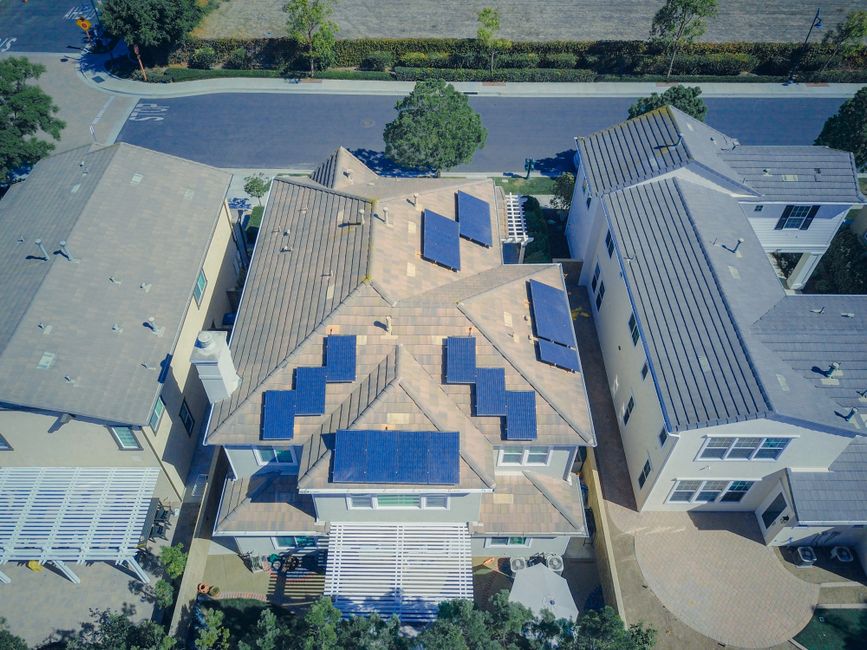
Ground mounts sidestep the roof load question entirely. They can be optimally tilted for your latitude (most Arizona homes should aim for around 32-33 degrees tilt, for example), which can produce 10-15% more energy than a poorly oriented rooftop system. They’re also easier to service and don’t interact with your roof warranty.
The downside is cost: ground mounts typically add $0.20-$0.50 per watt to installation expenses due to concrete footings and additional racking. On a 6 kW system, that’s $1,200-$3,000 more. You also need adequate yard space and, if you’re in a park, you’re back to the lease permissions problem.
The National Renewable Energy Laboratory (NREL) has published research showing that ground-mounted systems in residential applications can outperform equivalent rooftop installations by 8-12% annually when siting is optimized. That performance gain can materially shorten payback periods, worth running the numbers before you assume rooftop is the only way.
What a Realistic System Looks Like
Let me put some actual figures on a middle-of-the-road scenario, because I think it helps.
A 1,400 sq ft double-wide in central Texas (Austin area) with a $175/month average electric bill would typically need a 7-8 kW system to reach near-offset. At current market pricing, the Solar Energy Industries Association (SEIA) tracks residential solar at roughly $2.80-$3.20 per watt installed as of 2026.
Scenario: 7 kW system on a 2015 double-wide on owned land
- Gross cost: $21,000 (at $3.00/watt)
- Federal ITC (30%): -$6,300
- Net cost after credit: $14,700
- Estimated annual savings: $1,850-$2,100
- Simple payback: 7-8 years
- Roof assessment + engineering sign-off: add $450
If that same homeowner chose a ground mount instead: add $2,100 to gross cost, but improved production likely closes the gap within year 3-4.
Before You Sign Anything
A quick checklist, because I’ve watched people skip these and regret it:
- Pull your HUD data plate and photograph it. Give that info to your installer and ask them to provide a written statement that the roof structure is compatible or that they’re ordering an engineering assessment.
- Check your lease agreement (or your deed, depending on your land situation) for language about structural modifications and permanent fixtures.
- Confirm your financing option in writing with the lender before a site visit fee is charged.
- Ask your installer specifically: have you completed a manufactured home solar installation in this county? Get a reference from that job.
- If you’re on leased land, ask the park manager for written confirmation that a solar system is permitted, and what happens to it if you sell the home.
A good home energy monitor, like the Emporia Vue 2 (around $75-$90 on Amazon, and genuinely worth it), can help you understand your actual consumption patterns before you size a system. Don’t let anyone design a system without knowing your real usage. (Note: this site may earn a commission on purchases.)
Sources
- SEIA (Solar Energy Industries Association): Current residential solar pricing data and installation statistics, 2026
- NREL (National Renewable Energy Laboratory): Research on ground-mount vs. rooftop performance differentials in residential applications
- HUD Manufactured Housing Standards: Federal code requirements for manufactured home structural load ratings
- IRS Notice 2013-29 and Inflation Reduction Act guidance: Section 25D Investment Tax Credit eligibility for residential solar installations
- Fannie Mae MH Advantage Program: Financing guidelines for qualifying manufactured homes, current as of 2026
Photo: Lena Netkach via Pexels
Recommended Resources
Disclosure: As an Amazon Associate, we earn a small commission from qualifying purchases at no extra cost to you. We only recommend products that genuinely support the topics covered in this article.
- Renogy 200W Solar Starter Kit + 30A Charge Controller (~$169), Complete beginner solar kit, 200W monocrystalline panel, charge controller, and mounting hardware included.
- EF EcoFlow DELTA 2 Portable Power Station (1024Wh) (~$599), 1024Wh LFP battery with 1800W output, top-rated solar generator for home backup power. Charges in under 2 hours.
- Renogy 2×100W Monocrystalline Solar Panels (~$99), Expandable 200W panel set from the most trusted DIY solar brand, used widely in off-grid and home backup systems.