 Nadia Patel
Most people assume this is a simple question. It’s not.
Whether you put solar on your roof or on a ground-mounted racking system in your yard is one of the most consequential decisions you’ll make in the whole solar process, and I’ve watched homeowners get it wrong in both directions. Ones who paid extra for ground mounts when their roof would have been totally fine. And ones who forced a roof install when a ground mount would have paid back thousands more over the system’s lifetime. The choice genuinely depends on factors that are specific to your property, and I want to walk you through all of them honestly.
What You’re Actually Choosing Between
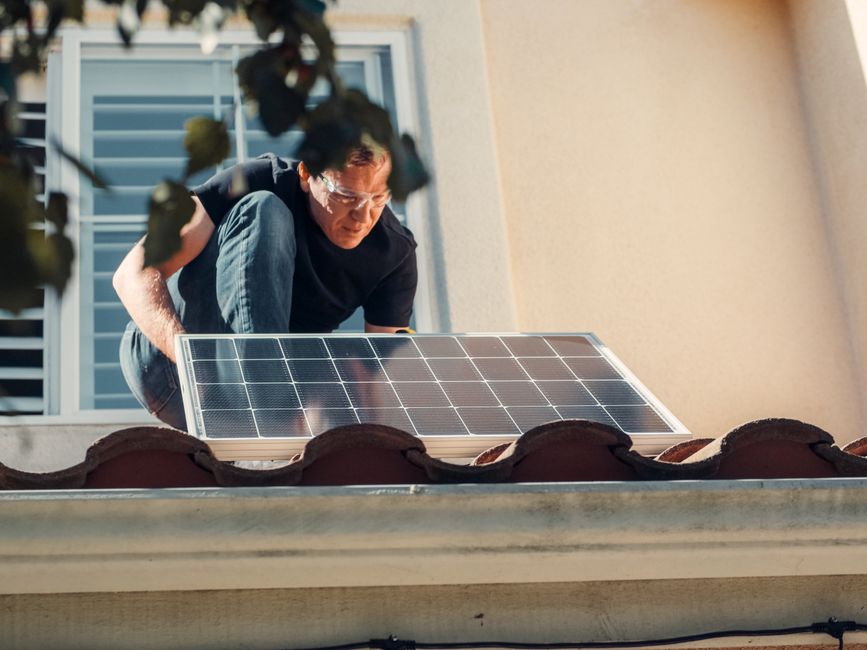
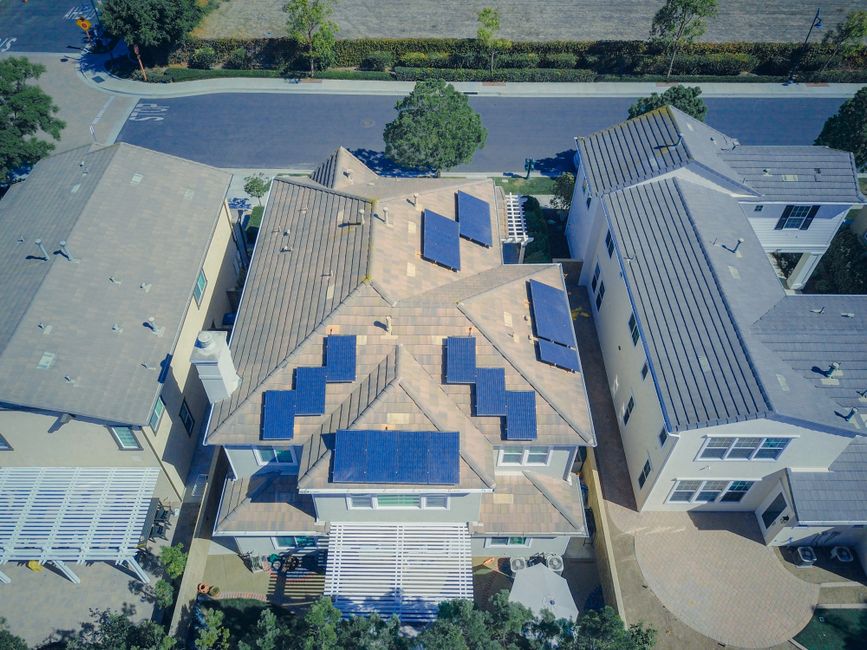
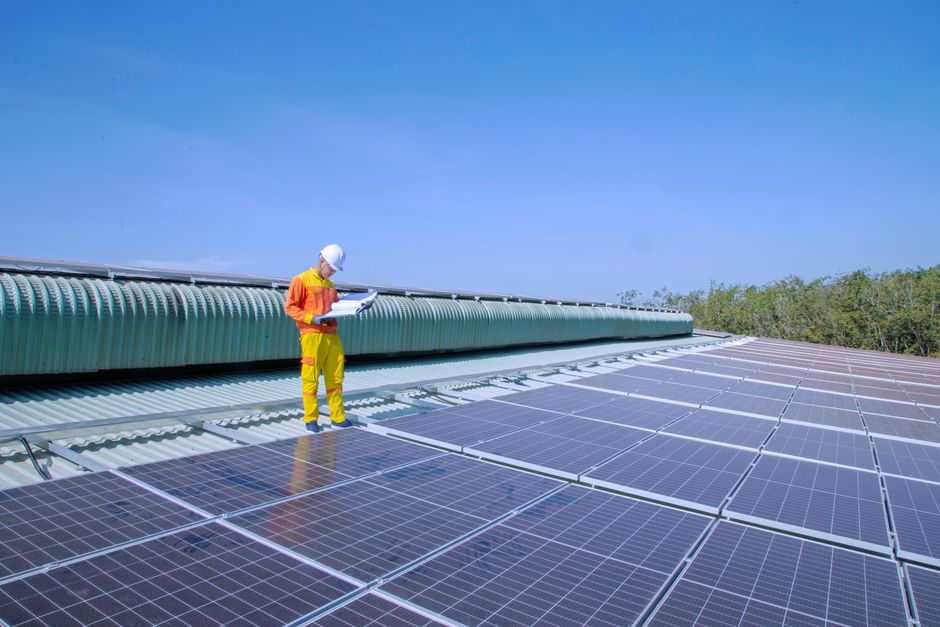
A rooftop system mounts panels directly to your existing roof structure using racking hardware bolted through the sheathing into your rafters. Labor is typically faster, the footprint is zero (you’re using space you already have), and installation costs are generally lower. As of July 2026, EnergySage’s market data puts the average cost of a residential rooftop install at around $2.85 to $3.10 per watt before incentives. For a 10 kW system, you’re looking at roughly $28,500 to $31,000 before the federal tax credit.
Ground mounts are a different animal. You’re digging footings, pouring concrete, erecting a steel racking structure, and running conduit back to the house. All of that adds labor and materials. Typical ground-mount premium runs $0.25 to $0.50 per watt more than an equivalent rooftop system, which on a 10 kW install means an extra $2,500 to $5,000 out of pocket. That number used to make me reflexively steer clients toward roof installs. Then I started tracking actual system production over time, and I changed my thinking.
When Ground Mounts Actually Win
Helpful resource: P3 Kill A Watt Electricity Usage Monitor is a top-rated option for this. (As an Amazon Associate this site earns from qualifying purchases.)
Here’s what shifted my perspective. A few years back, I was working with a family outside Tucson. Beautiful south-facing roof, looked perfect on paper. But the azimuth was off by about 20 degrees from true south, and there were two mature mesquite trees on the western edge of the property that were throwing afternoon shade on the roof from roughly 3 PM onward. The installer they’d originally spoken to had quoted a rooftop system and never mentioned the shade issue. When I modeled it out using PVWatts, that shade was costing them around 18% of annual production compared to an unshaded south-facing installation.
We put in a ground mount about 40 feet from the house, angled at 25 degrees toward true south, fully clear of shade. The extra install cost was $3,200. The production improvement over the roof install? About 1,800 kWh per year. At their blended rate of $0.13 per kWh (this was Arizona, rates are low), that’s $234 a year. The payback on the premium was under 14 years, but they planned to be in the house indefinitely, and the system itself is warrantied for 25 years. Over the back half of that warranty period, the ground mount paid for its own premium twice over.
Scenario: Suboptimal roof azimuth + afternoon shading from trees → Switched to ground mount with optimal orientation → 1,800 kWh/year production improvement, extra cost recovered in under 14 years.
Ground mounts also win decisively when your roof is older or in poor condition. If you’ve got 5 to 8 years of life left on your shingles, installing a rooftop system now means either removing and reinstalling the panels when you reroof (labor cost: typically $1,000 to $3,000 depending on system size) or replacing the roof first, which balloons your upfront costs. A lot of installers will suggest you just replace the roof and bundle it in. That’s not always bad advice, but make sure you’re actually getting a fair price on the roof portion, because the markup on bundled work can be aggressive.
Flat roofs are a separate conversation. You can absolutely solar a flat roof with ballasted racking, but the tilt angle typically gets compromised for wind load reasons, which affects production. In that case, a ground mount with a proper fixed tilt often beats the ballasted flat-roof system, especially in higher latitudes where tilt angle matters more.
When Roof Mounts Are the Smarter Call
| Scenario | Roof Mount Cost | Ground Mount Cost | Annual Production Gain | Payback Period |
|---|---|---|---|---|
| Well-sited south-facing roof, minimal shading, 8+ year-old shingles | ~$29,000 | ~$34,200 | Baseline | 8.2 years (roof) |
| Suboptimal azimuth + afternoon tree shade | Higher (with shade loss) | ~$32,200 | 1,800 kWh/year | <14 years (ground) |
| Roof with 5-8 years remaining lifespan | $29,000 + roof replacement | ~$34,200 | Baseline | Longer (roof replacement cost) |
| Flat roof with ballasted racking | ~$29,000 | ~$34,200 | Reduced (compromised tilt) | Longer (roof) |
For most homeowners, the roof mount wins. Not because it’s better in some abstract sense, but because the economics just work out. If you’ve got a south-facing roof, relatively new shingles (10-plus years of life remaining), minimal shading, and sufficient square footage for the system size you need, you will almost certainly get a faster payback on the rooftop system because of the lower upfront cost.
You’re also not consuming yard space. That matters more to some people than others, but it’s a real consideration. Ground mounts require a footprint that’s roughly 1.5 to 2 times the panel area itself once you account for racking and access, and some HOAs and municipalities won’t permit them, or require setbacks that make them impractical on smaller lots.
There’s also a maintenance argument for rooftop systems that often gets overlooked. Ground-mounted panels sit lower to the ground, which means more dust, debris, and critter exposure. I’ve seen ground-mount installations where squirrels had nested under the panels within two years. Panel critters aren’t a crisis, but they’re an annoyance and they can damage wiring. On a roof, that’s much less common.
Scenario: Well-sited south-facing roof, 8-year-old shingles, no shading → Standard rooftop install at $29,000 before incentives → Payback at 8.2 years vs. estimated 9.8 years for equivalent ground mount due to lower upfront cost.
The Tracking Mount Question
You might be wondering whether a ground mount with a single-axis tracker is worth the extra cost. I’ll be direct: for most residential homeowners, no. Single-axis trackers add $0.40 to $0.80 per watt to your install cost and introduce moving mechanical parts that require maintenance and can fail. The U.S. Department of Energy’s resources for homeowners are pretty clear that trackers make economic sense primarily at commercial and utility scale. At residential scale, just oversizing your system slightly by 1 to 2 kW typically outperforms a tracker at a fraction of the cost and zero mechanical complexity.
Monitoring Either Way
Whether you go roof or ground, you’ll want visibility into your system’s performance. I’ve personally used the Emporia Vue Energy Monitor (the site may earn a commission if you buy through that link) to track production versus consumption in real time, and it’s made it much easier to catch underperforming strings early. Most modern inverters (SolarEdge, Enphase) have built-in monitoring, but a whole-home energy monitor adds context that inverter dashboards miss, like how your production aligns with actual consumption hour by hour.
Scenario: Homeowner installed 9.6 kW ground mount, no whole-home monitoring → Added Emporia Vue → Identified dryer and EV charging schedule misalignment with peak production hours → Shifted loads, reduced grid import by ~15% without any hardware change.
Sources
- EnergySage Solar Marketplace Report: Current pricing data on residential rooftop vs. ground-mount installations, installer quotes, and cost-per-watt benchmarks across U.S. markets.
- NREL PVWatts Calculator: NREL’s tool for estimating residential solar energy production based on tilt, azimuth, location, and shading inputs.
- U.S. Department of Energy, Homeowner’s Guide to Going Solar: Federal resource covering system types, incentives, installer selection, and technology options for residential buyers.
- SEIA U.S. Solar Market Insight: Industry data on residential installation trends and market growth, current as of 2026.
- Solar Energy Technologies Office, Shading and Soiling Research: NREL and DOE analysis on production losses from shading and site orientation, used to validate production modeling estimates.
Recommended Resources
Disclosure: As an Amazon Associate, we earn a small commission from qualifying purchases at no extra cost to you. We only recommend products that genuinely support the topics covered in this article.
- Renogy 200W Solar Starter Kit + 30A Charge Controller (~$169), Complete beginner solar kit, 200W monocrystalline panel, charge controller, and mounting hardware included.
- EF EcoFlow DELTA 2 Portable Power Station (1024Wh) (~$599), 1024Wh LFP battery with 1800W output, top-rated solar generator for home backup power. Charges in under 2 hours.