 Craig Stevens
Monocrystalline silicon panels hit 22-23% efficiency in real-world residential installs today. That number doesn’t sound dramatic until you realize the cheapest panels on the market are sitting at 15%. On a typical 400-square-foot roof, that gap is the difference between a system that covers your whole bill and one that doesn’t.
Most coverage of solar panel types reads like a manufacturer brochure. You get vague terms like “premium” and “budget-friendly” with nothing to anchor them. So let’s do this differently: actual efficiency ranges, actual costs, and an honest take on when the expensive option is genuinely worth it versus when you’re paying for marketing.
I’ve sat across from hundreds of homeowners who assumed higher efficiency automatically meant better value. It doesn’t, always. The calculation is more specific than that, and I’ll walk you through it.
- Monocrystalline panels lead at 20-23% efficiency; polycrystalline trails at 15-17%; thin-film averages 10-13%.
- Higher efficiency matters most when roof space is limited, not as a universal upgrade.
- TOPCon and heterojunction (HJT) panels now reach up to 24.5% efficiency with better temperature tolerance.
- A 400W monocrystalline panel costs roughly $0.80-$1.10 per watt; thin-film runs $0.50-$0.70 per watt.
- Efficiency degrades roughly 0.5% per year for premium panels vs. 0.7-0.8% for budget polycrystalline.
The Main Types, Ranked by Performance
Three panel technologies dominate residential solar right now: monocrystalline silicon, polycrystalline silicon, and thin-film. There are emerging variants under each, which I’ll get to, but start here.
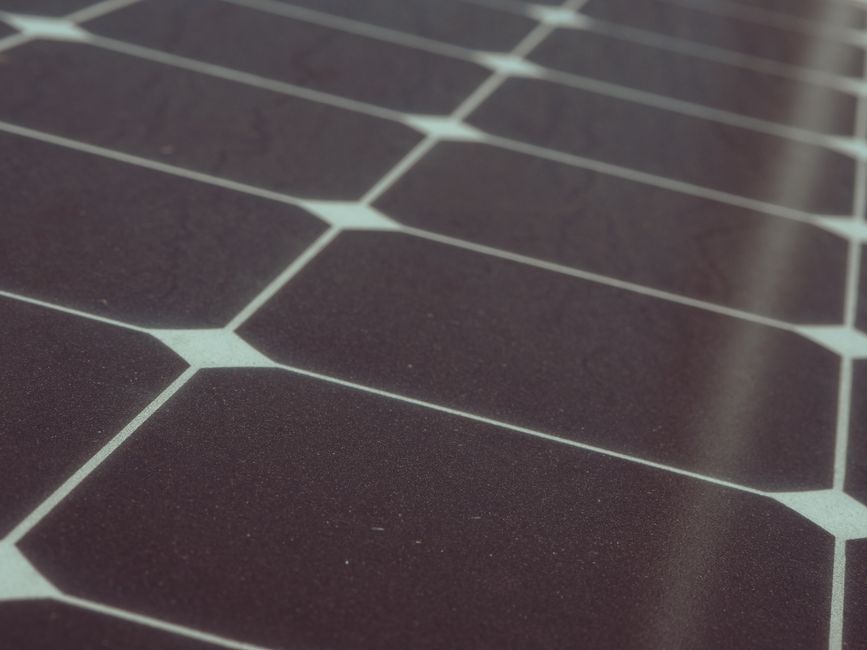
Monocrystalline is cut from a single silicon crystal. That uniform structure means electrons move through it more freely, which translates to higher efficiency and better performance in low-light conditions. The National Renewable Energy Laboratory (NREL) tracks cell efficiency records in a chart updated quarterly; as of this year, the best monocrystalline cells in a lab hit 27.3%, though residential products land in the 20-23% range after real-world losses.
Polycrystalline uses multiple silicon fragments melted together. It’s cheaper to manufacture, and it shows. Efficiency sits at 15-17%. In high heat, these panels lose output faster than mono panels, because the silicon grain boundaries create more resistance as temperature rises. If you’re in Phoenix or Houston, that’s not a footnote.
Thin-film is a different animal entirely. Instead of silicon wafers, manufacturers deposit photovoltaic material (cadmium telluride, amorphous silicon, or CIGS) onto a substrate. First Solar’s CdTe panels dominate the utility market, but residential thin-film remains niche. Efficiency of 10-13% means you need roughly twice the roof area for the same output. Where thin-film wins: flexibility, low degradation in extreme heat, and lower embodied energy in manufacturing. Where it loses: your house probably doesn’t have the square footage to make the math work.
The Full Comparison, Side by Side
Helpful resource: EG4 Battery Monitor Shunt for Solar Systems is a top-rated option for this. (As an Amazon Associate this site earns from qualifying purchases.)
Current as of August 2026, based on installer pricing data from EnergySage’s marketplace and NREL benchmarks:
| Type | Efficiency Range | Typical Cost ($/watt) | 25-yr Degradation | Best For |
|---|---|---|---|---|
| Monocrystalline PERC | 20–22% | $0.85–$1.10 | ~11% total | Most residential installs |
| Monocrystalline TOPCon | 22–24% | $0.95–$1.20 | ~9% total | Small roofs, high-production goals |
| HJT (Heterojunction) | 21–24.5% | $1.05–$1.35 | ~7% total | Hot climates, premium installs |
| Polycrystalline | 15–17% | $0.60–$0.80 | ~17% total | Large roofs, tight budgets |
| Thin-Film (CdTe) | 10–13% | $0.50–$0.70 | ~10% total | Commercial, unusual surfaces |
| CIGS Thin-Film | 13–15% | $0.70–$0.95 | ~12% total | Flexible/curved installations |
A few things that table doesn’t capture: HJT panels perform noticeably better than PERC in high temperatures because the amorphous silicon layer insulates against thermal losses. NREL’s research shows HJT panels can retain 90% of rated output at 45°C versus roughly 82-84% for standard PERC. In a climate like Las Vegas or Miami, that’s a meaningful difference across 25 years.
When Efficiency Actually Changes Your Decision
What Type of Solar Panel Should You Buy? · The Solar Lab on YouTube
Here’s the thing most installers skip: efficiency ratings only matter if roof area is your constraint. I’ve seen homeowners in suburban Ohio with 800-square-foot south-facing roofs spend an extra $3,200 on high-efficiency panels when cheaper polycrystalline panels would have generated the same kilowatt-hours because they had room to add two more panels instead.
The math that actually matters is cost per kilowatt-hour generated over the system’s lifetime, not efficiency percentage.
Worked examples:
Scenario 1 (small roof, urban Chicago): Homeowner with 300 sq ft usable south-facing roof. Standard polycrystalline at 16% efficiency maxes out at roughly 7.2 kW capacity. TOPCon panels at 23% efficiency fit 10.4 kW on the same area. Annual production difference: approximately 3,900 kWh at Chicago’s average 4.2 peak sun hours. At $0.17/kWh (Illinois average), that’s $663 more per year in offset electricity. The TOPCon premium pays back in about 4.8 years. Worth it here.
Scenario 2 (large roof, suburban Georgia): Homeowner with 700 sq ft available, 6.0 peak sun hours daily. Polycrystalline covers their entire 10 kW target size at lower cost. Installing premium TOPCon instead adds $2,800 to the project with only a marginal efficiency edge, because they weren’t space-constrained. Payback on the upgrade alone: 11+ years. Skip it.
Scenario 3 (hot climate degradation, Phoenix): HJT panels at $1.15/watt versus PERC at $0.92/watt for a 10 kW system, a $2,300 premium. Lower temperature coefficient on HJT yields roughly 7% more annual production in Phoenix’s heat, about 1,100 extra kWh per year at $0.13/kWh local rate. That’s $143/year. Payback on the HJT premium: 16 years. I’d take the PERC here unless you’re planning to stay 25+ years.
I made the mistake early in my career of recommending premium panels almost by default. A reader emailed me a few months back, frustrated that her installer had pushed HJT panels for a shaded, north-facing partial array in Oregon. HJT’s temperature advantage is irrelevant when your problem is tree shade and bad orientation. No panel type fixes that.
The New Tech Worth Watching
TOPCon (Tunnel Oxide Passivated Contact) panels have moved from niche to mainstream fast. Several Chinese manufacturers, including Jinko Solar and LONGi, now produce TOPCon at scale, which has pushed prices down to where the efficiency premium is genuinely competitive. A year ago I would have called TOPCon a “wait and see.” Today, for a space-constrained roof, it’s often the right call.
Perovskite is the technology everyone’s excited about in research, with lab efficiencies above 33% in tandem configurations with silicon. But durability in outdoor conditions remains an open question, and the U.S. Department of Energy has been careful not to oversell the timeline to commercial availability. I don’t have good numbers on how perovskite will perform long-term at residential scale because nobody does yet. Check back in five years.
What Temperature Coefficient Actually Tells You
Every panel spec sheet lists a temperature coefficient, typically expressed as a negative percentage per degree Celsius above 25°C. Standard PERC panels run around -0.34% to -0.38%/°C. HJT panels hit -0.24% to -0.26%/°C. That sounds like noise until you consider that a panel on a dark roof in summer can easily reach 65°C, which is 40 degrees above the test standard.
At -0.36%/°C and 40°C above baseline, a PERC panel is already outputting 14.4% less than its rated wattage. An HJT panel at -0.25%/°C loses 10%. On a 10 kW system, that’s roughly 450 kWh of production difference in a single Phoenix summer. Installers who quote efficiency ratings without mentioning temperature coefficient are leaving you with half the picture.
Sources
- NREL Best Research-Cell Efficiency Chart: Quarterly-updated data on peak cell efficiencies across all PV technologies
- EnergySage Solar Marketplace Data: Installer pricing benchmarks and homeowner quote data used for cost-per-watt figures
- SEIA (Solar Energy Industries Association): U.S. residential solar market statistics and technology adoption trends
- U.S. Department of Energy, Homeowner’s Guide to Going Solar: Federal guidance on panel selection, incentives, and system sizing
- Fraunhofer ISE Photovoltaics Report: European research institute data on degradation rates and temperature coefficient comparisons
Photo: Vladimir Srajber via Pexels
Recommended Resources
Disclosure: As an Amazon Associate, we earn a small commission from qualifying purchases at no extra cost to you. We only recommend products that genuinely support the topics covered in this article.
- Renogy 200W Solar Starter Kit + 30A Charge Controller (~$169), Complete beginner solar kit, 200W monocrystalline panel, charge controller, and mounting hardware included.
- EF EcoFlow DELTA 2 Portable Power Station (1024Wh) (~$599), 1024Wh LFP battery with 1800W output, top-rated solar generator for home backup power. Charges in under 2 hours.