 Patricia Moore
Most guides on this topic open with “the process is simpler than you think!” That’s not always true, and it sets up homeowners for frustration when their installation drags into month three.
Here’s the honest version: a residential solar installation in the U.S. takes anywhere from six weeks to six months, depending heavily on where you live. The national median, according to EnergySage, sits around two to three months from signed contract to first kilowatt-hour generated. But that number hides a lot. A homeowner in Arizona can realistically go from deposit to permission-to-operate in five weeks. The same project in a New England town with a slow permitting office and a backlogged utility interconnection queue can drag past four months without anyone doing anything wrong.
Knowing the stages, and what actually causes delays, is what lets you manage the process instead of just waiting for emails.
The Stages (And Where Time Actually Goes)
Site assessment and design: 1 to 2 weeks. After you sign a contract and pay a deposit, the installer sends a technician to measure your roof, confirm its structural integrity, and check your electrical panel. Some companies do this remotely using satellite imagery and shade analysis tools. The design phase produces a system layout and a single-line electrical diagram that gets submitted for permits.
This stage is fast. Don’t let a sluggish installer make it slow. If you haven’t heard about your site design within two weeks of signing, ask directly.
Permitting: 2 to 8 weeks. This is the biggest variable in the entire timeline and the one your installer controls least. Every jurisdiction has its own process. Los Angeles typically runs two to three weeks. Some smaller municipalities in the Midwest or Northeast still require in-person submissions and have building departments that review solar permits once a week. The Solar Energy Industries Association (SEIA) has spent years pushing for permit streamlining, and progress has been made in many states, but it remains patchy.
A reader emailed me last month after her installer told her permitting “usually takes two weeks” in her Connecticut town. It took seven. Nobody lied to her; they just quoted the optimistic scenario.
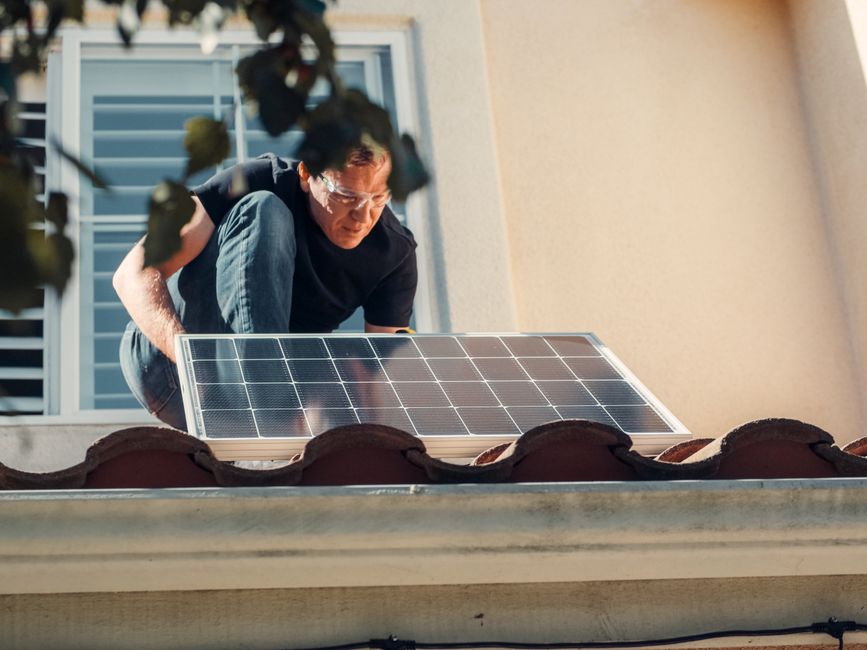
Installation day: 1 to 3 days. The physical work goes fast. A typical 8 to 10 kW residential system can be racked, wired, and commissioned in one to two days with a crew of three. If you have a complex roof, multiple array orientations, or you’re adding battery storage, plan for two to three days. This is the part homeowners expect to take the longest. It almost never does.
Utility inspection and interconnection: 1 to 8 weeks. After installation, your utility needs to approve the system before it can export power to the grid. The installer submits interconnection paperwork; a utility inspector (and sometimes a city inspector) comes out; then the utility installs a new bi-directional meter or grants permission-to-operate (PTO). This step is entirely outside your installer’s control, and it’s where timelines get blown up in congested grids. California’s investor-owned utilities, including PG&E and SCE, have faced significant interconnection backlogs. Some homeowners have sat on completed systems for eight or ten weeks waiting for PTO.
Your panels can be fully installed on your roof and you still can’t legally turn them on until PTO is granted. I’ve seen homeowners surprised by this more than almost any other aspect of the process.
Check how your installer handles permit expediting by asking them directly: learn what questions to ask solar installers before signing.
A Realistic Timeline by Region
| Region | Permitting Time | Utility Interconnection | Total Timeline | Key Factors |
|---|---|---|---|---|
| Texas (Austin/Dallas) | Fast | 2-4 weeks | 6-9 weeks | Streamlined utilities (Oncor, Austin Energy) |
| California (Bay Area/LA) | 2-3 weeks | 4-8 weeks | 10-16 weeks | NEM 3.0, PG&E/SCE queue backlogs |
| Massachusetts/Connecticut | 3-4 weeks | 4-6 weeks | 12-20 weeks | High demand, town-by-town variation, National Grid delays |
| Florida (Tampa/Orlando) | Fast | 2-4 weeks | 7-11 weeks | Generally fast permitting, improved FPL interconnection |
Helpful resource: Renogy 100W 12V Flexible Solar Panel is a top-rated option for this. (As an Amazon Associate this site earns from qualifying purchases.)
Geography matters more than most installers will tell you upfront.
Texas (Austin or Dallas): Permitting is relatively fast, utilities like Oncor or Austin Energy have streamlined interconnection in recent years. Realistic total timeline: 6 to 9 weeks.
California (Bay Area or LA): NEM 3.0 changed the economics, and interconnection queues at PG&E and SCE are real. Realistic total timeline: 10 to 16 weeks, sometimes longer.
Massachusetts or Connecticut: Strong solar incentive programs mean installer demand is high, permitting varies town by town, and National Grid interconnection can run slow. Realistic total timeline: 12 to 20 weeks.
Florida (Tampa or Orlando): Generally fast permitting in most counties, FPL interconnection has improved. Realistic total timeline: 7 to 11 weeks.
These are estimates, not guarantees. An experienced local installer who knows your specific utility and building department will give you a more accurate forecast than any national average.
Start comparing local installer timelines side by side using a platform like EnergySage to filter by installer experience in your specific utility territory.
Three Real-World Examples
New construction, Phoenix, AZ: 9.6 kW system, straightforward south-facing roof, SRP utility territory. Site assessment to PTO: 41 days. Permitting took 11 days. Installation was one day. SRP interconnection: 18 days. Clean, fast, near-ideal conditions.
Retrofit, suburban Boston, MA: 7.2 kW system with 10 kWh Enphase IQ battery, older electrical panel requiring upgrade, Eversource utility territory. Site assessment to PTO: 19 weeks. Panel upgrade added two weeks and required a separate electrical permit. Town permitting took four weeks due to a historic district review. Eversource interconnection: six weeks. Nothing went “wrong,” exactly. It just stacked.
Rural Vermont, co-op utility: 6 kW system, net metering through a small electric co-op. The co-op required a separate interconnection study because the line capacity was close to its limit. Total timeline: 26 weeks. The installer had done dozens of projects in the state but only two with this particular co-op. Lesson: small utilities with limited staff and older infrastructure are their own category.
Build a realistic timeline buffer into your plan by requesting your installer’s average PTO timeline specifically for your utility, not their statewide average.
What You Can Actually Control
You can’t speed up a utility inspector. You can keep your own side of things moving.
Respond to installer requests for documents (HOA approvals, structural reports, signed permits) within 24 hours. Delays on the homeowner side are more common than most people admit. If your HOA needs to approve the system, get that process started before you even sign a contract. HOA review alone can add two to four weeks.
“One of the most preventable delays I see is homeowners waiting on their HOA approval after installation is already scheduled,” says Jared Feldman, a solar project coordinator with over a decade of residential installations in California. “Get that letter in hand before you sign your contract.”
Also: find out early whether your electrical panel needs an upgrade. A 100-amp panel often can’t support a modern solar-plus-storage system, and a panel upgrade adds cost (typically $1,500 to $3,000) and one to three weeks to your timeline. Ask your installer to flag this at the site assessment stage.
If you want to track your system’s performance closely once it’s live, a home energy monitor like the Emporia Vue 3 (available on Amazon) gives you real-time consumption and production data that most inverter apps miss. (This site may earn a commission on purchases.)
Test your installer’s responsiveness before you sign: send a detailed email with three specific questions and see how long it takes to get a complete answer.
Sources
- EnergySage Solar Marketplace Data: Consumer-facing platform publishing installer pricing, timelines, and quote comparisons based on hundreds of thousands of homeowner quotes.
- Solar Energy Industries Association (SEIA): U.S. solar industry trade association publishing installation statistics, policy updates, and state-by-state market data.
- National Renewable Energy Laboratory (NREL), “Residential Solar Soft Costs” report: Ongoing research on permitting, inspection, and interconnection timelines across U.S. jurisdictions.
- California Public Utilities Commission, NEM 3.0 Decision: Regulatory framework governing California solar interconnection and net metering policy.
- Emporia Energy consumer product documentation: Specs and integration details for home energy monitoring hardware.
The honest summary of all this: solar installation isn’t complicated, but the calendar is mostly outside your control. Pick an installer who’s done volume in your specific utility territory, clear your HOA hurdle before signing anything, and budget four months mentally so that two months feels like a win.
Recommended Resources
Disclosure: As an Amazon Associate, we earn a small commission from qualifying purchases at no extra cost to you. We only recommend products that genuinely support the topics covered in this article.
- Renogy 200W Solar Starter Kit + 30A Charge Controller (~$169), Complete beginner solar kit, 200W monocrystalline panel, charge controller, and mounting hardware included.
- EF EcoFlow DELTA 2 Portable Power Station (1024Wh) (~$599), 1024Wh LFP battery with 1800W output, top-rated solar generator for home backup power. Charges in under 2 hours.