 Patricia Moore
Roughly 40% of U.S. homes are under 1,500 square feet. And a huge chunk of those homeowners assume solar just isn’t worth it for them. I’ve heard it dozens of times: “My roof isn’t big enough,” “My bill isn’t high enough,” “The payback period would be forever.” Honestly? That instinct is wrong more often than right. A smaller house typically means a smaller system, which means lower upfront cost, faster payback, and in many cases, better economics per watt than a sprawling 3,000-square-foot system that needs premium panels just to squeeze onto the roof.
The number that usually surprises people: according to EnergySage’s current market data, the average cost of a small residential solar system (4-6 kW, which covers most homes under 1,500 sq ft) runs between $11,000 and $17,000 before incentives. After the federal Investment Tax Credit (ITC), which sits at 30% as of this year, that drops to roughly $7,700 to $11,900. That’s not pocket change, but it’s not the $30,000 figure people assume when they picture “going solar.”
- A typical 4-6 kW system for a small home costs $11,000-$17,000 before incentives in 2026.
- The 30% federal tax credit reduces that to roughly $7,700-$11,900 out of pocket.
- Payback periods for small homes commonly run 7-10 years, with 25+ year panel warranties.
- Homes under 1,500 sq ft often need only 8-14 panels, fitting on most standard roofs.
- State incentives, net metering, and local utility rates change the math significantly by region.
What Does a Small Home Actually Need?
Let’s get concrete. A house under 1,000 square feet with average usage consumes roughly 500-700 kWh per month in most of the continental U.S. A home in the 1,000-1,500 sq ft range is usually somewhere between 600 and 900 kWh. The Solar Energy Industries Association (SEIA) reports the U.S. average is around 886 kWh per month across all home sizes, so a small home is meaningfully below average.
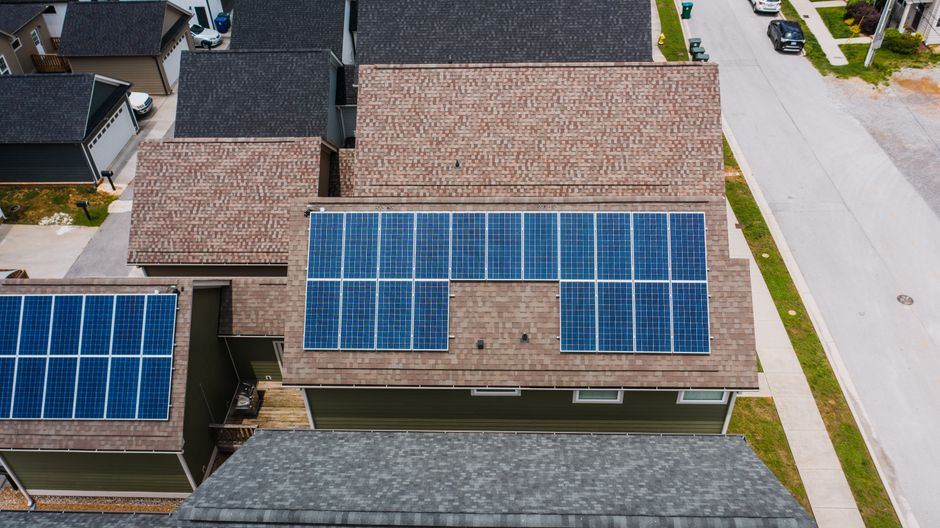
To cover 600 kWh per month, you’d typically need a 4-5 kW system in a sunny state like Arizona or Texas. In a cloudier region like the Pacific Northwest or New England, you might need 5-6 kW to hit the same output. That translates to about 10-14 panels using modern 400W modules (the current industry standard; panels below 350W are getting rare in residential installs). Eight to fourteen panels fit comfortably on most small roofs, which is why the “my roof is too small” concern usually doesn’t hold up.
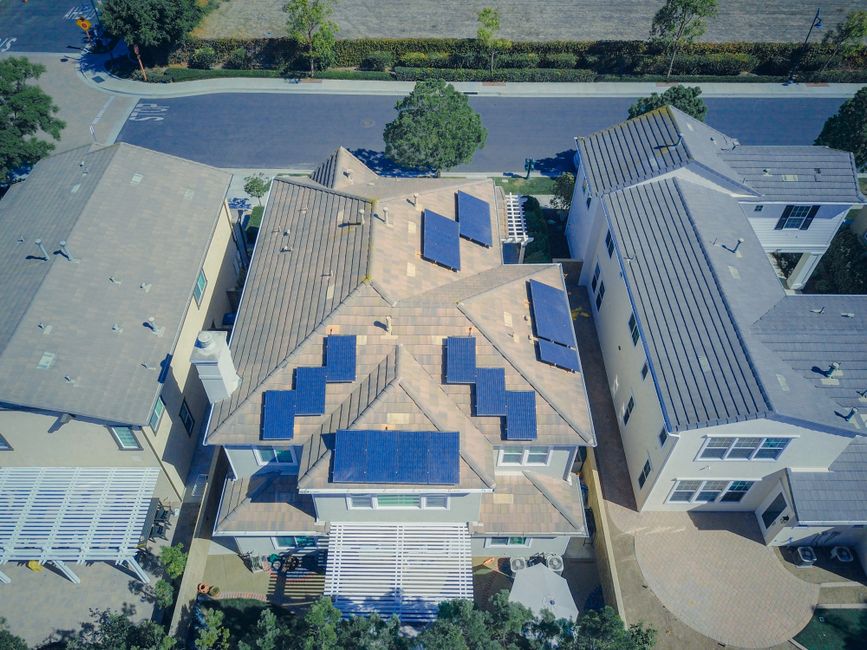
One thing installers often don’t mention upfront: roof orientation matters more than roof size. A south-facing pitch in good condition with no shading is worth more than twice the square footage of a north-facing or heavily shaded surface. I’ve seen homeowners with 1,000 sq ft homes outperform neighbors with 2,200 sq ft homes simply because their roof geometry was better. Don’t let anyone sell you a bigger system to compensate for a bad orientation. Fix the orientation problem first, or accept the limitation honestly.
The Real Numbers: System Size vs. Cost in 2026
Helpful resource: Lutron Caséta Wireless Smart Dimmer Kit is a top-rated option for this. (As an Amazon Associate this site earns from qualifying purchases.)
Here’s a breakdown I put together from current installer quotes and EnergySage market data. These figures reflect installed costs (equipment plus labor) before any incentives, current as of July 2026.
| System Size | Typical Home Size | Est. Before ITC | After 30% ITC | Est. Annual Savings | Simple Payback |
|---|---|---|---|---|---|
| 3 kW | Under 800 sq ft | $8,400-$10,500 | $5,880-$7,350 | $600-$900 | 7-10 years |
| 4 kW | 800-1,100 sq ft | $11,200-$14,000 | $7,840-$9,800 | $800-$1,200 | 7-10 years |
| 5 kW | 1,100-1,400 sq ft | $14,000-$17,500 | $9,800-$12,250 | $1,000-$1,500 | 8-11 years |
| 6 kW | 1,400-1,600 sq ft | $16,800-$21,000 | $11,760-$14,700 | $1,200-$1,800 | 8-11 years |
Annual savings depend heavily on local electricity rates and net metering policies. Figures assume ~$0.15/kWh average retail rate and full net metering credit.
What jumps out here is that the cost-per-watt doesn’t improve dramatically as you scale down. A 3 kW system often runs $2.80-$3.50/W installed, and a 6 kW system might run $2.80-$3.50/W as well. The labor overhead is similar regardless of system size, which is why some installers quietly steer small homeowners toward larger systems than they need. Ask for the cost-per-watt explicitly. If they quote you $4.00/W or higher, get another bid.
Where the Money Actually Goes
What Type of Solar Panel Should You Buy? · The Solar Lab on YouTube
A lot of people assume panels are the biggest cost. They’re not. Panels typically represent about 25-30% of a total installed system cost. Labor runs 10-15%, the inverter (the box that converts DC to AC power) is another 10-15%, and permitting, design, and overhead swallow the rest. This matters because when you’re comparing quotes, a suspiciously low panel price often just means higher margins elsewhere.
For small systems, I generally recommend string inverters for the straightforward economics: a Enphase IQ8 microinverter setup on an 8-panel system adds $800-$1,200 over a string inverter from SolarEdge or Fronius, and the shade-tolerance advantage rarely justifies that premium on a clean, unobstructed roof. If you’ve got a chimney, skylights, or a tree that shades even two panels during peak hours, the calculation flips. Microinverters win there, no argument.
One thing I got wrong for years: I underestimated how much local electricity rates drive payback period. A homeowner paying $0.12/kWh (think parts of the Southeast) has much longer payback than someone paying $0.28/kWh in California or Massachusetts. NREL’s data shows average U.S. retail electricity rates have climbed roughly 3-4% annually over the past decade. Every year you wait, that payback period quietly improves, because the value of each solar kilowatt-hour you generate goes up with your utility rate.
Three Real-World Scenarios
Maria, a reader from Tucson with an 1,100 sq ft home, got quotes ranging from $13,500 to $19,200 for a 5 kW system. She used EnergySage’s marketplace to get competitive bids and landed at $14,800 before incentives. After the 30% ITC, her effective cost was $10,360. Her Tucson Electric Power bill was averaging $148/month before solar. Post-install, it dropped to roughly $18/month (a connection fee), saving her about $1,560/year. Payback: about 6.6 years.
David, outside Portland, Oregon, installed a 5 kW system on his 1,300 sq ft bungalow. Same system size as Maria’s, but with significantly less sun exposure (Portland averages 4.1 peak sun hours vs. Tucson’s 6.5). His annual production is about 5,200 kWh versus Maria’s projected 8,100 kWh. His annual savings are closer to $780, giving him a payback closer to 12 years after incentives. Still positive, but the difference is real.
A third case worth mentioning: a couple in Massachusetts with a 900 sq ft cape who installed a 4 kW system with battery backup (a Tesla Powerwall 3). Total cost before incentives was $28,500. The ITC covered $8,550, but they also qualified for the Massachusetts Solar Tax Credit (15%, up to $1,000) and a net metering credit that’s above-average in that state. Their payback is closer to 10-11 years, but they bought the battery for backup power during outages, not payback math. That’s a legitimate reason to go bigger on budget if grid reliability matters to you. But if pure economics is the goal, skip the battery for now. The numbers don’t support it for most small homes.
If you want to track your production yourself, a home energy monitor like the Emporia Vue 2 (affiliate link) is a practical way to see exactly what your panels are generating and where your consumption goes before you even get a solar quote. I’ve pointed a lot of homeowners toward this step first, and it almost always changes what system size they end up buying.
The Incentive Landscape Right Now
The 30% federal ITC runs through 2032, then steps down to 26% (2033), 22% (2034), and potentially expires or changes after that. As of July 2026, no new federal legislation has altered that schedule. Claim it via IRS Form 5695 on your federal return. One common mistake: it’s a tax credit, not a rebate. If your federal tax liability is only $4,000 and your credit is $9,000, you only get $4,000 this year. The rest carries forward to the next year. Most people don’t realize you can split it across years.
State and utility incentives vary enormously. Some states, like New York and California, layer on additional rebates. Others, like Florida, have good net metering but minimal direct rebates. Check your state energy office and DSIRE (the Database of State Incentives for Renewables and Efficiency) before you sign anything. I’d also check whether your utility offers a net metering program and what the compensation rate is. Full retail net metering (where you get credited at the same rate you pay) makes a 25-35% difference in long-term economics versus programs that only credit at wholesale rates.
Sources
- EnergySage Solar Marketplace Data: Current installer pricing, cost per watt benchmarks, and system size data for residential solar
- Solar Energy Industries Association (SEIA): U.S. residential solar market statistics, capacity trends, and policy tracking
- NREL (National Renewable Energy Laboratory): Peak sun hours by region, system performance modeling, and electricity rate trend data
- DSIRE (Database of State Incentives for Renewables & Efficiency): State-by-state solar incentives, rebates, and net metering policy details
- IRS Form 5695 instructions: Federal solar Investment Tax Credit (ITC) eligibility and carry-forward rules
Photo: Trinh Trần via Pexels
Recommended Resources
Disclosure: As an Amazon Associate, we earn a small commission from qualifying purchases at no extra cost to you. We only recommend products that genuinely support the topics covered in this article.
- Renogy 200W Solar Starter Kit + 30A Charge Controller (~$169), Complete beginner solar kit, 200W monocrystalline panel, charge controller, and mounting hardware included.
- EF EcoFlow DELTA 2 Portable Power Station (1024Wh) (~$599), 1024Wh LFP battery with 1800W output, top-rated solar generator for home backup power. Charges in under 2 hours.
- Renogy 2×100W Monocrystalline Solar Panels (~$99), Expandable 200W panel set from the most trusted DIY solar brand, used widely in off-grid and home backup systems.