 Craig Stevens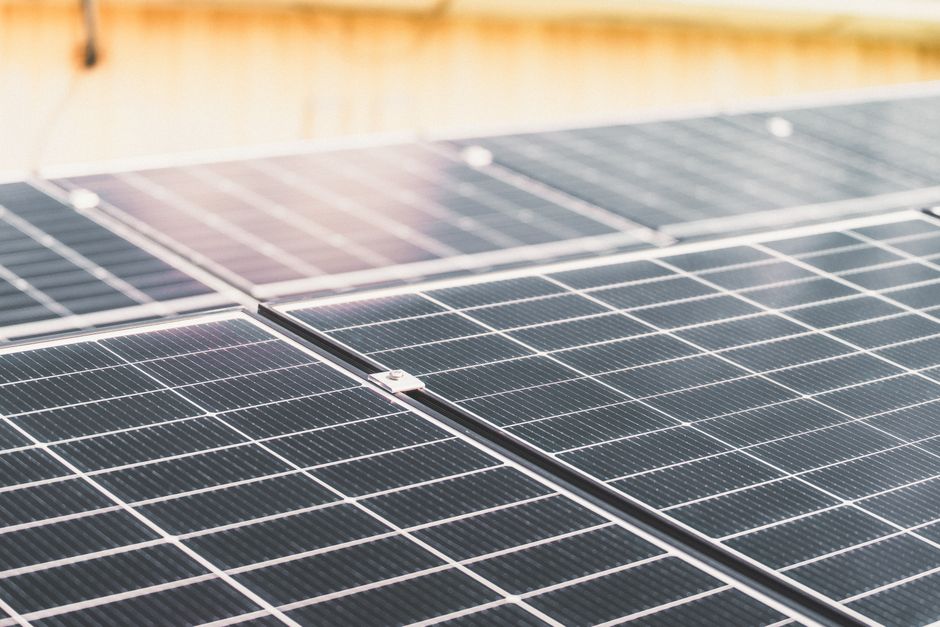
New Jersey might be the most interesting solar market in the country right now. I don’t say that to hype it up. I say it because when I started looking closely at the numbers for Garden State homeowners, I kept finding things that surprised me, including a few that made me reconsider advice I’d been giving people for years.
Here’s the thing most installers won’t tell you upfront: New Jersey isn’t a great solar state because of its sunshine. It’s not. Newark gets roughly 4.2 peak sun hours per day, which is solidly mediocre compared to Phoenix’s 5.9 or even Charlotte’s 4.8. What makes New Jersey work is the policy stack, a combination of incentives that, when you add them up, genuinely changes the math in ways I haven’t seen replicated anywhere else on the East Coast.
Let me walk you through what’s actually going on here, as of August 2026.
- NJ homeowners can combine the 30% federal tax credit with the state's SREC II program, reducing payback periods to 6-8 years in many cases.
- Average installed cost in NJ runs $2.80-$3.20 per watt before incentives, or roughly $16,800-$19,200 for a 6 kW system.
- NJ solar systems are exempt from both state sales tax and property tax reassessment, two savings most homeowners overlook.
- The NJ net metering policy is under pressure; locking in current terms sooner rather than later may be worth the urgency.
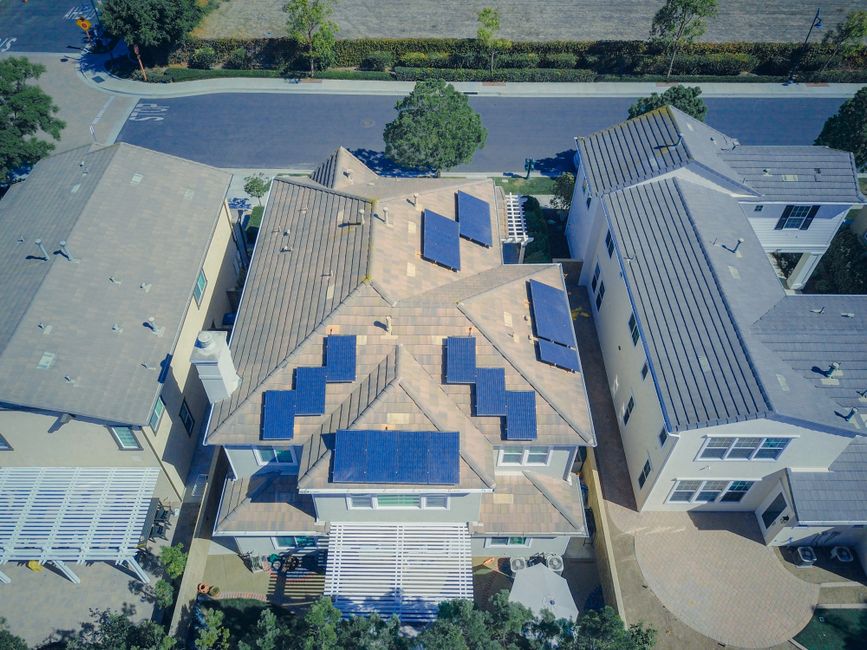
- A south-facing roof with minimal shading will outperform a larger system on a compromised roof, shade is the enemy here.
What It Actually Costs in NJ Right Now
Before incentives, a typical 8 kW residential system in New Jersey will run you somewhere between $22,400 and $25,600 based on current EnergySage market data for the Mid-Atlantic region. Most of the quotes I review from NJ homeowners fall in that $2.80 to $3.20 per watt range. There are outliers on both ends, and if someone quotes you under $2.50/watt, I’d want to know exactly what equipment they’re using.
After the 30% federal Investment Tax Credit (applied in 2026, which remains at 30% through 2032 under current law), that $24,000 system drops to roughly $16,800 out of pocket. That’s before New Jersey’s own incentives touch it.
| System Size | Pre-Incentive Cost | After 30% ITC | Est. SREC II Value (10 yr) | Approx. Net Cost |
|---|---|---|---|---|
| 6 kW | $16,800 – $19,200 | $11,760 – $13,440 | $4,200 – $5,400 | $6,360 – $9,240 |
| 8 kW | $22,400 – $25,600 | $15,680 – $17,920 | $5,600 – $7,200 | $8,480 – $10,720 |
| 10 kW | $28,000 – $32,000 | $19,600 – $22,400 | $7,000 – $9,000 | $10,600 – $13,400 |
SREC II values estimated at $70-$90 per SREC over 15 years, discounted to present value. Actual prices fluctuate.
One thing I almost missed the first time I analyzed a NJ project: the sales tax exemption and the property tax exemption stack on top of all this. You’re saving roughly 6.625% in sales tax on equipment costs (that’s $1,100+ on a $16,000 system), and your property taxes won’t increase even though your home value almost certainly will. That second one is surprisingly significant. A typical solar installation adds $15,000-$20,000 to a home’s resale value, according to NREL research, and in New Jersey, that value increase isn’t assessed.
The SREC II Program: The Part That Actually Moves the Needle
Helpful resource: Lutron Caséta Wireless Smart Dimmer Kit is a top-rated option for this. (As an Amazon Associate this site earns from qualifying purchases.)
New Jersey’s Solar Renewable Energy Certificate program is what separates this state from most others. Every 1,000 kWh your system produces generates one SREC, which you can sell to utilities that are required by law to source a portion of their power from solar. As of 2026, SREC II prices in NJ have been trading in the $85-$95 range per certificate, though this shifts based on supply and demand.
Here’s a worked example. An 8 kW system in central New Jersey (let’s say Mercer County) will generate approximately 9,200 kWh per year based on NREL’s PVWatts calculator with a standard 0.77 DC-to-AC derate factor. That’s roughly 9.2 SRECs annually. At $90 each, you’re collecting $828/year just from SREC sales, for 15 years under the program’s current structure. That’s $12,420 in SREC revenue before you’ve calculated a dollar of electric bill savings.
The catch: SRECs aren’t guaranteed at today’s price. If installations boom and supply outpaces utility demand, prices drop. I’ve watched this happen in New Jersey before, which is one reason the state restructured from SREC I to SREC II. The current program has better price floors, but I’d be lying if I said the risk was zero.
Net Metering: A Policy Worth Paying Attention To
What Type of Solar Panel Should You Buy? · The Solar Lab on YouTube
New Jersey’s net metering policy currently compensates homeowners at the full retail rate for excess power sent to the grid. For PSE&G residential customers paying around $0.17-$0.19/kWh (as of this year), that’s real money. But the Solar Energy Industries Association has flagged that several northeastern states are moving toward “net billing” programs that compensate at wholesale rates instead, which can slash the value of exported energy by 60-70%.
I’ll be honest: I don’t know exactly when or whether New Jersey will make this shift. The BPU has been cautious. But if you’re on the fence, this policy uncertainty is one legitimate reason to move sooner rather than wait. A few solar contracts I’ve seen in NJ now include “grandfather clause” language that locks in your net metering terms at the time of interconnection. Worth asking your installer about.
Choosing the Right Installer (And What to Watch For)
New Jersey has dozens of active installers, from national players like Sunrun, SunPower, and Trinity Solar (which is actually headquartered in NJ and has strong regional service history) to smaller local outfits. When I’ve compared quotes for NJ homeowners, the spread between the highest and lowest bids on identical systems has sometimes been $8,000 or more. That’s not a small number.
A few things I look for that generic buyer’s guides skip:
The interconnection timeline matters enormously in NJ. JCP&L and PSE&G have different processing speeds, and your installer should know which utility serves your address and what the current backlog looks like. I’ve seen interconnection wait times stretch from six weeks to six months depending on the utility and the installer’s familiarity with local paperwork. The form you’re waiting on is the Parallel Generation Interconnection Application, and a good installer will know exactly where yours is in the queue.
Panel choice in NJ: given the modest sun hours, high-efficiency panels (Panasonic, REC Alpha, or Maxeon series) can recover 8-12% more energy from the same roof footprint compared to budget modules. On a shaded or smaller roof, this is the upgrade worth paying for.
Scenario: A homeowner in Montclair with a 1,400 sq ft south-facing roof section got competing quotes of $31,000 (SunPower/Maxeon, 9.4 kW) and $24,500 (generic modules, 10 kW). After the 30% ITC, the gap narrowed to about $4,550. Projected SREC and bill savings over 15 years favored the higher-efficiency system by roughly $3,200, nearly closing the cost gap entirely. Not always the case, but worth running the numbers.
Battery Storage: Does It Pencil Out in NJ?
What surprised me when I dug into this: for most NJ homeowners with strong net metering, adding battery storage doesn’t dramatically improve ROI on its own. If you’re getting full retail rate credit for grid exports, there’s less financial incentive to store that power at home. A 13.5 kWh Tesla Powerwall currently runs $11,000-$13,000 installed, which is a substantial addition.
Where storage absolutely makes sense in New Jersey: if you’re on a time-of-use rate (PSE&G’s “MySolar” tariff, for example) where export rates at midday are lower than evening peak rates, or if you’ve experienced extended outages from storms. NJ takes real hurricane hits. I’ve talked to homeowners in Ocean County who lost power for 9 days after a nor’easter and now treat their Powerwall as a non-negotiable. That’s a legitimate use case. Just don’t let an installer sell you storage purely on financial grounds if your net metering situation doesn’t support it yet.
Sources
- NREL PVWatts Calculator: Used for production estimates by county and system size
- Solar Energy Industries Association (SEIA): State-by-state solar policy tracking, net metering status
- EnergySage Solar Marketplace: Installer quote data and regional price benchmarks
- NJ Board of Public Utilities (NJBPU): Official SREC II program rules, interconnection requirements
- NREL “Selling Into the Sun” report: Solar home value premium research cited in property tax section
Photo: Elite Power Group via Pexels
Recommended Resources
Disclosure: As an Amazon Associate, we earn a small commission from qualifying purchases at no extra cost to you. We only recommend products that genuinely support the topics covered in this article.
- Renogy 200W Solar Starter Kit + 30A Charge Controller (~$169), Complete beginner solar kit, 200W monocrystalline panel, charge controller, and mounting hardware included.
- EF EcoFlow DELTA 2 Portable Power Station (1024Wh) (~$599), 1024Wh LFP battery with 1800W output, top-rated solar generator for home backup power. Charges in under 2 hours.
- Renogy 2×100W Monocrystalline Solar Panels (~$99), Expandable 200W panel set from the most trusted DIY solar brand, used widely in off-grid and home backup systems.