 Derek Hansen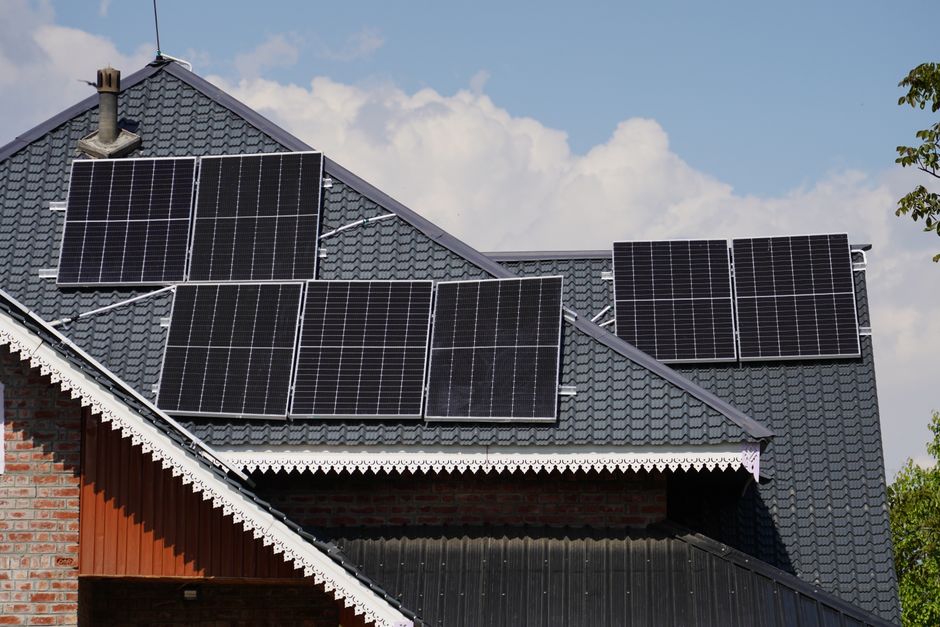
North Carolina has quietly become one of the better states for residential solar, and most coverage either oversells it or buries the details that actually matter when you’re signing a contract. So let me give you the real picture.
The state sits in a genuinely good solar sweet spot. Not Arizona sun, but not Seattle gloom either. Raleigh averages about 4.5 peak sun hours per day, which NREL’s solar resource data confirms is solidly above the national median. That number matters more than most homeowners realize, because it’s what determines how much electricity a given system size actually produces over a year.
What most coverage glosses over: North Carolina’s retail electricity rates are currently around 13 cents per kWh, which is below the U.S. average of roughly 17 cents. That one fact meaningfully changes your payback math compared to, say, California or Massachusetts. Lower rates mean slower payback, full stop. I’ll show you exactly what that looks like.
- NC homeowners average $25,000–$33,000 before incentives for a 10–12 kW system; after the 30% federal tax credit, expect $17,500–$23,100.
- NC's retail electricity rate (~13¢/kWh) is below the U.S. average, so payback periods run 9–13 years, longer than in high-rate states.
- NC has no state solar tax credit as of 2026, but a solid Property Tax Exemption on solar's added home value.
- Duke Energy and Dominion offer net metering, but the policy caps and credit rates have gotten less generous since 2023.
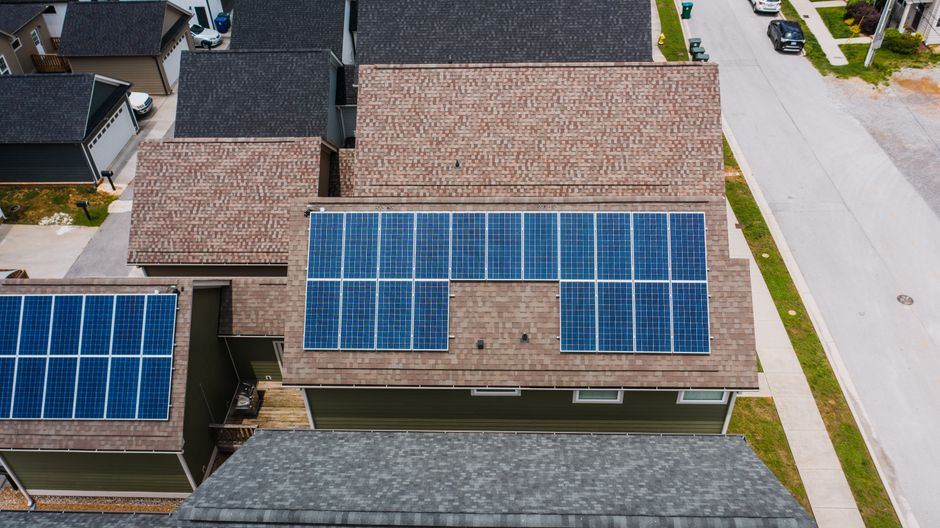
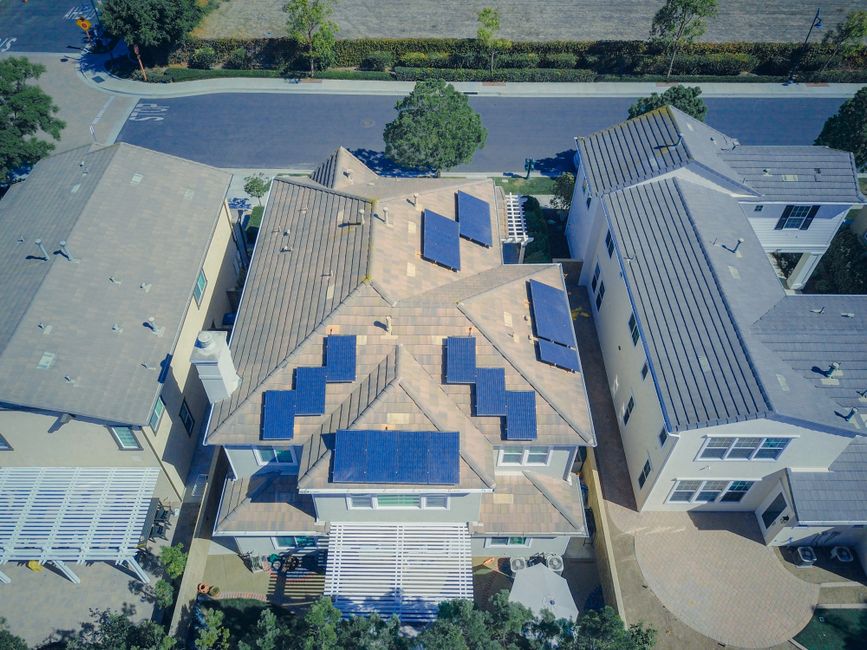
- A south-facing roof with minimal shade and a pitch between 15–40 degrees is where NC solar performs best.
What Solar Actually Costs in North Carolina Right Now
As of August 2026, the average installed cost for residential solar in North Carolina runs between $2.50 and $3.20 per watt before incentives, based on EnergySage’s current market data for the state. A typical 10 kW system lands between $25,000 and $32,000 before any credits.
The federal Residential Clean Energy Credit remains at 30% through 2032 (thank the Inflation Reduction Act for that runway). On a $28,000 system, that’s $8,400 back at tax time. Not a rebate, a tax credit, so you need to actually owe that much in federal taxes to use it fully. If you don’t, the unused portion carries forward to subsequent years, which most installers mention and then immediately underexplain.
| System Size | Gross Cost (est.) | After 30% Federal Credit | Annual Production (est.) | Simple Payback |
|---|---|---|---|---|
| 8 kW | $20,000–$25,600 | $14,000–$17,920 | 10,400–11,200 kWh | 11–14 years |
| 10 kW | $25,000–$32,000 | $17,500–$22,400 | 13,000–14,000 kWh | 9–13 years |
| 12 kW | $30,000–$38,400 | $21,000–$26,880 | 15,600–16,800 kWh | 10–14 years |
| 14 kW | $35,000–$44,800 | $24,500–$31,360 | 18,200–19,600 kWh | 10–14 years |
Production estimates assume 4.5 peak sun hours and a quality system with less than 10% shading loss. Add battery storage and you’re typically looking at another $10,000–$15,000 for a single Enphase IQ Battery 5P or Tesla Powerwall 3.
North Carolina’s Incentive Stack (and What’s Missing)
Helpful resource: Lutron Caséta Wireless Smart Dimmer Kit is a top-rated option for this. (As an Amazon Associate this site earns from qualifying purchases.)
Here’s where I have to deliver mildly disappointing news. North Carolina used to have a 35% state tax credit, one of the best in the country. It expired at the end of 2015 and nothing replaced it. So if you’re reading an older article that mentions a state credit, that’s stale information.
What you do get in 2026:
Property Tax Exemption: The added value solar gives your home is 100% exempt from property tax assessment. Real estate data from NREL consistently shows solar adds roughly $3–$4 per watt to home value, so a 10 kW system might add $30,000–$40,000 in appraised value, none of which increases your annual tax bill. That’s a genuinely good perk.
Sales Tax Exemption: Solar equipment is exempt from North Carolina’s 4.75% state sales tax. On a $25,000 system, that’s about $1,187 you’re not paying. Worth noting even if it’s less exciting than a tax credit.
Utility Incentives: Duke Energy Carolinas and Duke Energy Progress occasionally run rebate programs, though availability changes and supply exhausts quickly. Check the NC Clean Energy Technology Center’s DSIRE database before assuming anything is still live, because it changes faster than any article can track.
Net Metering: The Part That Has Changed
What Type of Solar Panel Should You Buy? · The Solar Lab on YouTube
I’d be doing you a disservice if I didn’t flag this directly. North Carolina’s net metering situation is in transition, and the direction hasn’t been homeowner-friendly.
The North Carolina Utilities Commission modified net metering rules, and both Duke Energy territories now offer a slightly degraded value for excess solar exports compared to what was available a few years ago. You still receive credits for power you send back to the grid, but depending on your rate class, those credits may be calculated at an “avoided cost” rate rather than full retail. The practical difference: you might earn 7–9 cents per kWh for exports instead of the full ~13 cents you’re saving on imports.
For homeowners who size their system correctly and consume most of their production on-site, this matters less. The problem is when installers encourage you to overbuild, claiming you’ll “bank credits all summer.” With the current rules, those banked credits don’t accumulate at full retail value, and they may not roll over indefinitely. I’ve talked with homeowners in the Charlotte area who got aggressive system-size recommendations and are now producing more than they can effectively monetize.
Right-sizing to your actual consumption is more important in NC right now than in states with stronger net metering protection.
Worked example 1: A homeowner in Cary with a 1,800 sq ft home used 14,400 kWh annually. Installer proposed a 13 kW system. On closer look, a 10 kW system would cover 13,000 kWh and use almost everything on-site. The extra 3 kW would have added ~$7,500 to the cost while generating exports credited at avoided cost rates. Staying at 10 kW saved $7,500 upfront and avoided the export-rate penalty.
Choosing an Installer in North Carolina
The Solar Energy Industries Association estimates there are over 200 solar companies operating in NC. That number is not reassuring. It means you’ll get a lot of quotes from companies whose quality ranges from excellent to “they went out of business before the warranty mattered.”
A few things I’d verify before signing anything:
NABCEP certification for the lead installer. This is the industry’s most rigorous credential and not everyone has it. Ask specifically, not “are you certified” but “what NABCEP credentials does your installation team hold.”
How they handle permits. North Carolina requires building permits for solar installations, and the jurisdiction (county or municipality) processes them. A good installer handles everything; a mediocre one hands you a stack of forms. The inspection process can take 2–6 weeks in most NC counties, sometimes longer in rural areas, so anyone promising a 2-week install-to-permission timeline in a busy county is setting you up for frustration.
References from jobs done at least 3–4 years ago. Anyone can have happy customers two months post-install. You want to know how they handle a warranty claim on year three when something underperforms.
Worked example 2: A reader in Asheville got five quotes ranging from $24,800 to $41,200 for the same 10 kW system. The lowest bidder was using older Jinko 370W panels; the highest was proposing REC Alpha 405W panels and a Solaredge inverter with a 12-year workmanship warranty. She went with the second-lowest at $29,500: Q CELLS Q.PEAK DUO panels with an Enphase IQ8 microinverter system. Three years in, she’s seen no service calls and the system’s producing within 2% of estimates.
Roof and Shading Reality Check
This is where I’ve seen the most honest mistakes, including one I nearly made on behalf of a client. A roof that looks fine from the street can have enough late-afternoon shade from a neighbor’s oak tree to cut production 15–20%. That’s the difference between a 10-year and a 13-year payback.
Ask any installer you’re considering to run a shade analysis using Aurora Solar or Solargraf, not just a visual estimate. The software ingests LiDAR data and models hourly shading across a year. If they’re not using something like that, they’re guessing.
North Carolina’s latitude (roughly 35° N) means a roof pitch between 20–30 degrees facing south is close to optimal, but southeast and southwest-facing roofs lose only about 8–12% of production compared to true south. West-facing can actually be strategically useful if Duke Energy is charging you time-of-use rates, since afternoon production aligns with peak demand periods when rates are highest.
For monitoring once your system’s live, a device like the Emporia Vue 3 Energy Monitor (the site may earn a commission on purchases) lets you see real-time production and consumption on a circuit-by-circuit level, which is genuinely useful for catching underperformance early rather than discovering it at year-end when your bill summary doesn’t match projections.
Worked example 3: Homeowner in Durham, 9 kW system installed in 2023. First summer looked fine. Second summer production dropped 11%. He’d signed up for Enphase’s app monitoring but wasn’t checking it weekly. The Emporia monitor he added flagged unusual consumption patterns, which led to discovering two microinverters had failed quietly. Covered under warranty, replaced within two weeks. Without active monitoring, that failure would have gone unnoticed for another full year.
Is Battery Storage Worth It in NC?
Probably not purely for financial return, but for a different reason than people assume.
North Carolina doesn’t have widespread time-of-use rate structures where you can arbitrage storage value the way California homeowners can. Without that rate structure, a battery’s financial case rests mainly on backup power during outages, which the Carolinas get more of than most states (Duke Energy’s reliability data shows significant storm-related outages, especially after hurricane seasons).
If you lose power two or three times a year for meaningful stretches, a Powerwall 3 or Enphase IQ Battery 5P is worth serious consideration. If you’re in a grid-stable suburban area and power blips happen maybe once a year for a few hours, the $12,000–$15,000 addition is hard to justify on math alone.
My honest take: add battery conduit rough-in during installation (costs maybe $300–$500 extra) so you can add storage later without a full reinstall. Don’t add the battery on day one unless backup power is a genuine priority for you.
Sources
- EnergySage Market Data: Current installer pricing and consumer solar quote data, updated quarterly
- NREL PVWatts Calculator: Solar production estimates by geography and system configuration
- NC Clean Energy Technology Center / DSIRE: Database of State Incentives for Renewables and Efficiency, including current NC programs
- Solar Energy Industries Association (SEIA): State solar market data and policy tracking
- NC Utilities Commission: Net metering rule proceedings and current interconnection standards for Duke Energy territories
Photo: Iqbal farooz via Pexels
Recommended Resources
Disclosure: As an Amazon Associate, we earn a small commission from qualifying purchases at no extra cost to you. We only recommend products that genuinely support the topics covered in this article.
- Renogy 200W Solar Starter Kit + 30A Charge Controller (~$169), Complete beginner solar kit, 200W monocrystalline panel, charge controller, and mounting hardware included.
- EF EcoFlow DELTA 2 Portable Power Station (1024Wh) (~$599), 1024Wh LFP battery with 1800W output, top-rated solar generator for home backup power. Charges in under 2 hours.
- Renogy 2×100W Monocrystalline Solar Panels (~$99), Expandable 200W panel set from the most trusted DIY solar brand, used widely in off-grid and home backup systems.