 Nadia Patel
You finally get your first electric bill after going solar. You were expecting something close to zero. Instead, it’s $94. You call your installer confused, and they explain that yes, your panels are producing power, but you’re still drawing from the grid every evening when the sun goes down. You didn’t add a battery. And now, six months in, you’re wondering if you made the right call.
I’ve had this conversation more times than I can count. Battery storage is one of the most misunderstood parts of going solar, and most installers either oversell it or barely mention it. The honest answer is: a battery isn’t always worth it, but sometimes it absolutely is. Let’s actually break down what the difference looks like in real life.
What You’re Actually Getting Without a Battery
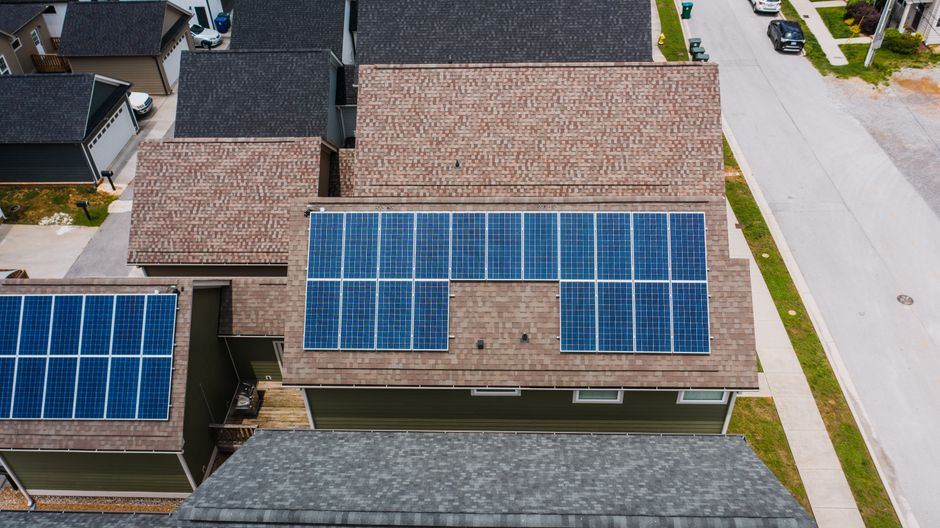
A standard grid-tied solar system without storage is simpler than most people realize. Your panels produce DC electricity, an inverter converts it to AC, and your home uses it in real time. If your panels produce more than you need at that moment, the excess gets pushed back to the grid. If you need more than your panels are producing (like at 8pm), you pull from the grid. That’s it.
This setup works well. Around 4.5 million U.S. homes have solar without batteries, according to SEIA data, and for good reason. The economics are often solid, especially in states with generous net metering policies. Net metering lets you earn credits on your bill for the power you export, then draw on those credits at night. In a full retail net metering state like New Jersey or Oregon, you’re effectively using the grid as your battery for free.
But here’s what’s happening: net metering rules are changing. Fast. California’s NEM 3.0, which took effect in 2023, cut export compensation rates by roughly 75% compared to the old policy. That single policy change made batteries dramatically more attractive in California almost overnight. Other states are watching and following suit.
So the no-battery path works well right now in many places. But “right now” is doing a lot of work in that sentence.
What Adding a Battery Actually Changes
Helpful resource: Renogy 100W 12V Flexible Solar Panel is a top-rated option for this. (As an Amazon Associate this site earns from qualifying purchases.)
A home battery, most commonly a Tesla Powerwall 3, Enphase IQ Battery 5P, or Franklin Electric aPower, stores excess solar energy during the day so you can use it at night. You’re no longer automatically dependent on the grid when the sun goes down. The benefits break into three categories.
Self-consumption. Instead of exporting cheap solar power to the grid and buying expensive grid power back at night, you use your own stored energy. In markets where time-of-use (TOU) rates apply, evening electricity can cost 30 to 50 cents per kWh while you exported your solar at 3 to 8 cents. A battery closes that gap.
Backup power. This is the one most people forget to think about until there’s a blackout. A standard grid-tied solar system without a battery shuts off during a grid outage, which is a safety feature to protect utility workers. With a battery and the right system configuration, your home can island from the grid and keep running. A single Powerwall 3 holds 13.5 kWh, enough to run a moderate home for 12 to 24 hours depending on consumption.
Rate arbitrage. If your utility has TOU pricing, you can program a battery to charge from the grid during cheap off-peak hours (often 10pm to 6am) and discharge during expensive peak hours. You don’t even need solar to benefit from this, though the combination is more powerful.
The Real Cost Difference: What the Numbers Look Like
| Configuration | Avg. Installed Cost (After 30% ITC) | Typical Payback Period |
|---|---|---|
| Solar only (good net metering) | $12,000 - $17,000 | 6 - 9 years |
| Solar only (weak net metering) | $12,000 - $17,000 | 8 - 12 years |
| Solar + 1 battery (TOU market) | $22,000 - $28,000 | 9 - 13 years |
| Solar + 1 battery (backup priority) | $22,000 - $28,000 | 11 - 16 years |
A solar system without a battery typically costs $2.50 to $3.50 per watt installed. A 7 kW system runs roughly $17,500 to $24,500 before the federal tax credit (which is 30% through at least 2032 under the Inflation Reduction Act). After the credit, you’re looking at $12,000 to $17,000.
Add a single Tesla Powerwall 3, and you’re adding approximately $11,500 to $15,000 installed, before incentives. The 30% federal tax credit also applies to battery storage now. But your all-in cost for solar plus storage still typically runs $25,000 to $35,000 on a mid-sized home.
Several states offer additional battery incentives worth researching. California’s SGIP rebate can knock several thousand dollars off. Oregon, New York, and Massachusetts also have meaningful battery incentives.
The payback period comparison:
| Configuration | Avg. Installed Cost (After 30% ITC) | Typical Payback Period |
|---|---|---|
| Solar only (good net metering) | $12,000 - $17,000 | 6 - 9 years |
| Solar only (weak net metering) | $12,000 - $17,000 | 8 - 12 years |
| Solar + 1 battery (TOU market) | $22,000 - $28,000 | 9 - 13 years |
| Solar + 1 battery (backup priority) | $22,000 - $28,000 | 11 - 16 years |
These ranges reflect national averages from EnergySage’s 2023 solar marketplace data. Your specific numbers will vary based on local electricity rates, usage profile, and available incentives.
How to Know Which Option Makes Sense for You
Rather than leaving you with a generic “it depends,” here’s how to actually work through this.
Step 1: Look up your state’s net metering policy. If your utility offers full retail net metering, a battery’s financial case is weaker right now. If you’re in California under NEM 3.0, or your state has moved to avoided-cost compensation (typically 3 to 8 cents per kWh), batteries are much more compelling. Your state’s public utilities commission website will have this, or you can call your utility directly.
Step 2: Check your utility’s rate structure. Log into your utility account and look for TOU rates. If peak rates are above 25 cents and off-peak is below 12 cents, you have real arbitrage potential. On a flat rate, the financial case for a battery weakens but doesn’t disappear.
Step 3: Assess your outage risk and backup priorities. How often does your area lose power? If you live in a wildfire zone, hurricane belt, or anywhere with multi-day outages, backup power has real value that’s hard to quantify but easy to appreciate at 2am in August. The National Renewable Energy Laboratory (NREL) has published research on resilience value for home batteries, and the numbers get interesting in high-outage areas.
Step 4: Calculate your self-consumption ratio without storage. A good installer can model this. If your panels produce most of their energy while you’re at work and the house is empty, you’ll export a large percentage of your generation. In a weak net metering environment, those exports are worth very little. A battery changes that equation meaningfully.
Step 5: Consider a “battery-ready” system. On the fence? Ask your installer to design your system with a battery-ready inverter, like the SolarEdge Energy Hub or Enphase IQ8 microinverters. You can add storage later without replacing hardware. This middle path is underused and worth knowing about.
If you want actual data before deciding, a home energy monitor like the Emporia Vue 2 (Amazon, we may earn a commission) shows you exactly when and how you’re consuming power, which makes the “do I need a battery” question much easier to answer with real numbers.
The Situations Where a Battery Is Almost Always Worth It
There are scenarios where a battery isn’t optional, even if the payback period looks long on paper.
You’re in California under NEM 3.0. The avoided-cost export rates make solar-only systems significantly less valuable at night. The U.S. Department of Energy has noted that pairing storage with solar is increasingly the default recommendation in markets with low export compensation. A battery isn’t just a nice-to-have, it’s how you make the system work as intended.
You have critical medical equipment at home. If someone in your house depends on a CPAP, oxygen concentrator, or home dialysis machine, backup power isn’t a luxury. The math changes completely.
You’re going off-grid or building new in a remote location. Grid connection costs can run $10,000 to $50,000 or more depending on distance from utility infrastructure. A robust solar plus battery system often pencils out ahead of a grid connection on pure economics, not just resilience.
You own an EV and charge at home. Combined smart charging, where your EV charges from battery storage during off-peak hours, can produce meaningful savings over time and is one of the better use cases for the solar-plus-storage combination.
The battery question doesn’t have a universal answer, but it has a right answer for your specific situation. What matters is the framework to figure out your version of that answer: know your net metering rate, know your rate structure, be honest about your outage risk, and don’t let anyone rush you into a decision either way. Solar is a 25-year asset. Getting it right matters more than getting it fast.
Sources
- Renogy 100W 12V Flexible Solar Panel
- National Renewable Energy Laboratory (NREL)
- home energy monitor like the Emporia Vue 2
- U.S. Department of Energy
- Jackery Explorer 300 Portable Power Station
Disclosure: As an Amazon Associate, we earn a small commission from qualifying purchases at no extra cost to you. We only recommend products that genuinely support the topics covered in this article.
- Renogy 200W Solar Starter Kit + 30A Charge Controller (~$169), Complete beginner solar kit, 200W monocrystalline panel, charge controller, and mounting hardware included.
- EF EcoFlow DELTA 2 Portable Power Station (1024Wh) (~$599), 1024Wh LFP battery with 1800W output, top-rated solar generator for home backup power. Charges in under 2 hours.
- EF EcoFlow DELTA 2 Max (2048Wh) (~$999), 2048Wh LFP battery with 2400W output, ideal for whole-home solar backup or pairing with rooftop solar panels.
Recommended Resources
Disclosure: As an Amazon Associate, we earn a small commission from qualifying purchases at no extra cost to you. We only recommend products that genuinely support the topics covered in this article.
- Renogy 200W Solar Starter Kit + 30A Charge Controller (~$169), Complete beginner solar kit, 200W monocrystalline panel, charge controller, and mounting hardware included.
- EF EcoFlow DELTA 2 Portable Power Station (1024Wh) (~$599), 1024Wh LFP battery with 1800W output, top-rated solar generator for home backup power. Charges in under 2 hours.
- EF EcoFlow DELTA 2 Max (2048Wh) (~$999), 2048Wh LFP battery with 2400W output, ideal for whole-home solar backup or pairing with rooftop solar panels.