 Craig Stevens
Most homeowners I talk to are shocked when they realize the federal tax credit is only part of the story. A homeowner in Massachusetts can stack so many incentives that a $28,000 solar system ends up costing closer to $10,000 out of pocket. Meanwhile, a neighbor in a state with weak net metering laws and no state rebate might wait 12 years just to break even on the same size system. The difference isn’t the panels. It’s the policy.
State solar incentives vary wildly, and most installers won’t walk you through all of them. Their job is to sell a system. Your job is to know what you’re entitled to before you sign anything.
Why State Incentives Matter as Much as the Federal Credit
The federal Investment Tax Credit (ITC) is the headline number. In 2025, it’s 30% of your total installed system cost, and you can read the full mechanics of how to claim it in our breakdown of the federal solar tax credit for 2026. That’s meaningful, but it’s the floor, not the ceiling.
State incentives can slash your payback period by two to five years depending on where you live. They come in several forms: direct rebates paid to you or your installer, state income tax credits that reduce your annual tax bill, property tax exemptions that prevent your home’s assessed value from rising because you added solar, sales tax exemptions that knock 5-9% off the upfront equipment cost, and net metering policies that determine how much your utility pays you for excess power you push to the grid.
The National Renewable Energy Laboratory (NREL) tracks these programs and consistently finds that states with strong net metering and stacked incentive programs produce the highest system ROI numbers in the country. That shouldn’t be surprising, yet a lot of buyers still focus only on panel cost per watt and ignore the policy environment entirely.
The States Where Incentives Are Genuinely Exceptional
Some states have built incentive stacks so aggressive that solar is almost a no-brainer financially.
Massachusetts runs one of the most generous programs in the country. The state offers a 15% personal income tax credit worth up to $1,000, but the real engine is the Solar Massachusetts Renewable Target (SMART) program. It’s a production-based incentive where you earn a fixed rate per kilowatt-hour your system generates for 10 years. Rates vary by utility and system size but have historically run between $0.05 and $0.20 per kWh on top of any net metering credits. Add the statewide sales tax exemption on solar equipment (Massachusetts charges no sales tax on solar installations) and the property tax exemption, and you’re looking at a very stacked deal.
New York has the NY-Sun Megawatt Block program, which pays upfront incentives based on system size. Residential systems have received between $0.20 and $0.40 per watt depending on the utility territory. The state also offers a 25% tax credit worth up to $5,000. On a $25,000 system, that $5,000 state credit plus the $7,500 federal credit brings your net cost to roughly $12,500 before any utility rebates.
New Jersey abolished its solar sales tax years ago, exempts 100% of solar added home value from property tax assessments, and has a competitive Solar Renewable Energy Certificate (SREC) market where homeowners earn tradeable credits for every 1,000 kWh generated.
California no longer has the old SGIP battery storage incentive as broadly as it once did, and the 2023 NEM 3.0 changes cut net metering export rates significantly. That hurt the financial case for many new installations. It’s a good reminder that incentive programs change, and California actually became a less favorable market almost overnight because of a regulatory shift.
Texas has no state income tax, so a state income tax credit means nothing there. But many Texas utilities run their own rebate programs. Austin Energy and CPS Energy (San Antonio) have offered $2,500 rebates historically. Texas also exempts 100% of solar added value from property taxes.
States Where You Need to Be More Careful
Not every state is a solar goldmine.
Florida is interesting because it has great sun but complicated utility politics. The state has a full property tax exemption and a sales tax exemption, which helps. But Florida has been fighting over net metering for years, and some utilities have pushed for minimum bills and demand charges that eat into your savings. If you’re in Florida, ask your installer specifically about your utility’s current net metering rate structure before committing.
Georgia has weak state-level incentives. There’s no state tax credit, no meaningful statewide rebate program, and Georgia Power’s net metering terms have historically been less favorable than markets like Massachusetts or New Jersey. Solar still works there financially, especially if you consume most of your own production, but you shouldn’t expect a short payback period.
Arizona is sunny and has a 25% state tax credit worth up to $1,000, which is pretty small relative to system costs. The bigger issue is that Arizona’s largest utility, APS, has fought net metering aggressively. Export rates have dropped below the retail rate, which reduces long-term savings. The sun helps, but the policy environment isn’t as favorable as the weather might suggest.
South Carolina, Virginia, and North Carolina are improving their programs, but they’re mid-tier. Worth investigating closely at the utility level because co-ops and municipal utilities sometimes offer their own rebates that the state doesn’t mandate.
Net Metering: The Ongoing Incentive Most People Underestimate
Net metering deserves its own discussion because it’s not a one-time discount. It’s an ongoing cash flow mechanism that affects your return every single month for the life of your system.
Under full retail net metering (the most favorable version), your utility credits you at the full retail electricity rate for every excess kilowatt-hour you send to the grid. If you pay $0.18/kWh for power you consume, you also receive $0.18/kWh credit for power you export. That symmetry maximizes your savings.
Some states have moved to “avoided cost” net metering, where exports are credited at the wholesale rate, often $0.03 to $0.06/kWh. That dramatically changes your payback timeline. If you’re exporting 40% of your production and only getting credited at a third of the retail rate, your effective system value drops substantially. You can dig into how these structures affect your monthly bill on our net metering savings explained page.
States with strong net metering protection include Massachusetts, Rhode Island, Vermont, New Hampshire, Maryland, and Illinois. States where net metering has been weakened or is under active threat include California (already changed), Arizona, Nevada (partially reversed after a solar-unfriendly change in 2015), and Florida.
If you’re in a state with uncertain net metering, right-sizing your system to match your consumption rather than overbuilding for export becomes more important. You don’t want to produce power that earns you almost nothing.
A State-by-State Incentive Snapshot (Key Programs)
| State | State Tax Credit | Rebate Program | Sales Tax Exempt | Property Tax Exempt | Net Metering Strength |
|---|---|---|---|---|---|
| Massachusetts | 15% (up to $1,000) | SMART production tariff | Yes | Yes | Strong |
| New York | 25% (up to $5,000) | NY-Sun per-watt rebate | Yes | Yes | Strong |
| New Jersey | None | SREC market | Yes | Yes | Moderate-Strong |
| California | None | Some utility rebates | No | Yes | Weakened (NEM 3.0) |
| Texas | None | Utility rebates vary | Yes | Yes (100%) | Moderate |
| Florida | None | None statewide | Yes | Yes | Contested |
| Arizona | 25% (up to $1,000) | None | Yes | Yes | Weakened |
| Colorado | None | Xcel Energy rebates | Yes | Yes | Moderate |
| Illinois | None | Illinois Shines SREC | Yes | Yes | Strong |
| Georgia | None | None | No | No statewide | Weak |
This table reflects general program status as of 2025. Always verify current rates with your state energy office because programs adjust funding caps regularly.
How to Actually Find and Stack Your State’s Incentives
Here’s a practical process I recommend to every client before they get their first installer quote.
Step 1: Start at the Database of State Incentives for Renewables and Efficiency (DSIRE) at dsireusa.org. Enter your zip code and filter for solar. You’ll see every state, utility, and local incentive available. Don’t skip utility programs. Some of the best rebates come from utilities, not the state.
Step 2: Calculate your federal credit first. Your 30% ITC is calculated on the full system cost before any other rebates reduce the price. In most cases, utility rebates don’t reduce your ITC basis, but state tax credits might depending on how they’re structured. This distinction can affect your credit amount by hundreds or thousands of dollars. Our ITC solar investment tax credit explanation walks through how the credit applies to different system cost scenarios.
Step 3: Identify whether your state has a production incentive (like SMART or an SREC market) versus a one-time rebate. Production incentives pay out over years and can be more valuable in the long run, but they require paperwork and registration with your utility or state program.
Step 4: Confirm your utility’s current net metering rate and structure. Call the utility directly or check their rate tariff filed with the state public utility commission. Don’t take an installer’s word for it.
Step 5: Get at least three quotes and ask each installer to itemize which incentives they’ve included in their savings projections. EnergySage’s market data shows that homeowners who compare multiple quotes save an average of 20% on system cost. That matters as much as any state rebate.
Step 6: Run your own payback calculation. Use the total net system cost after all incentives, your utility rate, and your annual production estimate to calculate payback. Our solar payback period calculator makes this straightforward.
Sources
- Solar Panel Cleaning Brush Kit with Extension Handle
- Lutron Caséta Wireless Smart Dimmer Kit
- Jackery SolarSaga 100W Solar Panel
- Renogy 200W Solar Starter Kit + 30A Charge Controller
- EF EcoFlow DELTA 2 Portable Power Station (1024Wh)
Disclosure: As an Amazon Associate, we earn a small commission from qualifying purchases at no extra cost to you. We only recommend products that genuinely support the topics covered in this article.
- Renogy 200W Solar Starter Kit + 30A Charge Controller (~$169), Complete beginner solar kit, 200W monocrystalline panel, charge controller, and mounting hardware included.
- EF EcoFlow DELTA 2 Portable Power Station (1024Wh) (~$599), 1024Wh LFP battery with 1800W output, top-rated solar generator for home backup power. Charges in under 2 hours.
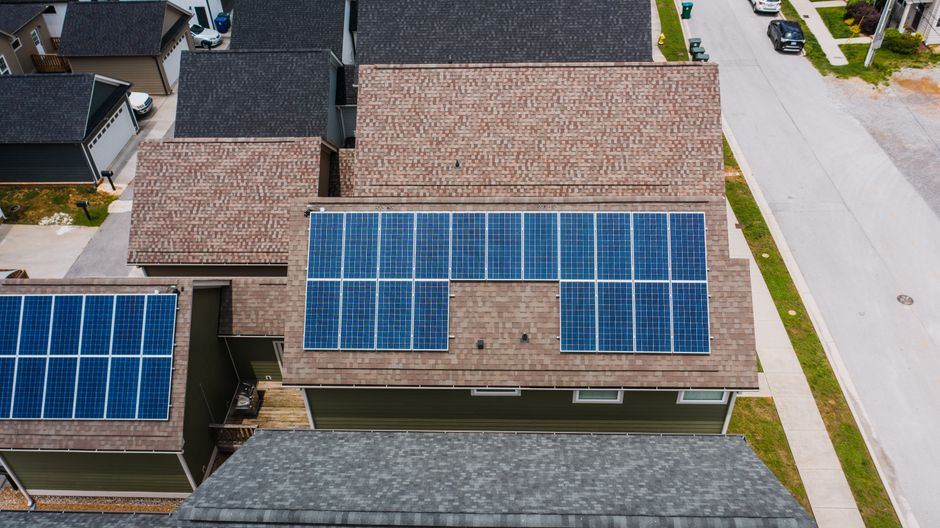
Photo: Florida Solar Fix via Pexels
Recommended Resources
Disclosure: As an Amazon Associate, we earn a small commission from qualifying purchases at no extra cost to you. We only recommend products that genuinely support the topics covered in this article.
- Renogy 200W Solar Starter Kit + 30A Charge Controller (~$169), Complete beginner solar kit, 200W monocrystalline panel, charge controller, and mounting hardware included.
- EF EcoFlow DELTA 2 Portable Power Station (1024Wh) (~$599), 1024Wh LFP battery with 1800W output, top-rated solar generator for home backup power. Charges in under 2 hours.