 Alex Rivera
Three companies dominate the residential solar conversation in America, and the coverage of them is almost universally useless. Most comparisons just list specs and call it a day. What actually matters: who’s going to be around in ten years, whose contracts won’t trap you, and whether the panels on your roof are worth what you’re paying.
Let’s get specific.
What You’re Actually Comparing
Sunrun, SunPower, and Tesla Solar are not interchangeable companies offering slightly different versions of the same thing. They have genuinely different business models, different hardware, and very different relationships with the customer. Lumping them together is like comparing a Toyota dealership, a luxury car brand, and a tech company that decided to sell cars.
Sunrun is primarily a solar financing and services company. They’ll put panels on your roof, often with a lease or power purchase agreement (PPA), and they own the equipment. As of 2023, they’re the largest residential solar installer in the U.S. by market share, according to SEIA data. Scale has its advantages: established processes, a large service network, financing options for people who don’t want to buy outright. The downside is that the installer experience varies wildly because Sunrun relies heavily on a network of subcontractors in many markets.
SunPower is a different animal. They manufacture their own Maxeon solar cells, which for years held the efficiency record among commercially available residential panels. Their current Maxeon 6 panels hit around 22.8% efficiency. They sell through a dealer network, and the pitch is premium hardware backed by one of the stronger warranties in the industry: 25 years on panels, inverters, and workmanship, all under one roof. The price tag reflects that. SunPower systems typically run 10-20% higher than the market average on a cost-per-watt basis, and that’s a conservative estimate.
Tesla Solar is the one everyone has an opinion about before they actually research it. Tesla’s strategy is the opposite of SunPower’s: standardized system sizes, no custom design consultations, all online ordering, low price. Their panels are manufactured by Hanwha Q Cells, a solid tier-1 supplier, not by Tesla. The Tesla Solar Roof (the glass tile product) is a completely separate beast from the regular panel system, and most of this comparison is about the standard panel option because the Solar Roof economics are genuinely difficult to justify for most homes.
The Price Reality
| Company | Primary Business Model | Panel Efficiency | Typical Cost/Watt | Warranty |
|---|---|---|---|---|
| SunPower | Premium hardware manufacturer | ~22.8% (Maxeon 6) | $3.50-$4.00+ | 25 years (panels, inverters, workmanship) |
| Tesla Solar | Direct-to-consumer, standardized systems | 19.8-20.6% | $2.65-$2.85 | Standard manufacturer warranty |
| Sunrun | Solar financing & installation services | Varies by package | $2.90-$3.20 (cash); PPA-based pricing | Depends on equipment sourced |
| Market Average | - | - | $3.00 | - |
Here’s the number that should anchor your thinking: the average residential solar installation in the U.S. cost about $3.00 per watt before incentives in 2023, per EnergySage market data. For a 8 kW system (typical for a 2,000 sq ft home), that’s $24,000 before the 30% federal tax credit brings it to roughly $16,800.
Tesla consistently undercuts that. Their pricing is often in the $2.65-$2.85/watt range before incentives. The catch is that pricing is non-negotiable (it’s fixed online), you can’t mix and match equipment, and the monitoring app is the only visibility you get. No sales rep, no customization consultation. For a lot of people, that’s fine. For people who want to optimize around a complicated roof, a home battery, or a time-of-use utility rate, it’s limiting.
Sunrun’s pricing is harder to pin down because it depends heavily on which product you’re buying. A cash purchase quote from Sunrun typically lands around market average ($2.90-$3.20/watt). But a big portion of Sunrun’s business is lease and PPA products, and those are structured differently. Under a PPA, Sunrun owns the panels, you pay per kilowatt-hour at a contracted rate (usually slightly below your utility rate), and you’re locked into a 20-25 year agreement. That agreement transfers to the buyer if you sell your house, which some buyers welcome and others treat like a lien they didn’t ask for.
SunPower is the most expensive. Expect $3.50-$4.00+/watt for a cash system in most markets. The question is whether the hardware justifies it, and the honest answer is: sometimes.
The Hardware Argument
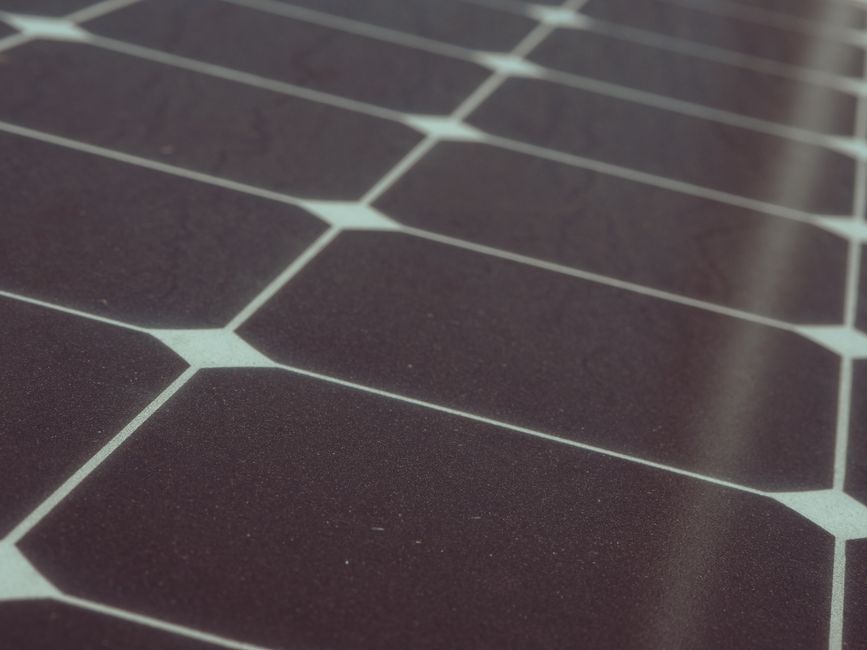
SunPower’s Maxeon cells use a back-contact design that puts metal contacts on the back of the cell, eliminating shading losses from front-side busbars and improving durability. Independent testing, including work from the National Renewable Energy Laboratory (NREL), has confirmed that Maxeon cells degrade more slowly than conventional silicon cells. SunPower advertises less than 0.25% annual degradation. Most conventional panels degrade at 0.5-0.7% per year. Over 25 years, that difference adds up to 4-6% more lifetime energy production from SunPower.
That matters on a small roof. If you’re space-constrained and need to maximize watts per square foot, the efficiency premium is real. If you have a large south-facing roof with plenty of space, standard panels from Q Cells, REC, or Panasonic will serve you just as well for considerably less money.
Tesla’s panels are fine. That’s not a slight. Hanwha Q Cells makes solid, warranted, bankable panels that’ll generate power for decades. The efficiency is around 19.8-20.6% depending on the model, which is respectable. The inverter Tesla uses is a string inverter with a power optimizer option, not microinverters. For complex roofs with shading, that matters. A reader emailed me last month asking why his Tesla system was underperforming: he had a tree shading one corner of his array, and with a string inverter setup, the underperforming panels dragged down the whole string. A microinverter system (like Enphase) handles that situation much better.
Sunrun doesn’t manufacture panels. They install whatever tier-1 equipment they’re sourcing at the time, often SunPower Maxeon panels on higher-tier packages, or more mainstream panels like LG (before LG exited the market) or Canadian Solar on standard packages. The lack of a fixed hardware story is both honest and frustrating. Make sure you get the actual equipment specs in writing before you sign anything.
The Warranty and Longevity Problem
A warranty is only as good as the company standing behind it. SunPower has been around since 1985 and has manufacturing operations invested in long-term stability. That said, they went through significant financial restructuring and a split (SunPower separated its dealer business from its manufacturing unit, which became Maxeon Solar Technologies, a publicly traded company headquartered in Singapore). The integrated warranty story is now more complicated. Worth asking your SunPower dealer specifically who is backing the warranty and how claims work.
Sunrun as a company is large and relatively well-capitalized, but their lease-model customers are dependent on Sunrun’s corporate health for the life of the contract. If Sunrun is acquired or restructures (both have happened in various forms across the solar industry in the past decade), your lease terms follow the company, not the installer who put the panels up. Read every line of the contract.
Tesla is the wildcard. The company is financially sound, but their solar division has had turbulent history: rapid scaling, mass layoffs in the solar team in 2022, and an in-and-out-of-market customer service reputation. The U.S. Department of Energy recommends checking installer licensing and insurance as part of due diligence. With Tesla’s direct-to-consumer model, on-site support if something goes wrong post-installation is handled through a call center and field service dispatch, which works until it doesn’t. Some customers have had smooth warranty claims. Others have waited months.
Who Each Company Is Actually Right For
Tesla Solar: Best for homeowners who want the lowest upfront cost on a straightforward roof, are comfortable managing everything digitally, and don’t have shading complications. Also makes sense if you want a Powerwall and want a single-vendor Tesla ecosystem. The price advantage is real. Don’t overthink it if your situation is simple.
SunPower: Best for space-constrained installs, homeowners who genuinely plan to stay in the house long-term and want to maximize lifetime production, and people who are willing to pay for a cleaner warranty experience. Not the right call if you’re optimizing purely on payback period. The numbers don’t work as well at $3.80/watt as they do at $2.90/watt.
Sunrun: Best for people who don’t want to own the system, don’t qualify for the tax credit (because a lease means Sunrun takes it, not you), or who want a large national company handling maintenance. The PPA product can genuinely make sense if you’re a retiree on a fixed income who’d rather pay a predictable monthly energy bill than put $15,000+ into a home improvement project. But go in with eyes open about the contract terms.
The comparison I hear most: SunPower vs. Tesla. My take: if your system is under 7 kW and you have shade issues, SunPower or Enphase-equipped alternatives are worth the premium. If you’ve got a clean southern exposure and 8+ kW of potential, Tesla’s lower cost per watt beats the marginal efficiency gain.
If you want to monitor any system’s actual performance yourself (rather than relying on a company’s app), a home energy monitor like the Emporia Vue gives you independent real-time visibility into what your panels are producing versus what your house is consuming. Worth having regardless of who installed your system. (Note: this site may earn a commission on purchases made through this link.)
Sources
- National Renewable Energy Laboratory (NREL)
- U.S. Department of Energy
- Emporia Vue
- P3 Kill A Watt Electricity Usage Monitor
- Solar Panel Cleaning Brush Kit with Extension Handle
Disclosure: As an Amazon Associate, we earn a small commission from qualifying purchases at no extra cost to you. We only recommend products that genuinely support the topics covered in this article.
- Renogy 200W Solar Starter Kit + 30A Charge Controller (~$169), Complete beginner solar kit, 200W monocrystalline panel, charge controller, and mounting hardware included.
- EF EcoFlow DELTA 2 Portable Power Station (1024Wh) (~$599), 1024Wh LFP battery with 1800W output, top-rated solar generator for home backup power. Charges in under 2 hours.
Recommended Resources
Disclosure: As an Amazon Associate, we earn a small commission from qualifying purchases at no extra cost to you. We only recommend products that genuinely support the topics covered in this article.
- Renogy 200W Solar Starter Kit + 30A Charge Controller (~$169), Complete beginner solar kit, 200W monocrystalline panel, charge controller, and mounting hardware included.
- EF EcoFlow DELTA 2 Portable Power Station (1024Wh) (~$599), 1024Wh LFP battery with 1800W output, top-rated solar generator for home backup power. Charges in under 2 hours.