 Nadia Patel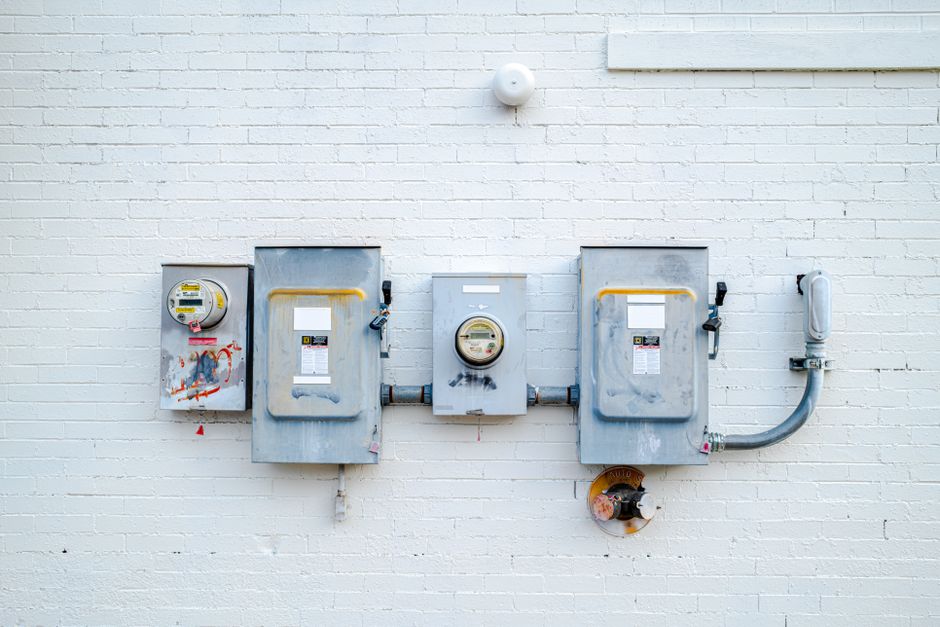
No one warns you about the interconnection process. You research panels, get three quotes, agonize over microinverters versus string inverters, maybe even spend a weekend on the EnergySage marketplace comparing cost-per-watt figures. And then, after you sign the contract, your installer mentions almost as an aside: “Oh, the utility still has to approve this. Could take a while.” A while. That’s the word they use.
I’ve watched homeowners assume their system would be running within a month of installation. Sometimes that’s true. Other times they’re sitting on a fully installed, inspection-passed solar array for four months, staring at a meter that isn’t spinning backward, because the utility hasn’t finished its paperwork. That gap between “installation complete” and “actually generating power you can use” is the interconnection process, and it’s the part of going solar that installers gloss over most consistently.
So I went deep on this. What follows is the real story.
What Interconnection Actually Is
At its core, interconnection is the utility’s formal approval to connect your solar system to the grid. It’s not just bureaucratic theater. The utility needs to verify that your inverter won’t backfeed power in a way that endangers lineworkers, that your system won’t destabilize local voltage, and that their equipment can handle the additional generation. These are legitimate technical concerns. The friction, though, is that the process is wildly inconsistent from one utility to the next.
There are two main pieces: the interconnection application (submitted before or during installation, depending on your state and installer) and the Permission to Operate, usually called a PTO letter, which is the final green light you need before you can actually flip the system on. In between those two moments, you might also need a separate utility meter upgrade, a witness inspection by the utility (different from the local building department inspection), and an updated net metering agreement.
What surprised me, when I started pulling actual timeline data, was how much the utility itself determines your experience, not your installer, not the equipment brand, not even your state’s solar policy. A homeowner in Sacramento served by SMUD might wait three weeks. Someone forty miles away in PG&E territory might wait three months for the same type of system.
The Step-by-Step Reality
Helpful resource: Jackery SolarSaga 100W Solar Panel is a top-rated option for this. (As an Amazon Associate this site earns from qualifying purchases.)
Here’s the sequence most homeowners go through, though the order shifts depending on your jurisdiction:
Your installer submits the interconnection application. This includes system specs, single-line electrical diagrams, equipment datasheets, and sometimes a site map. Most utilities now have online portals for this, though I’ve dealt with a few rural co-ops that still want a PDF faxed or emailed to a specific address that changes every six months.
The utility reviews the application and assigns it to a “study” queue if the system is large or if there are grid capacity concerns nearby. Small residential systems (under 10 kW) often qualify for “simplified” or “expedited” review, which skips the deep engineering study. This is the single biggest timeline variable most homeowners don’t know to ask about.
The local building department issues its permit and schedules an inspection. This is parallel to the utility process but separate. Confusing both is one of the most common mistakes I see. Passing your local inspection does not mean you have utility approval.
After the local inspection passes, your installer typically notifies the utility. Some utilities then send their own inspector; others accept the municipal inspection as sufficient.
The utility installs a new or updated meter (often a bidirectional meter for net metering), or remotely upgrades your existing one. This step alone can add 2-6 weeks in some territories.
PTO letter arrives. You turn the system on.
The Numbers That Actually Matter
As of July 2026, EnergySage’s market data shows the national median time from permit submission to PTO for residential solar is around 45-60 days, but that median hides enormous variance. In states with strong interconnection standardization (North Carolina, Massachusetts, New York), you’re often looking at 20-35 days. In states where each utility writes its own process, you can hit 90-120 days without anything actually going wrong.
Here’s a comparison of what drives timeline differences:
| Factor | Fast scenario | Slow scenario |
|---|---|---|
| Utility type | Municipal / cooperative with online portal | Large investor-owned utility with paper process |
| System size | Under 10 kW (simplified review) | 10-25 kW (full engineering study required) |
| Grid capacity nearby | Ample headroom on local transformer | Near-capacity feeder line (requires load study) |
| Meter situation | Remote-programmable smart meter in place | Old electromechanical meter needing physical swap |
| State interconnection rules | Standardized application, utility deadline rules | No mandated timelines, utility sets own pace |
| Time of year | Winter (fewer applications in queue) | Spring/summer (peak install season, queues backed up) |
The National Renewable Energy Laboratory (NREL) published analysis showing that interconnection delays are now one of the top reasons residential solar projects get canceled or significantly delayed, and that utilities with standardized, time-limited review windows process applications significantly faster than those without them. Some states have responded: New York’s PSC, for instance, mandates utilities meet interconnection decision deadlines or face penalties. Others have done essentially nothing.
What Can Actually Go Wrong
I’ll be honest: this is the section most solar salespeople skip entirely.
Transformer capacity issues. If your neighborhood already has a lot of solar, the local transformer may be at or near its export capacity. Your application gets flagged for a “secondary review” or a “supplemental engineering study.” I’ve seen this add 4-6 months in dense California suburbs. You’ll likely pass eventually, but nobody’s in a hurry to tell you that upfront.
Meter upgrade delays. Your utility physically has to swap the meter in some cases. They schedule this on their own timeline. One reader, Sarah from suburban Phoenix, told me she waited 11 weeks from passing her inspection to getting a new APS meter installed. Her system sat ready on the roof the whole time.
Application errors. Missing equipment specs, wrong inverter model listed, incorrect service address format. These restart the clock. A good installer submits clean applications; ask yours how often their applications come back with correction requests.
Change orders mid-process. If your system design changes after the interconnection application is submitted (say, you added two panels), the application often has to be revised or resubmitted. That resets the queue position.
Scenario example: A homeowner in Denver with Xcel Energy submits an interconnection application for an 8.4 kW system in February → application passes simplified review in 19 days → local building inspection passes March 15 → Xcel schedules meter swap for April 3 → PTO letter arrives April 8 → system has been sitting installed since early March. Total wait after installation: 36 days. That’s a decent outcome.
Compare: A homeowner in an unincorporated part of Northern California served by PG&E, same size system, submits in April during peak season → application flagged for supplemental capacity review due to high solar saturation on feeder → engineering study takes 11 weeks → study completed, approved with no modifications required → meter swap scheduled → PTO arrives in September. System installed in May. Wait time: roughly 18 weeks. No one did anything wrong. That’s just how it went.
How to Actually Speed This Up
There’s a ceiling on what you can control here, but a few things genuinely help.
Ask your installer, before signing, how long interconnection has taken for their last five projects with your specific utility. Not “what’s typical” in the abstract. The last five. Good installers track this number. If they go vague, that tells you something.
Confirm your system size relative to your utility’s simplified review threshold. Staying under it (usually 10 kW, sometimes 25 kW) can shave months off your timeline. For most households, a system sized to exactly cover your usage is right around that range anyway.
Check whether your state has mandated interconnection timelines. If your utility violates them, you may have recourse. If your state has no mandated timelines, you mostly don’t. NREL maintains a database of state interconnection rules that’s worth looking at before you sign a contract.
One thing I always tell homeowners to do that installers rarely mention: monitor your inverter’s output data from day one after the PTO arrives. Products like the Emporia Vue energy monitor (the site may earn a commission on this link) let you see your generation, consumption, and grid export in real time, so you can verify immediately whether your net metering setup is actually working as agreed. I’ve seen cases where the PTO arrived, the homeowner assumed everything was fine, and a billing error meant they weren’t getting net metering credit for two months. Catching that fast matters.
Sources
- National Renewable Energy Laboratory (NREL): Research on interconnection process delays, standardization, and their impact on residential solar adoption rates
- EnergySage Market Intelligence Report: Installer survey data on permitting and interconnection timelines by utility and region, 2025-2026
- SEIA (Solar Energy Industries Association): State-by-state policy tracking, including interconnection rules and net metering status
- FERC Order 2023: Federal rule on generator interconnection procedures (primarily transmission-level, but sets baseline principles that inform state-level residential policy)
- Rocky Mountain Institute, “Reducing Solar Soft Costs”: Analysis of permitting and interconnection as major components of residential solar soft costs in the U.S.
Recommended Resources
Disclosure: As an Amazon Associate, we earn a small commission from qualifying purchases at no extra cost to you. We only recommend products that genuinely support the topics covered in this article.
- Renogy 200W Solar Starter Kit + 30A Charge Controller (~$169), Complete beginner solar kit, 200W monocrystalline panel, charge controller, and mounting hardware included.
- EF EcoFlow DELTA 2 Portable Power Station (1024Wh) (~$599), 1024Wh LFP battery with 1800W output, top-rated solar generator for home backup power. Charges in under 2 hours.